
Chimney Leak Repair in Minnesota: Water-Entry Evaluation, Diagnosis & Repair
CHIMNEY CRICKETS • CHIMNEY LEAK EVALUATION & REPAIR
Chimney leak repair in Minnesota begins with tracing the water-entry source — not guessing at a fix. A chimney leak can involve the crown, cap, flashing, masonry, mortar joints, roof connection or multiple components at the same time. Chimney Crickets helps homeowners across Minneapolis, Bloomington and the South Metro identify where water is entering, which components are involved and what repair will address the actual source.
Repairing the visible symptom without identifying the water path may stop the stain temporarily — while the water continues to cause concealed damage behind walls, inside the chimney or beneath the roofline.
Condition-Based Evaluation
Leak repair recommendations begin with the homeowner’s observed symptoms and a systematic evaluation of the chimney’s exterior and interior components. Chimney Crickets traces the likely water path before selecting a repair — not after assuming the source.
Minnesota Weather Awareness
Minnesota’s rain, snow, ice, wind-driven precipitation and freeze-thaw cycling create some of the most demanding moisture conditions for chimney systems in the country. Leak evaluation accounts for these seasonal factors.
Clear Next Steps
Chimney Crickets explains where the water appears to be entering, which components are involved, what repair is recommended and whether related masonry, crown, flashing, cap or waterproofing service should also be considered.
What Is Chimney Leak Repair?
Chimney leak repair is the professional process of identifying where water is entering a chimney system and repairing the specific component or components responsible for the water entry. It is a diagnostic-first service — the repair method is determined by the evaluated water path, not by applying a general fix before the source is confirmed.
Chimney leak repair may involve:
- Evaluating the crown, cap, flashing, masonry, mortar joints, roof junction and other components
- Tracing the visible water path from the interior symptom to the exterior entry point
- Identifying whether one component or multiple components are contributing
- Repairing, replacing or correcting the specific defective component or components
- Confirming that the repair has addressed the identified entry source
- Recommending waterproofing or additional protection after structural repairs
A chimney leak is not a single problem with a single cause. It is a symptom that must be traced to its source before the correct repair can be selected.
How Chimney Leaks Differ From Roof Leaks
Water staining near a chimney does not automatically mean the chimney is leaking. It also does not automatically mean the roof is leaking. The chimney and the roof intersect at one of the most complex waterproofing junctions on any home — and water problems in this area can originate from either system or from the connection between them.
| Source | Examples |
|---|---|
| Chimney-related water entry | Cracked crown, missing cap, deteriorated mortar, porous masonry, failed chimney flashing, gaps around flue tiles |
| Roof-related water entry | Damaged shingles near the chimney, failed roof underlayment, ice dams, valley drainage, worn roof sealant |
| Connection-related water entry | Failed step flashing, deteriorated counter flashing, improper cricket or saddle, gaps between chimney and roof structure |
Why this matters: A roofer who replaces shingles around the chimney may not address a cracked crown or deteriorated masonry. A chimney repair that fixes the crown may not resolve failed roof flashing. An accurate diagnosis determines whether the chimney, the roof, the connection or a combination needs attention.
Common Signs of a Chimney Leak
The following symptoms may indicate chimney-related water entry. However, each symptom can have more than one possible source. Professional evaluation traces the water path rather than assuming the cause from the visible symptom alone.
Water Stains on the Ceiling or Walls Near the Chimney
Brown, yellow or expanding stains on the ceiling or interior walls adjacent to the chimney are among the most common indicators of water entry. The stain location may not correspond directly to the entry point — water can travel along framing, flashing or masonry before becoming visible.
Damp, Wet or Water-Stained Firebox
Water pooling on the firebox floor, damp firebox walls, rust-colored staining or water dripping from the damper area may indicate water entering the flue from above — through a failed crown, missing cap, deteriorated liner joints or direct precipitation.
White Mineral Deposits on Exterior Brick (Efflorescence)
Efflorescence is a white, powdery or crystalline deposit that appears on brick surfaces when water moves through the masonry, dissolves mineral salts and carries them to the surface as it evaporates. It is a reliable indicator that water has been or is currently migrating through the chimney masonry.
Musty or Damp Odors Near the Chimney
Persistent musty, damp or mildew-like odors near the fireplace or chimney wall — especially during or after rain — may indicate ongoing moisture entry. The odor source may be wet masonry, wet framing, damp insulation or trapped moisture behind finished surfaces.
Peeling Paint, Bubbling Wallpaper or Damaged Interior Finishes
Interior wall and ceiling finishes near the chimney that are peeling, bubbling, discoloring or separating may indicate hidden moisture behind the surface. By the time these symptoms are visible, the water problem may have been present for some time.
Leaks During or After Rainstorms
Water entry that appears during rain, shortly after rain or during snow melt may indicate direct precipitation entry through a crown, cap, flashing or masonry defect. Wind-driven rain may produce leaks that vertical rain does not, because horizontal precipitation reaches surfaces and joints that downward rain misses.
Leaks During Snow Melt or Spring Thaw
In Minnesota, chimney leaks may appear during mid-winter thaws, spring melt or ice-dam conditions rather than during active rain. Ice and snow sitting on the crown, against the flashing or around the chimney base can create sustained water contact as temperatures rise.
Rust on the Damper, Cap or Metal Components
Rust or corrosion on the damper blade, damper frame, cap hardware or other accessible metal components inside the chimney area may indicate prolonged or ongoing moisture exposure.
Deteriorating Mortar Joints on the Chimney Exterior
Open, eroded or crumbling mortar joints on the chimney’s exterior allow water to penetrate the masonry wall. In a freeze-thaw climate like Minnesota’s, this water entry accelerates the deterioration of both the mortar and the surrounding brick.
Visible Crown Damage
Cracks, gaps, missing material or poor drainage on the chimney crown — when visible from the roof or a ladder — may correspond to interior water symptoms. Crown damage is one of the most common sources of chimney leaks.
Flashing Gaps or Separation
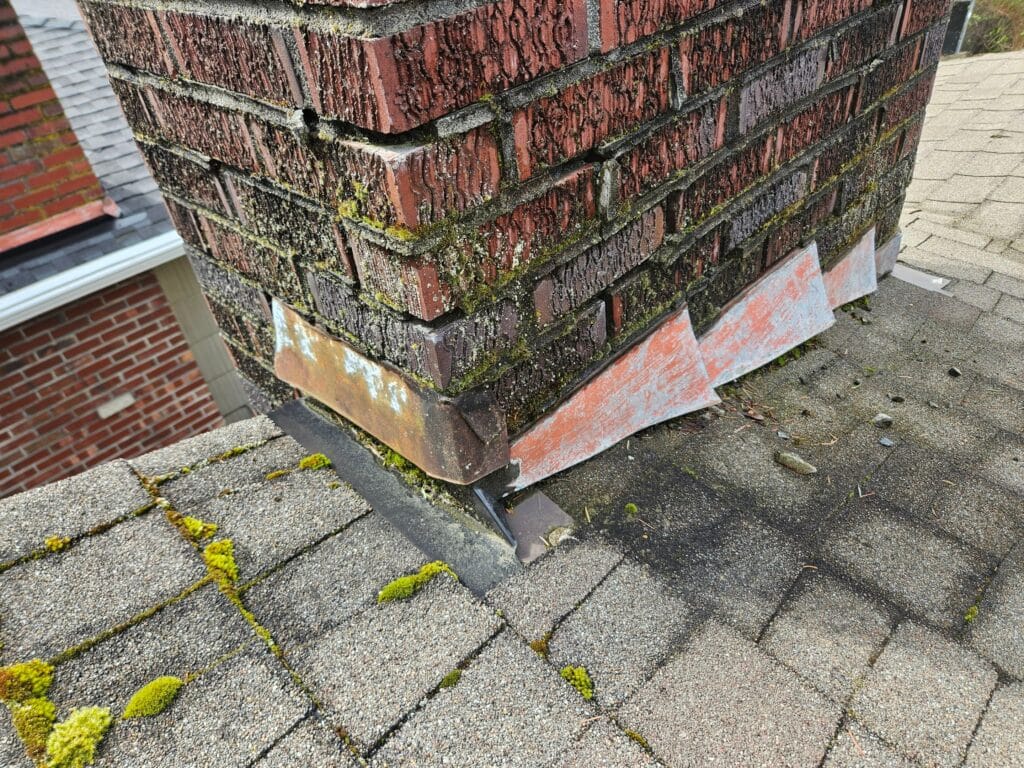
Visible gaps, lifted metal, failed sealant or separation between the chimney and the roofline indicate that the flashing connection is no longer performing its intended function.
Important: Many homeowners notice interior symptoms — stains, dampness, odors — long before the exterior source is identified. A chimney leak evaluation works backward from the symptom to the source, examining every applicable component along the likely water path.
Where Do Chimney Leaks Originate?
A chimney leak can originate from any component that is supposed to manage or exclude water. In Minnesota, multiple sources may contribute to the same visible leak.
The Chimney Crown
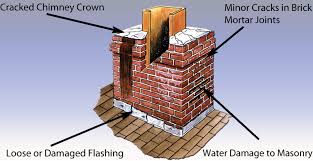
The crown covers the top of a masonry chimney and is designed to shed water away from the masonry below. Crown cracks, missing edges, flat areas that pool water, and gaps around the flue tile can all allow direct water entry into the chimney structure.
Crown-related leaks are among the most common chimney leaks in Minnesota because the crown receives the most direct weather exposure of any chimney component.
The Chimney Cap
A chimney cap covers the flue opening and may help limit direct rain, snow and debris entry. A missing, rusted, poorly fitted or storm-damaged cap allows precipitation to fall directly into the flue — reaching the damper, firebox and interior chimney surfaces.
Chimney Flashing
Flashing is the metal and sealant system that waterproofs the junction between the chimney and the roof. Failed step flashing, deteriorated counter flashing, cracked sealant, rust, poor original installation and storm damage can all create gaps that allow water to enter the building at the roofline.
Flashing is the most mechanically complex waterproofing connection on a chimney, and it is one of the most common failure points.
Chimney Masonry and Mortar Joints
Brick and mortar are porous. Over time, wind-driven rain, snow contact, freeze-thaw cycling and weathering increase the amount of water that absorbs into chimney masonry. Open, eroded or missing mortar joints provide direct pathways for water to enter the chimney wall.
Gaps Around the Flue Tile
Where the flue tile exits through the crown, gaps or failed sealant can allow water to enter directly into the space between the liner and the chimney wall — a concealed area where moisture damage may progress undetected.
The Roof Connection
Shingles, underlayment, valleys, crickets (saddles) and other roofing components near the chimney may fail, age or sustain storm damage — allowing water entry that appears to come from the chimney.
Ice Dams and Snow Accumulation
In Minnesota, ice dams can form at the base of the chimney where it meets the roof. Ice dams redirect snow melt behind shingles, under flashing and into areas that are normally weather-tight under rain-only conditions.
Condensation Inside the Flue
In chimneys venting gas furnaces or boilers, low-temperature flue gases may condense before reaching the top. This interior condensation is not a weather-related leak but can produce moisture symptoms inside the chimney that mimic a rain-induced leak.
Why Chimney Leaks in Minnesota Often Have More Than One Cause
One of the most important principles of chimney leak repair is this: a chimney leak frequently involves more than one component.
A cracked crown may allow water into the masonry. At the same time, separated flashing may allow water at the roof junction. And porous, weathered brick may absorb wind-driven rain across the entire chimney face. All three conditions may contribute to the same interior stain.
Repairing only one of the three sources may reduce the leak — but may not stop it entirely.
This is why chimney leak repair in Minnesota must be diagnostic first:
- Evaluate every applicable component
- Identify all likely contributing sources
- Prioritize repairs based on severity and contribution
- Address all confirmed entry points — not just the most obvious one
- Consider waterproofing after repairs to reduce residual absorption
Minnesota conditions compound multi-source leaks
In milder climates, a minor crown crack might not produce visible water entry for years. In Minnesota:
- Freeze-thaw cycling widens the crown crack every season
- Snow sitting on the crown creates sustained moisture contact
- Wind-driven rain forces water into the widening crack
- Simultaneously, freeze-thaw damages the mortar joints below
- And flashing sealant hardens, cracks and separates
Multiple components may fail at similar rates because they share the same weather exposure — making multi-source leaks common rather than exceptional.
Chimney Cricket (Saddle) Installation or Repair
A chimney cricket is a small peaked structure built on the uphill side of the chimney to divert water and debris around the chimney rather than allowing accumulation at the base. If a cricket is missing, undersized or damaged, water may pool against the chimney and enter through the flashing or masonry.
Liner Repair or Evaluation
If interior moisture is entering through the flue — from condensation, crown-related entry through flue-tile gaps, or a damaged liner — the liner condition should be evaluated and the appropriate repair identified.
Roof Repair Near the Chimney
If the water source involves shingles, underlayment, valleys, ice-dam damage or other roofing components adjacent to the chimney, roof repair may be needed alongside or instead of chimney-specific work.
Combined Repair Scope
When multiple components are contributing to the leak, a combined repair scope — addressing the crown, flashing, masonry and cap as a coordinated project — may be more effective and more efficient than addressing each source separately over time.
How Chimney Leak Repair in Minnesota Works
Step 1
Describe the Water Symptoms
Contact Chimney Crickets and describe what you have observed. Helpful information includes:
- Property address in Minneapolis, Bloomington or the South Metro
- Location of interior water stains, dampness or damage (ceiling, wall, firebox, floor)
- When the symptoms appear — during rain, after rain, during snow melt, after storms, consistently
- Whether the symptoms are new, recurring or worsening
- Visible exterior chimney damage — crown, cap, flashing, brick, mortar
- Efflorescence, rust, musty odors, peeling paint or bubbling finishes
- Previous chimney or roof repairs
- Whether the chimney is used for a fireplace, stove, furnace or other appliance
- Recent roofing work
- Whether the property is being purchased or sold
Step 2
Evaluate the Chimney and Water Path
Chimney Crickets systematically evaluates the chimney’s accessible components — working from the interior symptoms outward and upward to the exterior:
Interior evaluation:
- Firebox, damper area and accessible flue for moisture evidence
- Interior walls and ceiling near the chimney for staining patterns
- Direction and location of water travel
Exterior evaluation:
- Crown condition — cracks, slope, gaps, edges, sealant
- Cap presence, fit, corrosion and screening
- Flashing integrity — step flashing, counter flashing, sealant, separation
- Masonry and mortar-joint condition — open joints, spalling, efflorescence
- Roof components adjacent to the chimney — shingles, valleys, cricket
- Ice-dam evidence or snow-accumulation patterns (seasonal)
The goal is to trace the water path from the visible symptom to the most likely entry point or points.
Step 3
Identify the Source or Sources
Evaluation findings are used to determine:
- Which component or components appear to be allowing water entry
- Whether one source or multiple sources are contributing
- The relative severity and urgency of each identified source
- Whether the symptoms can be explained by the identified entry points
Step 4
Recommend the Repair Scope
The recommended repair scope addresses the confirmed entry source or sources:
- Crown sealing, patching or replacement
- Cap replacement
- Flashing repair or replacement
- Masonry repointing or brick replacement
- Cricket installation or repair
- Liner evaluation
- Waterproofing after structural repairs
- Roof repair referral when applicable
- Combined multi-component repair when needed
The recommended scope is based on confirmed findings — not an automatic upsell and not a surface patch that fails to address the actual water path.
Step 5
Complete the Repair and Confirm
Repairs are carried out using materials and methods appropriate for the identified conditions and Minnesota’s climate. After repair, the entry area is reviewed to confirm that the identified source has been addressed.
Step 6
Recommend Ongoing Protection
After the leak source has been repaired, waterproofing, periodic re-inspection, maintenance scheduling and monitoring guidance may be recommended to reduce the risk of future water entry.
Minnesota Conditions and Chimney Leaks {#minnesota-conditions}
Minnesota creates some of the most challenging moisture conditions for chimney systems in the country. Understanding why chimney leaks are so common in Minnesota helps homeowners appreciate the importance of accurate diagnosis and complete repair.
Why Minnesota Chimneys Leak More
- 50+ freeze-thaw cycles per year progressively widen crown cracks, mortar gaps and flashing separations
- Heavy seasonal snowfall means crowns, caps and flashing may sit beneath accumulated snow for weeks
- Wind-driven precipitation forces water into cracks and joints that vertical rain would not reach
- Ice dams redirect melt water into areas that are otherwise weather-tight
- Mid-winter thaws introduce water into masonry that refreezes within hours or days
- Spring melt produces sustained moisture contact across every exterior chimney surface
- Extended moisture seasons allow deep water absorption before freezing resumes
- Porous aging masonry in Minnesota’s older housing stock absorbs more water each year as mortar erodes and brick faces weather
The Minnesota chimney leak progression
In a milder climate, a small defect may produce minimal symptoms for years. In Minnesota:
- A minor crown crack appears
- Water enters the crack during rain
- The water freezes and widens the crack
- Snow sits on the crown and provides sustained moisture
- Wind-driven rain forces water deeper into the widening crack
- Water reaches the masonry below the crown
- The masonry absorbs water and begins to deteriorate
- Mortar joints below the crown open from freeze-thaw stress
- Flashing sealant hardens and separates from thermal cycling
- Multiple components now contribute to water entry
- Interior symptoms finally become visible — often well after significant concealed damage has occurred
Other Chimney Services
Explore the full range of Chimney Crickets services for Minnesota homeowners:
🔍 Chimney Inspections — Start with a professional evaluation before any repair
🧱 Chimney Repointing — Restore deteriorated mortar joints in Minnesota masonry
👑 Chimney Crown Repair — Seal or rebuild a cracked or damaged chimney crown
🔩 Chimney Flashing Repair — Stop water entry at the roof-chimney junction
💧 Chimney Leak Repair — Trace and resolve active moisture entry
🛡️ Chimney Waterproofing — Protect repaired masonry from future moisture damage
🏗️ Full Masonry Repair — Comprehensive brick and mortar restoration
This progression is why prompt chimney leak evaluation and repair in Minnesota is so important. A minor repair in year one may prevent a major restoration project in year three.
The Hidden Cost of Ignoring a Chimney Leak
Chimney leaks that are left unaddressed do not resolve on their own. In Minnesota’s climate, they worsen with every season. The damage often extends well beyond the visible stain on the ceiling.
What a chimney leak can damage over time
- Interior finishes — Stained, peeling or damaged paint, wallpaper, drywall and plaster
- Framing and sheathing — Wet wood framing may rot, weaken and develop mold
- Insulation — Wet insulation loses effectiveness and may support mold growth
- Chimney masonry — Ongoing moisture accelerates mortar erosion and brick spalling
- Chimney liner — Water reaching clay tiles can cause freeze-thaw cracking; condensation on metal liners can cause corrosion
- Damper and metal components — Persistent moisture causes rust and functional failure
- Crown and cap — Ongoing water accelerates the deterioration of components that were supposed to prevent entry
- Flashing and roofing — Sustained moisture may corrode flashing, damage underlayment and compromise adjacent shingles
- Adjacent wall and floor surfaces — Water may travel along framing and appear at locations distant from the chimney
- Mold and indoor air quality — Concealed moisture can support mold growth in wall cavities, attic spaces and behind fireplace surrounds
The financial reality
Repairing a cracked crown, correcting separated flashing or replacing a missing cap is a focused, manageable repair. Allowing those same defects to persist through multiple Minnesota seasons can result in:
- Full crown replacement
- Extensive masonry rebuilding
- Interior wall and ceiling restoration
- Insulation replacement
- Mold remediation
- Chimney relining
- Structural framing repair
Early evaluation and targeted repair are significantly less expensive than the cumulative damage that deferred repair allows.
Important Safety Information
Stop using the fireplace or connected appliance and request professional evaluation if:
- Active water is entering the firebox or fireplace area
- Significant water is entering through the chimney or nearby wall
- Smoke enters the living area
- A carbon monoxide alarm activates
- The chimney appears structurally unstable
- Masonry, crown or cap components appear ready to fall
- Mold or extensive moisture damage is visible near the chimney
If there is an active fire, a suspected gas leak, a carbon monoxide emergency or an immediate safety threat, leave the affected area and call emergency services.
Water and electrical safety
If water from a chimney leak is in contact with or near electrical wiring, outlets, junction boxes, lighting or panel equipment, do not touch the affected area. Contact a qualified electrician if water and electrical components may be involved.
Chimney Leak Repair in Minnesota Homeowners Can Request From Chimney Crickets
Chimney Crickets helps Minnesota homeowners understand accessible chimney and fireplace conditions and determine an appropriate next step.
The company’s approach connects inspection findings with condition-based service recommendations. Depending on what is identified, the appropriate next step may involve cleaning, maintenance, repair, moisture protection or additional evaluation.
For a professional chimney leak repair in Minnesota homeowners can request for a chimney or fireplace concern, contact Chimney Crickets.
Chimney Crickets
2012 W 98th St
Bloomington, MN 55431
(612) 280-2467
MinneapolisBloomingtonBurnsvilleEaganApple ValleySavageShakopeePrior LakeLakeville
📍 View more Areas → Not sure if we serve your area? Call (612) 280-2467 to confirm.
Chimney Leak Repair FAQs — Minnesota Homeowners
What is chimney leak repair?
Chimney leak repair is the professional process of identifying where water is entering a chimney system and repairing the specific component or components responsible. It begins with tracing the water path from the interior symptom to the exterior entry source before selecting the repair method.
When should I request chimney leak repair?
Request evaluation when you notice water stains on ceilings or walls near the chimney, a damp or wet firebox, efflorescence on exterior brick, musty odors near the fireplace, peeling interior finishes, rust on the damper or cap, or leaks that appear during rain, storms or snow melt.
What commonly causes chimney leaks in Minnesota?
Common causes include cracked or deteriorated crowns, missing or damaged caps, failed or separated flashing, open mortar joints, porous masonry, gaps around flue tiles, ice-dam-related water entry and failed roof components near the chimney. Multiple sources frequently contribute to the same leak.
Can a chimney leak have more than one source?
Yes — and in Minnesota, multi-source leaks are common. A cracked crown, separated flashing and porous masonry may all contribute to the same visible stain. Effective repair requires evaluating and addressing every contributing source, not just the most obvious one.
Can Minnesota weather cause chimney leaks?
Minnesota’s moisture, freeze-thaw cycling, snow, ice, wind-driven rain and seasonal temperature extremes accelerate the deterioration of crowns, flashing, masonry and caps — making chimney leaks significantly more common and more progressive than in milder climates.
Will the chimney be inspected before leak repair?
Yes. The chimney’s exterior and interior components should be systematically evaluated to trace the water path before any repair is selected. Repairing one component while missing another entry source may not stop the leak.
Can chimney leaks be diagnosed from a photograph?
Photographs may show visible exterior damage such as crown cracks, missing caps or flashing separation. However, they generally cannot trace the water path, identify concealed flashing conditions, reveal interior masonry absorption, confirm ice-dam involvement or determine whether multiple sources are contributing.
Is a chimney leak the same as a roof leak?
Not always. Water staining near a chimney may originate from the chimney (crown, cap, masonry, flashing), the roof (shingles, underlayment, valleys), or the connection between them. Accurate diagnosis determines which system — or combination — needs repair.
Can chimney leak repair stop water damage to the home?
Yes. Identifying and repairing the water-entry source or sources prevents ongoing moisture from reaching framing, insulation, interior finishes and chimney components. Waterproofing after repair can further reduce residual moisture absorption.
Does chimney waterproofing fix a chimney leak?
Waterproofing reduces surface moisture absorption through brick and mortar but cannot stop water from entering through open mortar joints, crown cracks, flashing gaps, a missing cap or other structural defects. Those conditions must be repaired first. Waterproofing is the final protective step after structural repairs.
How long does chimney leak repair take?
Duration depends on the number of components involved, the extent of damage, weather conditions and whether related masonry, crown, flashing, cap or waterproofing work is included. A single-source repair may be completed in one visit. Multi-component repairs may require multiple visits.
What is efflorescence and what does it mean?
Efflorescence is a white mineral deposit on brick surfaces caused by water moving through the masonry and carrying dissolved salts to the surface. It indicates that water has been or is currently migrating through the chimney wall — making it a reliable sign that the leak source should be identified and repaired.
Can a chimney cricket prevent leaks?
A chimney cricket (also called a saddle) is a small peaked structure on the uphill side of the chimney that diverts water and debris around the chimney. If a cricket is missing, undersized or damaged, water may accumulate against the chimney base and increase leak risk.
Should I stop using the fireplace if the chimney is leaking?
Stop using it if water is actively entering the firebox, if the chimney structure appears damaged, if smoke enters the home or if a carbon monoxide alarm activates. For leaks appearing only near the chimney wall or ceiling, professional evaluation should determine whether continued use is appropriate.
Can a chimney leak cause mold?
Yes. Ongoing moisture entry into wall cavities, attic spaces, insulation and concealed areas near the chimney can support mold growth. Addressing the leak source promptly helps prevent moisture conditions that allow mold to develop.
Does chimney leak repair require a permit?
Routine chimney leak evaluation and component repair generally do not require a permit. Structural changes, flashing replacement, roof alterations or related work may have permit requirements depending on the scope and local jurisdiction.
Can I wait until spring to fix a chimney leak?
In Minnesota, waiting may allow freeze-thaw cycling, snow contact, ice dams and wind-driven moisture to significantly worsen the damage during winter. Urgent leaks should be evaluated and addressed promptly regardless of season. If conditions prevent a complete repair, temporary protective measures may help limit further damage until permanent repair is possible.
What information should I provide when requesting leak repair?
Provide the property address, location of water stains or moisture, when leaks appear (during rain, after storms, during melt), visible exterior damage, chimney and fireplace type, known previous repairs, recent roofing work, and whether the property is being purchased or sold.
How do I request chimney leak repair in Minnesota?
Call Chimney Crickets at (612) 280-2467 or submit the online service-request form. Include your property address, water symptoms, timing of the leaks and any visible exterior chimney or roof damage.