
Chimney Masonry Repair in Minnesota: Brick, Mortar & Structural Restoration
CHIMNEY CRICKETS • CHIMNEY MASONRY EVALUATION & REPAIR
Chimney masonry repair in Minnesota addresses deterioration in the brick, mortar and structural masonry that forms the chimney itself — from the foundation and firebox through the interior chimney structure to the stack, crown and cap above the roofline. When brick spalls, mortar erodes, joints open and structural integrity weakens, the chimney loses its ability to support safe operation, shed water and resist Minnesota’s aggressive freeze-thaw climate.
Chimney Crickets helps homeowners across Minneapolis, Bloomington and the South Metro evaluate the brick, mortar, structural alignment and overall masonry condition before recommending targeted repair, repointing, brick replacement, partial rebuild, full restoration or related component service.
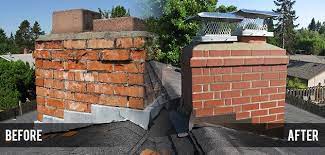
Condition-Based Evaluation
Chimney masonry repair recommendations begin with the homeowner’s concern and a professional evaluation of the brick, mortar joints, structural condition and related components. Chimney Crickets identifies the type, extent, depth and likely cause of deterioration before selecting a repair approach — not after assuming what the chimney needs.
Minnesota Weather Awareness
Minnesota’s freeze-thaw cycling, snow, ice, wind-driven rain and temperature extremes make chimney masonry repair in Minnesota more urgent, more material-sensitive and more timing-dependent than in milder climates. Repair planning accounts for these conditions at every stage.
Clear Repair Path
Chimney Crickets explains which masonry conditions are present, what level of repair is appropriate and whether related crown, cap, flashing, liner, waterproofing or structural service should also be considered.
What Is Chimney Masonry Repair?
Chimney masonry repair is the professional evaluation and restoration of deteriorated brick, mortar and structural masonry in a chimney system. It encompasses a range of services — from filling a few eroded mortar joints to replacing individual damaged bricks to rebuilding entire sections of a structurally compromised chimney.
Chimney masonry repair may include:
- Mortar-joint repointing — Removing and replacing deteriorated mortar
- Individual brick replacement — Removing and resetting spalled, cracked or failed bricks
- Multi-brick section repair — Replacing clusters of damaged masonry in a defined area
- Partial chimney rebuild — Disassembling and reconstructing a damaged section
- Full chimney rebuild — Complete reconstruction when deterioration is structural and widespread
- Firebox masonry repair — Restoring damaged firebrick or mortar inside the fireplace
- Smoke chamber repair — Parging, sealing or restoring the smoke chamber interior
- Structural evaluation — Assessing alignment, stability, footing condition and load-bearing capacity
- Coordination with component service — Crown, cap, flashing, liner and waterproofing work that may be needed alongside masonry repair
The scope of chimney masonry repair in Minnesota depends on which materials have deteriorated, how extensively, how deeply and why — questions that professional evaluation answers before work begins.
How Chimney Masonry Differs From Other Masonry
A chimney is not the same as a garden wall, a foundation or a decorative façade. Chimney masonry operates under conditions that no other residential masonry structure experiences.
Total weather exposure above the roofline
The chimney stack is exposed to wind, precipitation, UV, snow, ice and temperature extremes on every surface — with no protection from eaves, overhangs, the building envelope or drainage systems.
Interior heat and thermal cycling
Unlike a wall, the chimney carries hot combustion products through its interior. This creates thermal stress from the inside while weather creates thermal stress from the outside — stressing the masonry from both directions simultaneously.
Combustion-gas exposure
The interior masonry and mortar are exposed to heat, moisture, acidic condensation and chemical by-products from combustion — conditions that interior building walls never experience.
Vertical structural loading
The chimney bears its own weight, the weight of the crown and cap, accumulated snow and ice loads, and lateral wind forces. Mortar deterioration reduces the chimney’s ability to resist these forces.
Moisture from multiple sources
Water can reach chimney masonry from:
- Rain and snow on the exterior
- Wind-driven horizontal precipitation
- Crown cracks from above
- Flashing failure at the roofline
- Interior condensation from flue gases
- Rising moisture from the foundation
- Porous masonry absorption
These combined conditions mean that chimney masonry must be evaluated, repaired and protected differently from other masonry on a home.
Signs Chimney Masonry Repair May Be Needed
Chimney masonry deterioration ranges from cosmetic surface wear to structural failure. Some conditions are visible from the ground; others require roof-level access or interior inspection to identify.
Exterior Brick Symptoms
| ⚠️ Symptom | 🔍 What It May Indicate |
|---|---|
| Spalling brick | Moisture inside the brick has frozen and fractured the face — active freeze-thaw damage |
| Cracked brick | Thermal stress, structural movement, impact, chimney-fire heat or frost fracturing |
| Loose or displaced brick | Mortar failure, deterioration of surrounding joints, structural movement or impact |
| Missing brick faces | Advanced spalling — the entire outer surface has broken away, exposing the softer interior |
| Efflorescence | White mineral deposits indicate water is migrating through the masonry |
| Darkened or stained brick | Moisture absorption, algae, mold or chemical deposits from interior or exterior sources |
Mortar-Joint Symptoms
| ⚠️ Symptom | 🔍 What It May Indicate |
|---|---|
| Recessed joints | Mortar has eroded inward — water can collect and freeze in the recessed channel |
| Cracked joints | Freeze-thaw, thermal cycling or structural movement has fractured the mortar |
| Missing mortar | Entire sections of mortar have fallen out — open joints allow direct water entry |
| Crumbling mortar | Mortar has lost its binding properties and is disintegrating when touched |
| Vegetation in joints | Plant roots indicate deep mortar failure and sustained moisture |
| Mismatched previous repairs | Prior work with incompatible mortar may be accelerating damage to adjacent brick |
Structural Symptoms
| ⚠️ Symptom | 🔍 What It May Indicate |
|---|---|
| Visible leaning or tilting | Foundation settlement, footing failure, one-sided mortar deterioration or structural compromise |
| Horizontal or diagonal cracking | Settlement, movement, lateral load stress or structural fracture |
| Separation from the building | The chimney has moved relative to the adjacent structure — potential structural failure |
| Fallen brick or mortar | Material has detached — falling-masonry hazard and active deterioration |
| Bulging face | Internal moisture, failed interior ties, differential expansion or frost pressure |
Interior Symptoms That May Indicate Exterior Masonry Problems
- Water stains on walls or ceilings near the chimney
- Damp or wet firebox
- Rust on the damper or accessible metal components
- Musty odors near the fireplace
- Debris falling from the flue into the firebox
- Efflorescence on interior chimney surfaces
Important: Interior symptoms may appear long after exterior masonry damage has begun. By the time water staining is visible inside the home, the chimney’s exterior masonry may have been deteriorating for multiple seasons. Early evaluation of exterior conditions can prevent costly interior damage.
What Causes Chimney Masonry to Deteriorate?
Multiple conditions attack chimney masonry simultaneously. In Minnesota, these forces are more aggressive and act faster than in most other states.
Freeze-Thaw Cycling — The Primary Destroyer
Water enters brick pores and mortar joints. When the temperature drops, the water freezes and expands — exerting internal pressure that fractures the material from within. When the temperature rises, the water thaws and the masonry relaxes. The next freeze cycle repeats the process in the widened crack.
The Twin Cities metro experiences more than 50 freeze-thaw cycles per year — each cycle compounding the damage from the previous one. This is the single most destructive force on chimney masonry in Minnesota.
Moisture Absorption
Brick and mortar are porous. Every rain event, snow contact, wind-driven moisture event and condensation episode delivers water into the masonry. Over time, as surfaces weather and joints erode, the masonry absorbs more water per event — accelerating deterioration.
Wind Exposure
The chimney above the roofline extends into unobstructed wind. Wind drives moisture horizontally into joints and surfaces that vertical rain would not reach, increases lateral stress on the masonry structure and accelerates evaporative cooling that promotes freezing.
Snow and Ice Loading
Heavy snow accumulation on and around the chimney provides sustained moisture contact. Ice formation in open joints physically displaces masonry. Ice dams at the chimney base may redirect melt water into the structure.
Thermal Stress
Minnesota’s temperature range — exceeding 100°F between seasonal extremes — causes brick and mortar to expand and contract at different rates. This differential movement stresses every joint and bond in the masonry wall.
Age and Cumulative Wear
Every chimney has a finite material lifespan. Mortar typically deteriorates before brick, but both eventually require maintenance. Chimneys built 40, 50, 60 or more years ago may be approaching or past the point where mortar and brick need professional attention.
Incompatible Previous Repairs
Mortar or brick used in previous repairs that does not match the original in strength, porosity, thermal behavior or chemical composition can cause accelerated damage to the surrounding masonry. Hard Portland cement mortar used to repoint soft historic brick is a common and destructive mismatch.
Internal Moisture and Condensation
Combustion by-products — particularly from gas-appliance venting — can produce acidic condensation inside the chimney that attacks mortar from the interior. This damage is invisible from outside until it becomes severe.
Crown, Cap and Flashing Failure
When the crown cracks, the cap is missing or flashing fails, water enters the chimney from above or at the roofline — saturating masonry that would otherwise remain relatively dry. These component failures accelerate masonry deterioration throughout the chimney.
Chimney Fire Damage
Extreme heat from a chimney fire can damage mortar joints, crack brick, compromise the liner and weaken the structural masonry from the inside out.
Foundation and Footing Settlement
If the chimney’s footing settles unevenly, the masonry above may crack, lean or separate from the building — producing structural damage that requires evaluation beyond the masonry surface.
Why Chimney Masonry Repair in Minnesota Requires Specific Expertise
Chimney masonry repair is not generic brickwork. It requires understanding of chimney-specific conditions, material compatibility, Minnesota climate demands and the relationship between masonry and the chimney’s other components.
Material compatibility is critical
The replacement mortar must be compatible with the existing brick — matched in strength, flexibility and porosity. The replacement brick must match the original in size, color, porosity, hardness and thermal characteristics. Mismatched materials can cause more damage than the deterioration they were intended to fix.
The chimney is a system, not just a wall
Repairing brick and mortar without evaluating the crown, cap, flashing, liner and moisture sources may leave the underlying cause of deterioration unaddressed. Effective chimney masonry repair in Minnesota considers the entire system.
Minnesota timing and curing requirements
Mortar requires sustained temperatures above freezing to cure properly. Masonry work completed too late in fall or during cold weather risks premature failure. The repair window in Minnesota is shorter than in milder states, making scheduling and weather planning essential.
Structural assessment may be required
Not all masonry damage is cosmetic. Leaning, cracking, separation and fallen material may indicate structural concerns that require evaluation of the footing, internal ties, load path and overall chimney integrity — not just surface repair.
Waterproofing must follow repair
Restoring brick and mortar without protecting the completed work from future moisture absorption allows the same deterioration cycle to begin again. A vapor-permeable water repellent applied after repairs and adequate curing extends the service life of the restoration.
Types of Chimney Masonry Repair
The appropriate repair depends on which masonry elements have deteriorated, how extensively, how deeply and what is causing the damage.
Chimney Repointing (Mortar-Joint Repair)
Deteriorated mortar is removed to a specified depth and replaced with compatible mortar. Repointing is appropriate when the brick is sound but the mortar joints have eroded, cracked or fallen out. It is the most common chimney masonry repair service.
When appropriate: Mortar failure with sound brick and stable structure.
Individual Brick Replacement
Spalled, cracked or structurally failed individual bricks are removed and replaced with matching units set in compatible mortar. The surrounding joints are repointed to integrate the new brick.
When appropriate: Scattered brick failure while the majority of masonry and mortar remain serviceable.
Multi-Brick Section Repair
When a cluster or defined area of bricks has failed — typically on the most weather-exposed face or in the upper courses — the affected section is removed and rebuilt with matching materials.
When appropriate: Concentrated damage in a defined area with sound masonry elsewhere.
Partial Chimney Rebuild
A larger portion of the chimney — typically the upper stack above the roofline — is disassembled and reconstructed when deterioration is too extensive for brick-by-brick replacement but does not affect the entire chimney.
When appropriate: Upper-stack failure, storm damage affecting multiple courses, or structural cracking in a defined section.
Full Chimney Rebuild
The entire chimney — or the entire portion above the roofline — is dismantled and reconstructed when damage is structural, widespread or affects the chimney’s ability to function safely.
When appropriate: Extensive structural damage, severe leaning, widespread spalling and mortar failure, chimney-fire damage or failed previous construction.
Firebox Masonry Repair
Damaged firebrick, cracked mortar or deteriorated masonry inside the fireplace firebox may need repair or replacement. Firebox masonry must withstand direct heat exposure and should use refractory materials appropriate for the application.
When appropriate: Cracked, spalling or displaced firebrick; deteriorated firebox mortar joints.
Smoke Chamber Repair
The smoke chamber — the transition area between the firebox and the flue — may need parging, sealing, smoothing or structural repair. A rough or damaged smoke chamber can affect draft performance and deposit accumulation.
When appropriate: Rough, cracked, deteriorated or improperly constructed smoke-chamber surfaces.
Structural Stabilization
If a chimney is leaning, separating or showing signs of footing failure, stabilization or structural correction may be needed before surface masonry repair is performed. Repointing a structurally compromised chimney without addressing the underlying instability may conceal a dangerous condition.
When appropriate: Visible lean, diagonal cracking, separation from the building or suspected footing problems.
Component Coordination
Chimney masonry repair frequently needs to be coordinated with:
Crown repair or replacement — The crown sits on top of the masonry
Cap replacement — The cap protects the flue opening from direct water entry
Flashing repair — The flashing seals the chimney-roof junction
Liner evaluation — Masonry damage may indicate interior liner concerns
Waterproofing — A vapor-permeable treatment applied after repair protects the restoration
How Chimney Masonry Repair in Minnesota Works
Step 1
Describe the Concern
Contact Chimney Crickets and describe what you have noticed about the chimney masonry. Helpful information includes:
- Property address in Minneapolis, Bloomington or the South Metro
- Visible brick damage — spalling, cracking, loose, missing faces, displacement
- Visible mortar damage — erosion, cracking, missing joints, crumbling, vegetation
- Structural concerns — leaning, bulging, cracking patterns, separation
- Location of damage — upper stack, lower chimney, all faces, one face, near the crown
- Fallen material on the roof or ground
- Interior water stains, dampness or fireplace moisture
- Approximate chimney age and construction type
- Known previous repairs or chimney work
- Whether the property is being purchased or sold
- Photographs of the masonry condition (when safely obtainable)
Step 2
Evaluate the Masonry and System
Chimney Crickets evaluates the chimney from an appropriate access point — not from the ground alone when the full scope must be determined.
Masonry evaluation includes:
- Brick condition on all accessible faces — spalling, cracking, looseness, face loss
- Mortar-joint condition — depth of erosion, cracking, absence, compatibility of previous repairs
- Structural alignment — plumb, lean, bulge, separation, diagonal cracking
- Crown condition — cracks, edges, slope, gaps, sealant
- Cap condition — presence, fit, corrosion, attachment
- Flashing condition — integration, sealant, metal integrity
- Efflorescence, staining and moisture patterns
- Evidence of previous repairs — materials used, quality, compatibility
- Liner termination — visible condition at the top
- Firebox and accessible interior masonry condition
Step 3
Identify the Repair Scope and Materials
Evaluation findings determine:
- Which brick and mortar need repair or replacement
- The appropriate mortar type for the existing brick
- Whether matching brick is needed and available
- Whether the damage is cosmetic, moderate or structural
- Whether repointing, brick replacement, partial rebuild or full rebuild is appropriate
- Whether crown, cap, flashing, liner or waterproofing work should be coordinated
- The recommended repair sequence and timeline
Step 4
Complete the Masonry Repair
Chimney masonry repair in Minnesota is completed using:
- Brick matched to the original in size, color, porosity, hardness and thermal characteristics
- Mortar compatible with the existing brick and rated for Minnesota’s freeze-thaw climate
- Proper joint profiles and tooling to match the original work
- Refractory materials for firebox and high-heat applications
- Weather protection for fresh mortar and new masonry during curing
- Appropriate scaffolding, staging and safety measures for above-roofline work
Step 5
Protect and Document
After masonry repair:
- Mortar is protected during the critical initial curing period
- Waterproofing is applied after adequate curing (when recommended)
- The crown is confirmed or repaired
- The cap is confirmed or replaced
- Flashing is confirmed or re-integrated
- Findings, repair scope, materials and photographs are documented
- Maintenance recommendations and re-inspection timing are communicated
Brick Matching and Mortar Compatibility
Two of the most important technical decisions in chimney masonry repair are brick matching and mortar selection. Incorrect choices in either area can undermine the repair.
Brick matching
Replacement brick should match the original in:
Size — Standard, modular, oversize or custom dimensions
Color — Body color, flashing (color variation), surface treatment
Porosity — Absorption rate should be similar to surrounding brick
Hardness — The replacement should not be significantly harder or softer than adjacent units
Texture — Smooth, wirecut, sandmold, tumbled or other surface finish
Perfect visual and structural matching may require sourcing from specialty suppliers, architectural salvage or custom brick manufacturers. Using readily available modern brick that does not match the original can create visible patchwork and differential weathering.
Mortar compatibility
Repointing mortar must be:
Softer than or equal to the brick — So the mortar absorbs stress rather than transferring it into the brick
Compatible with the original mortar — In strength, flexibility and vapor permeability
Rated for freeze-thaw exposure — Minnesota conditions demand mortar that can withstand aggressive cycling
Color-matched — To blend visually with the original joints
Type N mortar is commonly appropriate for most residential chimney masonry repair. Older chimneys with soft, handmade or historic brick may require lime-based mortar or a custom mix.
The most damaging brick-matching error: Using very hard modern brick to patch an older chimney built with softer brick. The hard replacement absorbs less moisture and redirects thermal stress into the adjacent soft brick — causing the original masonry to deteriorate faster.
The most damaging mortar error: Using hard Portland cement mortar (Type S or Type M) to repoint a chimney built with soft brick. The mortar overpowers the brick and causes spalling. This error is extremely common and extremely costly to correct.
Minnesota Conditions and Chimney Masonry
Minnesota’s climate is one of the most destructive environments for chimney masonry in the country. Understanding how local conditions attack chimney brick and mortar helps homeowners appreciate why evaluation, timing and material selection matter.
The masonry deterioration progression in Minnesota
| Stage | What Happens | Repair Opportunity |
|---|---|---|
| 1. Surface weathering | Mortar faces erode slightly; brick surfaces weather normally | Monitor; no repair needed yet |
| 2. Joint erosion begins | Mortar recesses from the brick face; hairline cracks appear | Repointing — most cost-effective repair window |
| 3. Water entry accelerates | Open joints and surface cracks allow deeper water penetration | Repointing with moisture-source correction |
| 4. Freeze-thaw damage compounds | Each cycle widens cracks; mortar loosens; first spalling appears | Repointing + individual brick replacement |
| 5. Structural impact begins | Multiple joints fail; bricks loosen; sections become unstable | Section or partial rebuild |
| 6. Structural compromise | Leaning, separation, widespread failure, falling material | Full rebuild — most expensive intervention |
Chimney masonry repair in Minnesota is most effective and least expensive at Stages 2–3. By Stage 5–6, the scope, cost and complexity increase significantly.
Other Chimney Services
Explore the full range of Chimney Crickets services for Minnesota homeowners:
🔍 Chimney Inspections — Start with a professional evaluation before any repair
🧱 Chimney Repointing — Restore deteriorated mortar joints in Minnesota masonry
👑 Chimney Crown Repair — Seal or rebuild a cracked or damaged chimney crown
🔩 Chimney Flashing Repair — Stop water entry at the roof-chimney junction
💧 Chimney Leak Repair — Trace and resolve active moisture entry
🛡️ Chimney Waterproofing — Protect repaired masonry from future moisture damage
🏗️ Full Masonry Repair — Comprehensive brick and mortar restoration
Seasonal repair timing
- Best months: Late May through early October — sustained warmth for mortar curing
- Acceptable with precautions: Mid-April through mid-November — when overnight temperatures remain safely above freezing
- Avoid for standard repair: Late November through March — unless emergency stabilization is needed
- Emergency evaluation: A structurally compromised chimney should be evaluated promptly regardless of season
Important Safety Information
Falling-masonry hazard
A chimney with spalling brick, loose masonry, missing mortar, visible leaning or fallen material presents a falling-masonry hazard. Brick, mortar fragments and crown material can fall onto the roof, walkways, vehicles, decks and occupied areas below.
- Do not stand directly below or adjacent to a visibly deteriorated chimney
- Keep people, pets and vehicles away from the fall zone
- Request prompt professional evaluation for any chimney with loose or fallen material
- Do not attempt to remove loose brick from a chimney without appropriate safety measures
Stop using the fireplace if:
- The chimney structure appears to lean, bulge or separate
- Brick or mortar is actively falling
- Significant structural cracks are visible
- A chimney fire may have occurred
- Smoke enters the living area
- A carbon monoxide alarm activates
- Heat, discoloration or moisture appears on wall or ceiling surfaces adjacent to the chimney
If there is an immediate structural-collapse concern, active fire, gas leak or carbon monoxide emergency, leave the affected area and call emergency services.
Chimney Masonry Repair in Minnesota Homeowners Can Request From Chimney Crickets
Chimney Crickets helps Minnesota homeowners understand accessible chimney and fireplace conditions and determine an appropriate next step.
The company’s approach connects inspection findings with condition-based service recommendations. Depending on what is identified, the appropriate next step may involve cleaning, maintenance, repair, moisture protection or additional evaluation.
For a professional chimney masonry repair in Minnesota homeowners can request for a chimney or fireplace concern, contact Chimney Crickets.
Chimney Crickets
2012 W 98th St
Bloomington, MN 55431
(612) 280-2467
MinneapolisBloomingtonBurnsvilleEaganApple ValleySavageShakopeePrior LakeLakeville
📍 View more Areas → Not sure if we serve your area? Call (612) 280-2467 to confirm.
Chimney Masonry Repair FAQs — Minnesota Homeowners
What is chimney masonry repair?
Chimney masonry repair is the professional evaluation and restoration of deteriorated brick, mortar and structural masonry in a chimney system. It may include mortar-joint repointing, individual brick replacement, section repair, partial or full rebuild, firebox masonry repair, smoke chamber repair and structural evaluation.
How is chimney masonry repair different from chimney repointing?
Chimney repointing specifically addresses mortar-joint deterioration — removing and replacing mortar without disturbing the brick. Chimney masonry repair is a broader service that encompasses repointing, brick replacement, structural repair, firebox masonry, smoke-chamber work and chimney rebuilding. Repointing is one type of chimney masonry repair.
How is chimney masonry repair different from chimney stack repair?
Chimney stack repair focuses specifically on the portion of the chimney above the roofline. Chimney masonry repair in Minnesota can address masonry deterioration anywhere in the chimney system — the stack, the chimney below the roofline, the firebox, the smoke chamber and the foundation-level masonry.
When should I request chimney masonry repair?
Request evaluation when you notice spalling brick, cracked or missing mortar, loose or displaced masonry, open joints, efflorescence, fallen material, structural cracking, leaning, water staining near the chimney or vegetation growing from mortar joints.
What commonly causes chimney masonry to deteriorate?
The primary cause in Minnesota is freeze-thaw cycling — water enters brick and mortar, freezes, expands and fractures the material. Contributing factors include wind-driven moisture, snow and ice, thermal cycling, age, incompatible previous repairs, crown and cap failure, flashing failure, interior condensation and chimney-fire damage.
Can Minnesota weather damage chimney masonry?
Yes. Minnesota’s freeze-thaw cycling, wind, snow, ice, temperature extremes and sustained moisture exposure make it one of the most demanding environments for chimney masonry in the country. Chimneys in Minnesota may deteriorate significantly faster than identical chimneys in milder states.
Can chimney masonry damage be diagnosed from a photograph?
Photographs may show visible spalling, cracking, missing mortar or displacement on accessible faces. However, they cannot confirm the condition of concealed faces, the depth of mortar deterioration, brick porosity, structural alignment, interior masonry condition or the compatibility of previous repairs. An on-site evaluation is needed for accurate scope and material determination.
Will the chimney be inspected before masonry repair?
Yes. Brick condition, mortar-joint condition, structural alignment, crown, cap, flashing, liner, firebox and overall chimney integrity should all be evaluated before the repair scope, materials and approach are determined.
What type of mortar is used for chimney masonry repair in Minnesota?
The mortar type must be compatible with the existing brick. Type N is commonly appropriate for most residential chimney masonry repair. Older chimneys with soft or historic brick may require lime-based or Type O mortar. The replacement mortar must be softer than or equal in hardness to the brick it bonds.
Why does brick matching matter?
Replacement brick that is significantly harder, more porous or dimensionally different from the original can create differential weathering, redirect stress into adjacent masonry and produce a visible patchwork appearance. Proper matching ensures the repair integrates structurally and visually.
Can a leaning chimney be repaired?
A slight lean caused by cosmetic mortar loss may sometimes be addressed with targeted repair. A significant lean indicating settlement, footing failure or structural compromise typically requires partial or full rebuild — and may also require evaluation of the chimney’s foundation and support system.
How long does chimney masonry repair take?
Duration depends entirely on scope. Repointing a small section or replacing a few bricks may be completed in one to two visits. Partial or full rebuilds require more time — including demolition, reconstruction, curing and component installation. Minnesota weather may also affect scheduling.
When is the best time to schedule chimney masonry repair in Minnesota?
Late spring through early fall provides the best conditions for masonry curing. Mortar should not be applied when temperatures are expected to drop below freezing within 72 hours. Urgent structural concerns should be evaluated promptly regardless of season.
Does chimney masonry repair require a permit?
Standard repointing and brick replacement generally do not require a permit. Partial or full rebuilds, structural modifications or height changes may. Confirm project-specific requirements with the local building authority.
Can waterproofing be applied after chimney masonry repair?
Yes. After all mortar has fully cured, a vapor-permeable water-repellent treatment may be applied to reduce future moisture absorption. Waterproofing should follow — not substitute for — structural masonry repair.
Is chimney masonry repair only for wood-burning fireplaces?
No. Any masonry chimney — regardless of the connected appliance — may need masonry repair. Gas-appliance chimneys, furnace flues, unused chimneys and decorative masonry chimneys can all experience brick and mortar deterioration.
Can chimney masonry repair prevent interior water damage?
Yes. Restoring deteriorated masonry reduces water entry through the chimney wall. When coordinated with crown, cap, flashing and waterproofing service, chimney masonry repair in Minnesota significantly reduces the risk of ongoing water damage to the chimney and adjacent structure.
What is spalling brick and why does it happen?
Spalling is when the face of a brick flakes, chips or fractures — typically because moisture inside the brick has frozen and expanded. It is one of the most visible and reliable indicators of active freeze-thaw damage and generally requires brick replacement.
What is the main benefit of chimney masonry repair?
Provide the property address, visible brick and mortar conditions, chimney age, known previous repairs, fallen material, water stains, structural concerns, fireplace type and whether the property is being purchased or sold. Include photographs when safely obtainable.
How do I request chimney masonry repair in Minnesota?
Call Chimney Crickets at (612) 280-2467 or submit the online service-request form. Include your property address, visible masonry damage description, approximate chimney age and any related concerns.