
Chimney Repointing in Minnesota: Mortar Joint Repair, Restoration & Protection
CHIMNEY CRICKETS • CHIMNEY REPOINTING & MORTAR RESTORATION
Chimney repointing in Minnesota is the process of removing deteriorated mortar from chimney joints and replacing it with fresh, compatible material suited to the brick type and the local climate. When mortar cracks, erodes or falls out, the joints between bricks become open pathways for water — and in Minnesota’s freeze-thaw climate, that water causes progressive damage to both the mortar and the surrounding masonry.
Chimney Crickets helps homeowners across Minneapolis, Bloomington and the South Metro evaluate mortar-joint conditions, determine whether chimney repointing is appropriate and complete the work using materials that are compatible with the existing brick and rated for Minnesota’s demanding weather.
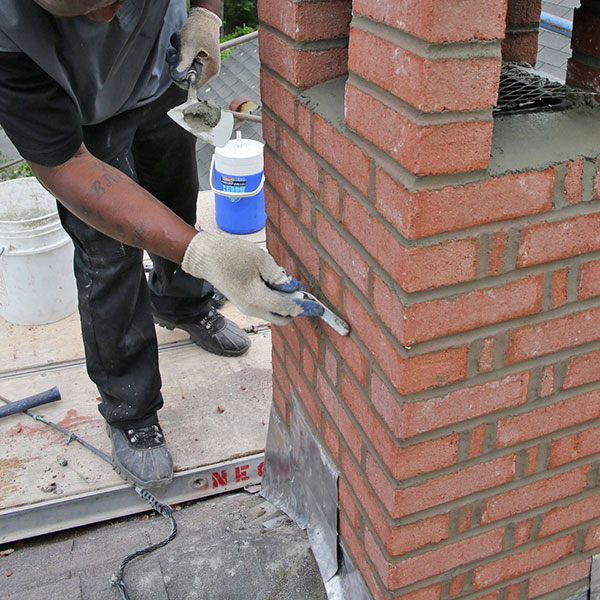
Condition-Based Evaluation
Chimney repointing recommendations begin with the homeowner’s concern and a professional evaluation of the mortar joints, brick condition, chimney construction and related components. Chimney Crickets determines the extent and depth of deterioration before selecting the repointing approach and mortar type.
Minnesota Weather Awareness
Mortar-joint deterioration is accelerated by Minnesota’s freeze-thaw cycling, wind-driven rain, snow contact, ice and temperature extremes. Chimney repointing in Minnesota requires mortar that can withstand these conditions without damaging the surrounding brick.
Clear Next Steps
Chimney Crickets explains which joints need attention, how deep the deterioration extends, what mortar type is appropriate and whether related crown, cap, flashing, stack or waterproofing service should also be considered.
What Is Chimney Repointing?
Chimney repointing is the process of removing deteriorated, cracked, eroded or missing mortar from the joints between chimney bricks to a specified depth and replacing it with fresh mortar that restores the structural integrity and weather resistance of the joint.
Repointing does not involve removing or replacing the brick itself — only the mortar between the bricks. The existing brick remains in place while the deteriorated mortar is carefully removed and new mortar is pressed into the cleaned joint.
When properly performed with compatible materials, chimney repointing:
- Restores the structural bond between masonry units
- Reduces water penetration through open or eroded joints
- Helps protect the chimney from freeze-thaw damage
- Extends the service life of the existing brick
- Improves the chimney’s weather resistance and appearance
- Prevents small mortar problems from becoming expensive structural failures
Repointing is one of the most common and most important chimney masonry services in Minnesota because mortar joints are the first chimney component to show freeze-thaw deterioration.
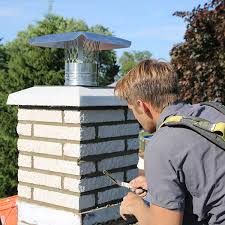
Repointing vs Tuckpointing: What Is the Difference?
Homeowners and contractors often use these terms interchangeably. In common practice, they frequently refer to the same work — removing old mortar and installing new mortar in the joints. However, the technical definitions differ:
Repointing (General term)
Repointing refers to the process of removing deteriorated mortar and replacing it with new mortar. It is the standard term for mortar-joint restoration regardless of the finishing technique used.
Tuckpointing (Traditional term)
Tuckpointing is a specific decorative technique that uses two colors of mortar — one matching the brick color and one contrasting (usually white) — to create the illusion of very fine, precise joints. True tuckpointing is a specialized finishing method.
How the terms are used in Minnesota
In the Minneapolis, Bloomington and South Metro area, “tuckpointing” is commonly used as a synonym for repointing — regardless of whether a decorative two-color technique is involved. When homeowners request “tuckpointing,” they typically mean standard mortar-joint restoration.
Chimney Crickets uses “chimney repointing” to describe the mortar-removal and replacement process. If a homeowner requests “tuckpointing,” the service evaluation and recommendations are the same.
For search clarity: If you are searching for chimney tuckpointing in Minnesota, chimney mortar repair or chimney joint restoration, the service described on this page — chimney repointing in Minnesota — addresses all of these needs.
Why Mortar Fails Before Brick
One of the most important principles in chimney masonry is that mortar is designed to be the sacrificial element in the wall. Properly formulated mortar is softer than the brick it bonds. This is intentional.
How the system is supposed to work
When moisture, thermal movement and freeze-thaw stress affect a masonry wall, the softer mortar absorbs the stress and deteriorates first — protecting the harder, more expensive-to-replace brick from fracturing.
When the mortar reaches the end of its service life, it can be removed and replaced through repointing — without disturbing the brick.
What happens when this system fails
- Mortar that is too hard for the brick (such as Portland cement mortar used with soft historic brick) can redirect stress into the brick — causing the brick to crack and spall instead of the mortar
- Mortar that is too soft may erode too quickly and provide inadequate protection
- Mortar that is chemically incompatible may react with the brick or trap moisture
This is why chimney repointing in Minnesota must use mortar that is specifically compatible with the existing brick — not simply the strongest or most convenient material available.
Signs Chimney Repointing May Be Needed
Mortar deterioration is sometimes visible from the ground but is frequently more advanced than it appears — especially on the upper courses, rear face and weather-exposed sides of the chimney.
| ⚠️ Symptom | 🔍 What It May Indicate |
|---|---|
| Recessed mortar joints | Mortar has eroded inward from the brick face — water can now collect in the recessed joint |
| Cracked mortar joints | Freeze-thaw cycling, thermal movement or settlement has fractured the existing mortar |
| Missing mortar | Sections of mortar have fallen out entirely — leaving open gaps between bricks |
| Crumbling or powdery mortar | The mortar has lost its binding properties and is disintegrating |
| Water-stained masonry | Moisture is entering through open or deteriorated joints and migrating through the wall |
| Efflorescence on brick | White mineral deposits indicate water is moving through the masonry — often through failing joints |
| Uneven previous patches | Prior repointing with mismatched mortar, improper depth or poor technique may need correction |
| Vegetation in mortar joints | Plant roots growing from joints indicate deep mortar deterioration and sustained moisture retention |
| Spalling brick adjacent to open joints | Water entering through open joints may be freezing inside adjacent brick — causing the brick face to fracture |
| Interior water stains near the chimney | Mortar-joint failure may be one contributing source — along with crown, flashing and cap conditions |
Important: Mortar deterioration on the rear face of the chimney, the upper courses and the sides most exposed to wind-driven rain may be significantly worse than what is visible from the ground on the front face. Roof-level or ladder evaluation is typically required to assess the full scope of repointing needed.
What Causes Chimney Mortar to Deteriorate?
Multiple conditions contribute to mortar deterioration. In Minnesota, these factors are more aggressive and act faster than in milder climates.
Freeze-Thaw Cycling
The single most destructive force on chimney mortar in Minnesota. Water enters the mortar, freezes, expands and fractures the joint. With more than 50 freeze-thaw cycles per year in the Twin Cities metro, this damage compounds rapidly. Each cycle widens the crack, allowing more water to enter during the next cycle.
Wind-Driven Precipitation
Wind drives rain and moisture horizontally into mortar joints that vertical rain alone would not penetrate. The chimney above the roofline is exposed to wind from every direction.
Snow and Ice Contact
Snow sitting against the chimney, ice forming in open joints and melt water flowing across chimney surfaces provide sustained moisture contact — allowing deep water absorption into the mortar before the next freeze.
Thermal Expansion and Contraction
Minnesota’s seasonal temperature range — exceeding 100°F between summer highs and winter lows — causes brick and mortar to expand and contract repeatedly. Because they expand at different rates, stress concentrates at the joint, progressively loosening the bond.
Age
Mortar has a finite service life. Depending on the original composition, quality and exposure, chimney mortar joints may begin to require repointing within 25–50 years — sometimes sooner on heavily exposed chimneys.
UV Degradation
Direct sunlight breaks down surface components in some mortar formulations, contributing to surface erosion over decades of exposure.
Incompatible Previous Repairs
Prior repointing with mortar that is too hard, too soft or chemically incompatible with the original brick can accelerate deterioration of both the new mortar and the adjacent masonry. Hard Portland cement mortar used to repoint soft, older brick is a common and destructive error.
Moisture From Crown, Cap or Flashing Failure
Water entering through a cracked crown, missing cap or failed flashing may saturate the mortar from the inside — causing deterioration that begins hidden and progresses outward.
Acidic Flue-Gas Condensation
In chimneys venting gas appliances, low-temperature flue gases may condense inside the chimney. This acidic condensation can attack the mortar from the interior side of the chimney wall, causing deterioration that is invisible from outside until it becomes advanced.
Why Chimney Repointing in Minnesota Requires Specific Materials
Mortar selection is the most critical technical decision in chimney repointing. Using the wrong mortar can cause more damage than the deterioration it was intended to fix.
The mortar compatibility rule
The repointing mortar must be softer than or equal in hardness to the original mortar — and softer than the brick it bonds. This ensures that the mortar continues to function as the sacrificial element, absorbing stress and weathering before the brick does.
Common mortar types used in chimney repointing
| Mortar Type | Compressive Strength | Appropriate Use |
|---|---|---|
| Type O | ~350 psi | Soft historic brick; low-stress applications; interior |
| Type K | ~75 psi | Very soft historic masonry; conservation projects |
| Type N | ~750 psi | Most residential chimney repointing; moderate-strength brick; freeze-thaw exposure |
| Type S | ~1,800 psi | Higher-strength applications; some modern brick; structural loading |
| Type M | ~2,500 psi | Below-grade, high-compression applications; rarely appropriate for chimney repointing |
| Lime-based | Variable | Historic masonry restoration; older brick that requires maximum flexibility and vapor permeability |
Why Type N is commonly recommended for Minnesota chimney repointing
Type N mortar provides a balance of strength, flexibility and freeze-thaw resistance that makes it suitable for most residential chimney repointing in Minnesota. It is strong enough to resist weather exposure above the roofline while remaining flexible enough to accommodate thermal movement without cracking the surrounding brick.
However, Type N is not universally correct. Older chimneys with soft, handmade or low-fired brick may require a lime-based or Type O mortar to avoid damaging the masonry. The correct type should be determined by evaluating the existing brick and original mortar — not by defaulting to the strongest available product.
The danger of using mortar that is too hard
When a hard mortar — such as Type S or Type M — is used to repoint a chimney built with softer brick:
- The mortar resists movement and stress
- Stress transfers into the softer brick instead
- The brick cracks and spalls rather than the mortar
- Brick replacement becomes necessary — a far more expensive repair
- The “repair” has caused more damage than the original deterioration
This is one of the most common and most costly repointing errors. It is especially problematic in Minnesota, where freeze-thaw cycling amplifies every stress event. Chimney repointing in Minnesota must be performed with mortar that matches the masonry — not mortar that overpowers it.
Chimney Repointing Options by Condition
The repointing scope depends on the extent, depth and distribution of mortar deterioration, the brick condition and whether related chimney components are also involved.
Targeted Repointing
When deterioration is concentrated in a defined area — such as a few courses near the crown, one weather-exposed face or a specific section of the stack — targeted repointing addresses only the affected joints. This is the most focused and cost-effective approach when surrounding joints remain sound.
Full-Perimeter Repointing
When mortar deterioration is widespread across multiple faces and elevations of the chimney, repointing the entire accessible chimney perimeter may be more effective than patching individual areas. Full-perimeter repointing provides uniform protection and may be more economical per joint than scattered repairs.
Deep-Joint Repointing
Standard repointing removes mortar to a depth of approximately ¾ inch to 1 inch. When mortar has deteriorated deeper than this — or when previous repointing used only a thin surface layer — deeper removal may be necessary to provide adequate bonding depth for the new mortar.
Previous-Repair Correction
If prior repointing was performed with incompatible mortar (too hard, too soft, wrong type), the incorrect material should be removed and replaced with appropriate mortar before the incompatibility causes further brick damage.
Repointing With Related Component Service
Chimney repointing may be coordinated with:
- Crown repair or replacement — Crown deterioration frequently accompanies mortar-joint failure
- Cap replacement — A missing or failed cap accelerates mortar deterioration from above
- Flashing repair — Failed flashing may contribute moisture that accelerates joint deterioration
- Stack repair — Upper courses may need brick replacement alongside repointing
- Waterproofing — A vapor-permeable treatment applied after repointing helps protect the restored joints from re-absorbing moisture
How Chimney Repointing in Minnesota Works
Step 1
Describe the Concern
Contact Chimney Crickets and describe what you have noticed about the chimney mortar. Helpful information includes:
- Property address in Minneapolis, Bloomington or the South Metro
- Visible mortar erosion, cracking, missing joints or crumbling
- Which chimney faces appear most affected
- Fallen mortar or debris on the roof or ground
- Water stains near the chimney or fireplace
- Approximate chimney age
- Known previous repointing or chimney work
- Whether the property is being purchased or sold
- Photographs of the mortar condition (when safely obtainable)
Step 2
Evaluate the Mortar and Masonry
Chimney Crickets evaluates the chimney from an appropriate access point — not from the ground alone when the full scope must be determined.
Evaluation includes:
- Joint-by-joint assessment of mortar condition on all accessible faces
- Depth of deterioration — surface erosion vs deep joint failure
- Brick condition — sound, spalling, cracked, loose or previously damaged
- Previous repair identification — type, quality and compatibility
- Mortar type assessment — estimated original composition
- Crown, cap, flashing and stack condition
- Efflorescence, staining and moisture patterns
- Structural alignment and overall masonry integrity
Step 3
Select the Mortar and Define the Scope
Evaluation findings determine:
- Which joints require repointing
- The appropriate removal depth
- The correct mortar type for the existing brick
- The joint profile (tooling shape) to match the original
- Whether crown, cap, flashing or stack work should be coordinated
- Whether waterproofing should follow repointing
Step 4
Remove Deteriorated Mortar
Old mortar is carefully removed from the joints to the specified depth using hand tools, mechanical grinders or a combination. Removal must be deep enough to provide adequate bonding surface for the new mortar without damaging the surrounding brick.
Mortar removal is one of the most skill-dependent steps in repointing. Improper removal can chip brick edges, widen joints excessively, damage the brick face or leave an inconsistent depth that prevents proper mortar bonding.
Step 5
Install New Mortar
Fresh mortar — matched to the original in type, color, strength and texture — is packed firmly into the prepared joints. The mortar is applied in layers when the joint is deep, allowing each layer to firm before the next is added.
Step 6
Tool the Joint Profile
After the mortar reaches initial firmness, the joint is tooled (compressed and shaped) to match the original joint profile. Common profiles include concave, V-shaped, flush and weather-struck. Proper tooling compresses the mortar surface and improves weather resistance.
Step 7
Protect During Curing
New mortar must be protected from:
- Freezing temperatures (minimum 72 hours; longer in cold weather)
- Direct heavy rain before initial set
- Extreme heat that accelerates surface drying
- Wind that may dry the surface before full hydration
In Minnesota, curing protection is especially critical. Mortar that freezes before adequate curing may fail within the first season.
Step 8
Apply Waterproofing (When Appropriate)
After the mortar has fully cured — typically several days to weeks depending on conditions — a vapor-permeable masonry water repellent may be applied to reduce future moisture absorption. Waterproofing should follow — not substitute for — proper repointing.
Step 7
Review and Document
The completed repointing is reviewed with the homeowner. Findings, scope, materials and photographs are documented. Maintenance recommendations and re-inspection timing are communicated.
Common Chimney Repointing Mistakes to Avoid
Repointing quality depends on materials, technique, timing and experience. The following mistakes — common in both professional and DIY work — can reduce the effectiveness of chimney repointing in Minnesota or cause additional damage.
Using mortar that is too hard for the brick
The most destructive common error. Hard mortar (Type S, Type M, or pure Portland cement) used with softer brick transfers stress into the brick — causing spalling, cracking and expensive brick replacement.
Insufficient mortar removal depth
Applying new mortar over a thin layer of old mortar (sometimes called “butter joints” or “smear pointing”) does not create adequate bonding depth. The new mortar may fail within one or two seasons.
Using caulk, sealant or filler instead of mortar
Caulk, silicone and masonry filler products are not structural mortar. They do not bond properly, do not match the masonry’s thermal behavior and may trap moisture inside the joint.
Repointing in freezing or near-freezing conditions
Mortar that freezes before curing does not develop full strength and may crumble during its first winter. Chimney repointing in Minnesota should be scheduled when sustained temperatures remain above freezing long enough for proper curing.
Failing to match the joint profile
Mortar that is finished flush, recessed or at a different angle than the original creates inconsistent water-shedding patterns and a mismatched appearance.
Skipping the crown, cap and flashing evaluation
Repointing mortar joints while ignoring a cracked crown, missing cap or failed flashing allows water to continue entering the chimney from other sources — potentially undermining the new repointing work.
Applying impermeable coating over fresh repointing
Impermeable sealers, paint or non-breathable coatings applied over repointed joints may trap moisture inside the masonry and accelerate freeze-thaw damage behind the coating.
Damaging brick edges during mortar removal
Aggressive mechanical removal or improper tool angles can chip and fracture brick edges — creating new water-entry points and an unacceptable visual result.
Minnesota Conditions and Chimney Repointing
Minnesota’s climate is one of the most demanding environments for chimney mortar in the country. Understanding how these conditions affect mortar joints helps homeowners appreciate why timely and properly executed chimney repointing in Minnesota is essential.
The mortar deterioration cycle in Minnesota
| Stage | What Happens |
|---|---|
| Stage 1 — Surface erosion | Wind, rain, UV and normal weathering gradually wear the mortar surface inward from the brick face |
| Stage 2 — Hairline cracking | Freeze-thaw cycling creates small cracks in the mortar that are initially invisible |
| Stage 3 — Water entry begins | Cracks and erosion allow water to penetrate deeper into the joint |
| Stage 4 — Accelerated freeze-thaw damage | Water inside the joint freezes, expands and fractures the mortar further with each cycle |
| Stage 5 — Joint opens | Sections of mortar crack, loosen and begin to fall out |
| Stage 6 — Water reaches the masonry wall | Moisture now penetrates through the open joint into the chimney’s interior masonry |
| Stage 7 — Adjacent brick deterioration | Water entering through the joint freezes inside adjacent brick — causing spalling |
| Stage 8 — Structural compromise | Multiple open joints reduce the chimney’s structural integrity; loose brick becomes possible |
Chimney repointing is most effective and least expensive at Stages 1–4 — before joints have fully opened and before brick has begun to spall. By Stage 7 or 8, brick replacement and stack repair may be necessary alongside repointing.
Other Chimney Services
Explore the full range of Chimney Crickets services for Minnesota homeowners:
🔍 Chimney Inspections — Start with a professional evaluation before any repair
🧱 Chimney Repointing — Restore deteriorated mortar joints in Minnesota masonry
👑 Chimney Crown Repair — Seal or rebuild a cracked or damaged chimney crown
🔩 Chimney Flashing Repair — Stop water entry at the roof-chimney junction
💧 Chimney Leak Repair — Trace and resolve active moisture entry
🛡️ Chimney Waterproofing — Protect repaired masonry from future moisture damage
🏗️ Full Masonry Repair — Comprehensive brick and mortar restoration
Timing chimney repointing in Minnesota
Best months: Late May through early October — when sustained temperatures support proper mortar curing
Acceptable with precautions: April through mid-November — when overnight temperatures remain above freezing
Avoid: Late November through March — unless emergency stabilization is needed and cold-weather masonry techniques are employed
Urgent exceptions: A structurally compromised chimney should be evaluated promptly regardless of season; temporary stabilization may be needed until permanent repointing can be completed in suitable weather
Important Safety Information
Falling-mortar and masonry hazard
A chimney with extensively deteriorated mortar, loose brick or open joints may present a falling-masonry hazard. Loose mortar pieces and brick fragments can fall from the chimney onto the roof, walkways, vehicles or people below — especially during wind events, storms and freeze-thaw cycling.
- Do not stand directly below a chimney with visibly failed mortar and loose brick
- Request professional evaluation promptly for any chimney with structural mortar failure
Stop using the fireplace if:
- The chimney structure appears unstable
- Mortar or brick is actively falling
- Significant cracks suggest structural movement
- Smoke enters the living area
- A carbon monoxide alarm activates
If there is an immediate structural concern, active fire or carbon monoxide emergency, leave the affected area and call emergency services.
Chimney Repointing in Minnesota Homeowners Can Request From Chimney Crickets
Chimney Crickets helps Minnesota homeowners understand accessible chimney and fireplace conditions and determine an appropriate next step.
The company’s approach connects inspection findings with condition-based service recommendations. Depending on what is identified, the appropriate next step may involve cleaning, maintenance, repair, moisture protection or additional evaluation.
For a professional chimney repointing in Minnesota homeowners can request for a chimney or fireplace concern, contact Chimney Crickets.
Chimney Crickets
2012 W 98th St
Bloomington, MN 55431
(612) 280-2467
MinneapolisBloomingtonBurnsvilleEaganApple ValleySavageShakopeePrior LakeLakeville
📍 View more Areas → Not sure if we serve your area? Call (612) 280-2467 to confirm.
Chimney Repointing FAQs — Minnesota Homeowners
What is chimney repointing?
Chimney repointing is the process of removing deteriorated mortar from chimney joints to a specified depth and replacing it with fresh, compatible mortar. It restores the structural bond between bricks, reduces water penetration and helps protect the chimney from freeze-thaw damage.
Is chimney repointing the same as tuckpointing?
In Minnesota and throughout most of the United States, the terms are used interchangeably. Technically, “tuckpointing” refers to a decorative two-color mortar technique, while “repointing” describes standard mortar-joint restoration. When homeowners request either service, the evaluation and work are the same.
When should I request chimney repointing in Minnesota?
Request evaluation when you notice recessed, cracked, crumbling or missing mortar joints, efflorescence on brick, water staining near the chimney, vegetation growing from joints, spalling brick adjacent to open joints, or uneven previous repairs.
What commonly causes chimney mortar to deteriorate?
The primary cause in Minnesota is freeze-thaw cycling — water enters the mortar, freezes, expands and fractures the joint. Contributing factors include wind-driven rain, snow contact, thermal cycling, age, UV exposure, incompatible previous repairs and moisture from failed crowns, caps or flashing.
Can Minnesota weather damage chimney mortar?
Yes. Minnesota’s combination of moisture, freeze-thaw cycling, wind, snow and temperature extremes makes it one of the most demanding environments for chimney mortar joints in the country. Mortar may deteriorate significantly faster here than in milder states.
What type of mortar is used for chimney repointing in Minnesota?
The mortar type must be compatible with the existing brick. Type N is commonly used for residential chimney repointing because it balances strength, flexibility and freeze-thaw resistance. Older chimneys with soft or historic brick may require a lime-based or Type O mortar to avoid damaging the masonry.
Why can't I use the strongest mortar available?
Mortar that is harder than the brick transfers stress into the brick rather than absorbing it. This causes the brick to crack and spall — replacing a manageable repointing job with a far more expensive brick-replacement project.
Can chimney repointing be diagnosed from a photograph?
Photographs may show visible erosion, cracking or missing mortar on accessible faces. However, they cannot confirm the depth of deterioration, the condition of concealed faces, mortar compatibility, brick condition or whether the mortar has failed internally. An on-site evaluation is required to determine the correct scope and mortar type.
Will the chimney be inspected before repointing?
Yes. Mortar condition, brick condition, joint depth, previous repair quality, crown, cap, flashing and structural alignment should all be evaluated before the repointing scope and mortar type are determined.
How deep should old mortar be removed during repointing?
Old mortar should typically be removed to a depth of at least ¾ inch to 1 inch — or deeper when deterioration extends further. Insufficient removal depth prevents proper bonding and may result in early failure.
How long does chimney repointing take?
Duration depends on the scope. Targeted repointing of a defined area may be completed in one to two visits. Full-perimeter repointing of a large chimney may require additional time. Weather conditions in Minnesota may also affect scheduling and curing.
When is the best time to schedule chimney repointing in Minnesota?
Late spring through early fall provides the best conditions for mortar curing. New mortar should not be exposed to freezing temperatures within the first 72 hours. Repairs completed too late in fall risk freeze damage before adequate curing.
Can chimney repointing prevent water damage?
Yes. Restoring deteriorated mortar joints reduces one of the primary water-entry paths into the chimney masonry. However, chimney leaks can also involve the crown, cap, flashing or porous brick — all of which should be evaluated alongside the mortar joints.
Does every deteriorated joint need repointing?
Not necessarily. If deterioration is concentrated in a few joints, targeted repointing may be sufficient. If deterioration is widespread, full-perimeter repointing may be more effective and more economical.
Can I repoint my chimney myself?
Chimney repointing requires correct mortar selection, proper removal depth, technique for packing and tooling, and appropriate curing protection. Incorrect mortar, shallow removal, improper technique and poor timing can damage the brick, fail prematurely or create a more expensive problem. Professional evaluation and execution are recommended.
Does chimney repointing require a permit?
Standard repointing generally does not require a permit. Extensive masonry work, structural changes or stack rebuilding may. Confirm project-specific requirements with the local building authority.
Can waterproofing be applied after repointing?
Yes. After the new mortar has fully cured, a vapor-permeable water-repellent treatment may be applied to reduce future moisture absorption. Waterproofing should follow — not substitute for — proper chimney repointing in Minnesota.
Is chimney repointing only for wood-burning fireplaces?
No. Any masonry chimney with deteriorated mortar joints may need repointing — regardless of whether it serves a fireplace, furnace, boiler, water heater or is no longer connected to an active appliance.
What is the main benefit of chimney repointing?
The primary benefit is restoring the structural integrity and weather resistance of deteriorated chimney mortar joints — reducing water penetration, freeze-thaw damage, brick deterioration and the risk of more expensive structural repairs.
What information should I provide when requesting chimney repointing?
Provide the property address, visible mortar conditions, chimney age, known previous repairs, whether material has fallen, water stains near the chimney, fireplace or appliance type, and whether the property is being purchased or sold.
How do I request chimney repointing in Minnesota?
Call Chimney Crickets at (612) 280-2467 or submit the online service-request form. Include your property address, mortar condition description, approximate chimney age and any related concerns.