
Chimney Stack Repair in Minnesota: Masonry Evaluation & Repair Above the Roofline
CHIMNEY CRICKETS • CHIMNEY STACK EVALUATION & STRUCTURAL REPAIR
Chimney stack repair in Minnesota addresses the most exposed and most vulnerable section of any masonry chimney — the portion that rises above the roofline. The chimney stack receives direct wind, rain, snow, ice, UV radiation and freeze-thaw stress on every surface, every day, with no protection from the roof or building envelope. When the stack deteriorates, it can compromise the entire chimney system, create a falling-masonry hazard and allow water to enter the home.
Chimney Crickets helps homeowners across Minneapolis, Bloomington and the South Metro evaluate loose brick, cracked mortar, structural concerns, leaning, crown damage and weather deterioration in the chimney stack — and determine whether targeted repair, repointing, partial rebuild or full stack reconstruction is appropriate.
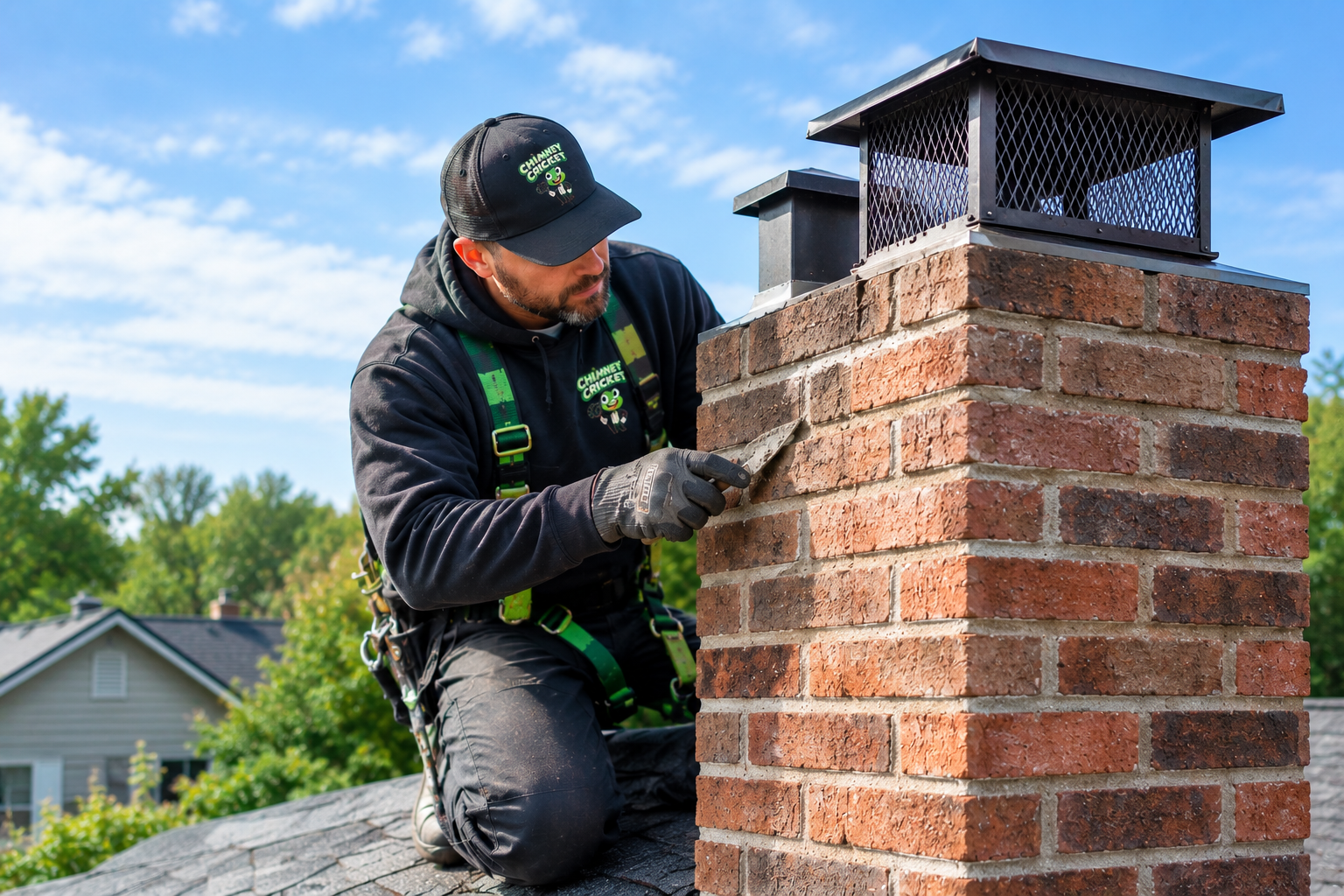
Condition-Based Evaluation
Stack repair recommendations begin with the homeowner’s visible concern and a systematic evaluation of the chimney above the roofline. Chimney Crickets assesses the brick, mortar, crown, cap, flashing, structural alignment and overall stack integrity before selecting a repair approach.
Minnesota Weather Awareness
The chimney stack receives more direct weather exposure per square foot than almost any other structural element on a Minnesota home. Repair planning accounts for freeze-thaw cycling, snow loads, wind exposure, ice accumulation and moisture conditions specific to the stack.
Clear Next Steps
Chimney Crickets explains which stack conditions are present, what level of repair is appropriate and whether related crown, cap, flashing, liner or waterproofing service should also be considered.
What Is a Chimney Stack?
The chimney stack is the visible portion of a masonry chimney that extends above the roofline. It is the section that rises from the point where the chimney penetrates the roof surface upward to the crown and cap at the top.
The chimney stack typically includes:
Exterior brick or stone masonry — The structural walls of the chimney visible above the roof
Mortar joints — The bonding material between each masonry unit
Chimney crown — The concrete or mortar cap covering the top of the stack
Chimney cap — The metal cover over the flue opening
Flue liner — The interior lining visible at the top of the stack
Flashing — The metal and sealant system where the stack meets the roof
Corbelling or decorative coursework — Stepped or decorative brick patterns at the top of some stacks
The chimney stack may be only a few courses tall on a single-story home with an interior chimney, or it may extend several feet on a two-story home or an exterior chimney where more of the structure is above the roofline.
Why the stack is different from the rest of the chimney
The chimney below the roofline is partially protected by the building envelope — walls, attic space, insulation and the roof itself help buffer it from direct weather. The chimney stack above the roofline has no such protection. It stands fully exposed to:
- Direct precipitation on all four sides and the top
- Wind from every direction
- UV radiation without shade
- Temperature extremes without insulation
- Snow and ice contact without drainage
- Physical forces including wind load and thermal movement
This total exposure makes the chimney stack the first section to show deterioration and the most likely section to require repair.
Why the Chimney Stack Is the Most Vulnerable Section
The chimney stack deteriorates faster than the chimney below the roofline for several compounding reasons:
Maximum weather exposure
Every surface of the stack — all four sides plus the top — is exposed to direct precipitation, wind, UV and temperature extremes. The chimney below the roofline may be protected on one, two or three sides by the building structure.
Maximum freeze-thaw exposure
Water absorbed into the stack’s masonry freezes and thaws with every temperature cycle. Because the stack is fully exposed to outdoor air, it experiences more freeze-thaw cycles per year than the chimney sections protected inside the building.
Wind amplification
The stack extends above the roof into unobstructed wind. Wind increases moisture penetration by driving rain horizontally into joints and surfaces, accelerates evaporative cooling that promotes freezing, and creates physical lateral loads that stress mortar joints over time.
Thermal isolation
The stack is thermally isolated from the heated building below. During winter, the stack’s masonry may be at or below outdoor ambient temperature even when the building below is heated — making it more susceptible to frost damage and condensation.
No drainage protection
Unlike walls protected by eaves, overhangs and gutters, the chimney stack has no drainage system. Water runs directly down its faces, saturating mortar joints and brick surfaces with every precipitation event.
Gravity and structural load
The stack bears its own weight and the weight of the crown, cap and any accumulated snow or ice. When mortar deteriorates and bricks loosen, gravity becomes an active force pulling the structure apart.
Signs a Chimney Stack May Need Repair
Some stack damage is visible from the ground. Other conditions require roof-level evaluation. Professional inspection is recommended because ground-level observation may miss critical conditions on the upper courses, crown, rear face and flashing area.
| ⚠️ Symptom | 🔍 What It May Indicate |
|---|---|
| Loose or displaced brick | Mortar failure, freeze-thaw damage, structural movement or impact damage — falling-brick hazard |
| Open, cracked or missing mortar joints | Weather erosion, freeze-thaw fracturing or age; allows water deep into the masonry wall |
| Visible cracks in the stack | Structural movement, settlement, thermal stress, chimney-fire damage or frost fracturing |
| Leaning or tilting appearance | Foundation or footing failure, mortar deterioration on one side, wind load, water-saturated masonry or structural compromise |
| Spalling or flaking brick faces | Moisture has entered the brick and frozen, fracturing the face from within — active freeze-thaw damage |
| Crown damage visible from the ground | Cracks or missing edges at the top of the stack; water entering through the crown accelerates stack deterioration |
| Efflorescence on upper courses | White mineral deposits indicate water is moving through the masonry — the stack is absorbing and transmitting moisture |
| Fallen brick or mortar on the roof | Material has already detached from the stack — immediate evaluation is recommended |
| Water stains at the roofline or ceiling | Water may be entering through deteriorated stack masonry, failed flashing or both |
| Rust on the cap or visible metal | Prolonged moisture exposure affecting components at the stack top |
| Missing courses or gaps in the stack | Advanced deterioration or storm damage — structural compromise possible |
| Vegetation growing from mortar joints | Plant roots indicate deep mortar deterioration and sustained moisture retention |
Safety warning: A chimney stack with loose brick, missing mortar, visible leaning, fallen material or structural cracks may present a falling-masonry hazard. Do not stand near or below a visibly deteriorated stack during wind, storms or freeze-thaw events. Request prompt professional evaluation.
What Causes Chimney Stack Damage?
Multiple conditions contribute to stack deterioration. In Minnesota, these factors often work simultaneously and compound each other.
Freeze-Thaw Cycling
The primary driver of chimney stack deterioration in Minnesota. Water enters mortar joints and brick pores, freezes, expands and fractures the material from within. With more than 50 freeze-thaw cycles per year in the Twin Cities metro, this damage is relentless and cumulative.
Moisture Absorption
Brick and mortar are porous. Rain, snow melt, wind-driven moisture, ice contact and condensation all contribute water to the stack’s masonry. Without periodic maintenance and waterproofing after repairs, the stack absorbs more water each year as surfaces weather and joints open.
Wind Exposure
The stack extends into unobstructed wind above the roofline. Wind drives rain horizontally into mortar joints, creates lateral load stress on the masonry structure and accelerates evaporative cooling that promotes freezing.
Snow and Ice Loading
Heavy snow accumulation on and around the stack creates sustained moisture contact and physical weight stress. Ice formation can wedge into open joints and physically displace brick. Ice dams at the stack base may redirect melt water into flashing and masonry.
Thermal Expansion and Contraction
Minnesota’s temperature range — exceeding 100°F between seasonal extremes — causes brick, mortar and metal components to expand and contract at different rates. This differential movement stresses mortar joints, loosens brick and opens gaps over time.
Mortar Deterioration
Mortar has a finite service life. Depending on the original mix, exposure and maintenance, mortar joints in a chimney stack may begin to fail within 25–50 years. Once joints open, water penetration accelerates the deterioration of both the mortar and the surrounding brick.
Incompatible Previous Repairs
Mortar used in previous repointing that is too hard, too soft or chemically incompatible with the original brick can cause accelerated damage to the adjacent masonry. Hard Portland cement mortar used to repoint soft historic brick is a common and destructive mismatch.
Settlement, Movement or Footing Failure
If the chimney footing settles unevenly, the stack may lean, crack or separate from the building. Settlement-related damage typically produces diagonal cracking patterns and progressive tilting.
Chimney Fire Damage
Intense heat from a chimney fire can damage the stack from the inside — cracking the liner, degrading interior mortar, and potentially weakening the structural masonry above the roofline.
Storm and Impact Damage
Falling branches, hail, wind-driven debris and severe weather events can crack brick, dislodge courses and damage the crown, cap and upper masonry.
Deferred Maintenance
Small conditions — a few open joints, a hairline crown crack, a single loose brick — progress rapidly in Minnesota’s climate when not addressed. The chimney stack deteriorates faster with each passing season because every new defect allows more water to enter and freeze.
Chimney Stack Repair Options by Condition
The appropriate stack repair depends on the type, extent, depth and cause of deterioration — and whether the stack is structurally sound or structurally compromised.
Chimney Stack Repointing
Deteriorated mortar is removed to a specified depth and replaced with fresh mortar suited to the original brick and Minnesota’s climate. Repointing is appropriate when the brick itself is sound but mortar joints have eroded, cracked or fallen out.
When repointing is appropriate:
- Mortar is visibly eroded, cracked or missing in accessible joints
- Brick faces remain intact without widespread spalling
- The stack is structurally plumb and aligned
- Deterioration is concentrated in the mortar joints rather than the brick
Individual Brick Replacement
Spalled, cracked or structurally failed individual bricks are carefully removed and replaced with matching units re-set in appropriate mortar. The number and location of affected bricks determine whether the repair is targeted or more extensive.
Partial Stack Rebuild
When deterioration is concentrated in the upper courses — typically the most exposed section — those courses may be removed and rebuilt without disassembling the entire stack. A partial rebuild may include:
- Removing deteriorated courses above a defined point
- Rebuilding with matching brick and appropriate mortar
- Installing a new crown on the rebuilt section
- Replacing or re-integrating the cap
- Reconnecting or evaluating the flashing
Full Stack Rebuild
When the stack has extensive structural damage, widespread mortar failure, significant leaning, chimney-fire damage or conditions that cannot be addressed by targeted repair, the entire stack above the roofline may need to be disassembled and reconstructed.
A full stack rebuild provides the opportunity to:
- Correct structural alignment
- Use properly matched brick and mortar
- Install a properly designed and sloped crown
- Integrate new flashing with the roof
- Evaluate and address the liner
- Install an appropriate cap
- Apply waterproofing to the completed masonry
- Bring the stack into compliance with applicable standards
Stack Stabilization
If a leaning or structurally compromised stack cannot be immediately rebuilt, temporary stabilization measures may be recommended to reduce the risk of collapse or falling masonry until full repair can be scheduled.
Crown Repair or Replacement
The crown sits on top of the stack and is typically repaired or replaced as part of stack work. Crown service may include sealing, patching, partial rebuild or complete replacement depending on the crown’s condition.
Flashing Repair or Replacement
Stack repair frequently affects the flashing system at the roofline. Re-integration, repair or replacement of step flashing, counter flashing and base flashing may be needed after stack work is completed.
Waterproofing After Stack Repair
After all masonry repairs are complete and mortar has cured, a vapor-permeable water-repellent treatment may be applied to the restored stack to reduce future moisture absorption. Waterproofing should follow — not substitute for — structural repair.
How Chimney Stack Repair in Minnesota Works
Step 1
Describe the Concern
Contact Chimney Crickets and describe what you have noticed about the chimney stack. Helpful information includes:
- Property address in Minneapolis, Bloomington or the South Metro
- Visible damage — loose brick, open joints, cracks, leaning, fallen material
- Location of damage — upper courses, middle of stack, near the roofline, near the crown
- Water stains on interior ceilings or walls near the chimney
- Debris on the roof or ground near the chimney
- Recent storm, wind, ice or hail events
- Known chimney-fire history
- Approximate chimney age
- Previous chimney or masonry repairs
- Whether the property is being purchased or sold
- Photographs of the stack taken from the ground or roof (when safely obtainable)
Step 2
Evaluate the Chimney Stack
Chimney Crickets evaluates the stack from an appropriate access point — not from the ground alone when conditions permit roof or ladder access.
Stack evaluation includes:
- Brick condition — spalling, cracking, looseness, displacement, missing units
- Mortar-joint condition — depth of erosion, cracking, absence, previous repair quality
- Structural alignment — plumb, lean, bulge, separation, movement
- Crown condition — cracks, slope, edges, gaps around flue tiles, sealant
- Cap condition — presence, fit, corrosion, screening, attachment
- Flashing condition — integration with the stack, sealant, metal integrity
- Liner termination — visible condition at the stack top
- Efflorescence, staining and moisture patterns
- Evidence of previous repairs and material compatibility
- Overall structural assessment
Step 3
Identify the Scope of Repair
Evaluation findings determine:
- Whether the damage is cosmetic, moderate or structural
- Whether repointing, brick replacement, partial rebuild or full rebuild is appropriate
- Whether the crown, cap, flashing or liner also need attention
- Whether a structural concern (lean, settlement, footing) exists
- The recommended repair sequence and timing
Step 4
Complete the Repair
Stack repairs are carried out using:
- Brick matched to the original in size, color, porosity and hardness
- Mortar appropriate for the existing masonry and Minnesota’s climate
- Proper joint profiles and tooling
- Crown material suited to horizontal weather exposure
- Flashing integration with the existing or new roofing
- Weather protection for fresh mortar during curing
Step 5
Protect and Document
After repair:
- Waterproofing may be applied after adequate curing
- The cap is installed or confirmed
- Flashing is confirmed or re-integrated
- Findings, repair scope and photographs are documented for the homeowner
- Maintenance recommendations and re-inspection timing are communicated
Partial Stack Rebuild vs Full Stack Rebuild
Homeowners frequently ask whether the stack can be partially repaired or must be fully rebuilt. The answer depends on where and how extensively the damage has progressed.
| Condition | Likely Appropriate Response |
|---|---|
| Mortar erosion with sound brick and straight stack | Repointing — most focused and least invasive repair |
| Scattered spalled bricks with sound mortar elsewhere | Individual brick replacement |
| Upper courses heavily deteriorated, lower courses sound | Partial rebuild from a defined point upward |
| Widespread mortar failure, spalling and structural cracking | Full stack rebuild above the roofline |
| Visible lean, tilt or separation | Structural evaluation followed by full rebuild or stabilization |
| Chimney-fire damage extending through the stack | Full rebuild with liner evaluation |
| Previous repairs with incompatible materials accelerating damage | Remove incompatible work; rebuild affected sections with appropriate materials |
| Stack in acceptable condition except for crown and cap | Crown repair or replacement and cap service — no stack masonry work needed |
Key distinction: A stack that is structurally sound but cosmetically weathered may need only repointing. A stack that is leaning, cracking diagonally or losing material may need partial or full reconstruction. Surface appearance alone does not determine structural adequacy — professional evaluation is essential.
Minnesota Conditions and Chimney Stacks
The chimney stack is the most weather-exposed structural element on a Minnesota home. Understanding how Minnesota’s climate specifically attacks the stack helps homeowners appreciate why timely repair and proper materials matter.
The annual deterioration cycle for a Minnesota chimney stack
| Season | How the Stack Is Affected |
|---|---|
| Spring | Snow melt saturates masonry; freeze-thaw continues into April; moisture migrates deep into opened joints |
| Summer | UV degrades mortar surfaces; thermal expansion stresses joints; rain washes into open joints; curing window for repairs |
| Fall | Cooling temperatures harden sealant; early freeze cycles begin cracking saturated masonry; last window for repair before winter |
| Winter | Peak freeze-thaw damage; snow accumulates on the crown and stack; ice wedges into joints; wind drives moisture horizontally; the stack endures maximum sustained stress |
Why Minnesota stacks deteriorate faster
- More than 50 freeze-thaw cycles per year — each cycle widens existing defects
- Seasonal temperature swings exceeding 100°F — maximum thermal stress on joints
- Heavy seasonal snowfall — sustained moisture contact on every stack surface
- Wind-driven precipitation — horizontal rain reaches joints that vertical rain does not
- Extended cold periods — the stack may remain at or below freezing for weeks
- Mid-winter thaws — introduce water that refreezes within hours
- No protection from the building — the stack has no insulation, walls or overhangs to buffer weather
A chimney stack in Minnesota may deteriorate in 30–40 years what an identical stack in a milder climate would not experience for 60–80 years.
Other Chimney Services
Explore the full range of Chimney Crickets services for Minnesota homeowners:
🔍 Chimney Inspections — Start with a professional evaluation before any repair
🧱 Chimney Repointing — Restore deteriorated mortar joints in Minnesota masonry
👑 Chimney Crown Repair — Seal or rebuild a cracked or damaged chimney crown
🔩 Chimney Flashing Repair — Stop water entry at the roof-chimney junction
💧 Chimney Leak Repair — Trace and resolve active moisture entry
🛡️ Chimney Waterproofing — Protect repaired masonry from future moisture damage
🏗️ Full Masonry Repair — Comprehensive brick and mortar restoration
Important Safety Information
Falling-masonry hazard
A chimney stack with loose brick, missing mortar, visible leaning, cracked courses or fallen material presents a potential falling-masonry hazard. Loose brick or mortar fragments can fall from the stack onto the roof, the ground, walkways, vehicles or people below.
- Do not stand directly below or near a visibly deteriorated chimney stack
- Do not attempt to remove loose brick from a stack without appropriate safety measures
- Keep people, pets and vehicles away from the fall zone beneath a compromised stack
- Request prompt professional evaluation for any stack with visible structural concerns
Stop using the fireplace if:
- The chimney stack appears to lean, bulge or separate
- Brick or mortar is actively falling
- Significant structural cracks are visible
- A chimney fire may have occurred
- Smoke enters the living area
- A carbon monoxide alarm activates
If there is an immediate structural-collapse concern, an active fire, a gas leak or a carbon monoxide emergency, leave the affected area and call emergency services.
Chimney Stack Repair in Minnesota Homeowners Can Request From Chimney Crickets
Chimney Crickets helps Minnesota homeowners understand accessible chimney and fireplace conditions and determine an appropriate next step.
The company’s approach connects inspection findings with condition-based service recommendations. Depending on what is identified, the appropriate next step may involve cleaning, maintenance, repair, moisture protection or additional evaluation.
For a professional chimney stack repair in Minnesota homeowners can request for a chimney or fireplace concern, contact Chimney Crickets.
Chimney Crickets
2012 W 98th St
Bloomington, MN 55431
(612) 280-2467
MinneapolisBloomingtonBurnsvilleEaganApple ValleySavageShakopeePrior LakeLakeville
📍 View more Areas → Not sure if we serve your area? Call (612) 280-2467 to confirm.
Chimney Stack Repair FAQs — Minnesota Homeowners
What is chimney stack repair?
Chimney stack repair is the professional evaluation and restoration of the portion of a masonry chimney that extends above the roofline. It addresses loose brick, deteriorated mortar, structural cracks, leaning, spalling, crown damage and related conditions in the most weather-exposed section of the chimney.
What is a chimney stack?
The chimney stack is the visible portion of a masonry chimney above the roofline. It includes the exterior brick or stone, mortar joints, crown, cap, liner termination and flashing connection. It is the most exposed section of the chimney and typically the first to show deterioration.
When should I request chimney stack repair?
Request evaluation when you notice loose or displaced brick, open mortar joints, cracks in the stack, a leaning or tilting appearance, spalling brick faces, fallen material on the roof or ground, crown damage, efflorescence, water staining at the roofline or near the ceiling, or vegetation growing from joints.
What commonly causes chimney stack damage in Minnesota?
The primary cause is freeze-thaw cycling — water enters the masonry, freezes, expands and fractures the material from within. Contributing factors include wind exposure, snow and ice loading, thermal cycling, mortar deterioration, incompatible previous repairs, settlement, chimney-fire damage and deferred maintenance.
Can Minnesota weather damage a chimney stack?
Yes. The chimney stack is the most weather-exposed structural element on a Minnesota home. It receives direct precipitation, wind, UV, snow, ice and freeze-thaw stress on every surface with no protection from the building envelope.
Is a chimney stack the same as the whole chimney?
No. The chimney stack is specifically the portion above the roofline. The chimney may extend through the home’s interior, through the attic and below the floor to a footing. “Chimney stack repair” refers to work on the exposed section above the roof.
Can chimney stack damage be seen from the ground?
Some conditions — significant leaning, missing brick, large cracks, fallen material — may be visible from the ground. However, many critical conditions including upper-course deterioration, crown cracks, mortar erosion on the rear face and flashing failure require roof-level access to evaluate properly.
Can a chimney stack be repaired or does it need full rebuilding?
It depends on the extent and type of damage. Eroded mortar with sound brick may require only repointing. Scattered spalled bricks may require individual replacement. Heavily deteriorated upper courses may need partial rebuild. Widespread structural damage, significant leaning or chimney-fire damage may require full stack rebuild.
What is the difference between chimney stack repointing and stack rebuild?
Repointing removes deteriorated mortar and replaces it with new mortar while keeping the existing brick in place. A rebuild involves removing and reconstructing part or all of the stack with new or salvaged brick and fresh mortar. Repointing is appropriate when the brick is sound; rebuilding is needed when the brick or structure has failed.
Does the chimney stack affect the rest of the chimney?
Yes. Water entering through a deteriorated stack can damage the liner, interior mortar, framing, insulation and interior finishes below. A structurally compromised stack can affect the chimney below the roofline. Stack condition directly influences the health of the entire chimney system.
Will the chimney be inspected before stack repair?
Yes. The stack’s brick, mortar, structural alignment, crown, cap, flashing and liner termination should all be evaluated before the repair scope is determined. Ground-level observation alone may not reveal the full extent of deterioration.
Can a leaning chimney stack be repaired without rebuilding?
A slight lean caused by cosmetic mortar loss on one side may sometimes be addressed with targeted repointing. A significant lean indicating settlement, footing failure or structural compromise typically requires partial or full rebuild to correct the alignment and restore structural integrity.
How long does chimney stack repair take?
Duration depends on the scope. Targeted repointing may be completed in one to two visits. Individual brick replacement is similar. Partial or full stack rebuilds require more time — including demolition, reconstruction, curing and cap or crown installation. Weather conditions in Minnesota may also affect scheduling.
When is the best time to schedule stack repair in Minnesota?
Late spring through early fall provides the best conditions for mortar curing and outdoor masonry work. Mortar should not be applied when temperatures are expected to drop below freezing within the first 72 hours. Urgent structural concerns should be evaluated promptly regardless of season.
Does chimney stack repair require a permit?
Permit requirements depend on the scope and local jurisdiction. Repointing may not require a permit. Partial or full stack rebuilds, structural modifications or height changes may. Confirm project-specific requirements with the local building authority.
Can waterproofing be applied after stack repair?
Yes. After all mortar has cured, a vapor-permeable water-repellent treatment may be applied to the restored masonry to reduce future moisture absorption. Waterproofing should follow — not substitute for — structural repair.
Is chimney stack repair only for wood-burning fireplaces?
No. Any masonry chimney with a stack above the roofline may need stack repair — regardless of whether it serves a fireplace, furnace, boiler, water heater or is no longer connected to an active appliance.
Can falling chimney brick damage the roof?
Yes. Loose brick, mortar fragments or crown material falling from a deteriorated stack can crack shingles, damage flashing, dent gutters and create safety hazards for people below. Prompt evaluation of a visibly deteriorating stack helps prevent roof damage and personal injury.
What information should I provide when requesting stack repair?
Provide the property address, visible stack damage, chimney age, known repair history, recent storm exposure, whether material has fallen, interior water-stain locations, fireplace or appliance type, and whether the property is being purchased or sold. Photographs are helpful when safely obtainable.
How do I request chimney stack repair in Minnesota?
Call Chimney Crickets at (612) 280-2467 or submit the online service-request form. Include your property address, visible stack damage description and any fallen material, water staining or structural concerns.