
Chimney Crown Repair in Minnesota: Cracks, Deterioration & Water Shedding
CHIMNEY CRICKETS • MASONRY & COMPONENT REPAIR
Chimney crown repair in Minnesota should be based on the evaluated condition of the crown, the masonry it protects and the moisture conditions affecting the chimney — not assumptions about what the chimney needs. Chimney Crickets helps homeowners across Minneapolis, Bloomington and the South Metro evaluate crown cracks, deterioration and poor water shedding before recommending repair, sealing or replacement.
Condition-Based Evaluation
Recommendations begin with the homeowner’s concern and the chimney crown’s accessible condition. The crown, surrounding masonry, flue termination, cap and nearby components are reviewed before a repair approach is selected.
Minnesota Weather Awareness
Crown repair planning accounts for moisture, snow, ice and repeated freeze-thaw cycling. Minnesota conditions are among the most demanding on chimney crowns of any state in the country.
Clear Repair Options
Chimney Crickets explains the visible findings, whether crown sealing, partial repair or full replacement is appropriate, and whether related masonry, flashing, cap or moisture-correction service should also be considered.
What Is a Chimney Crown?
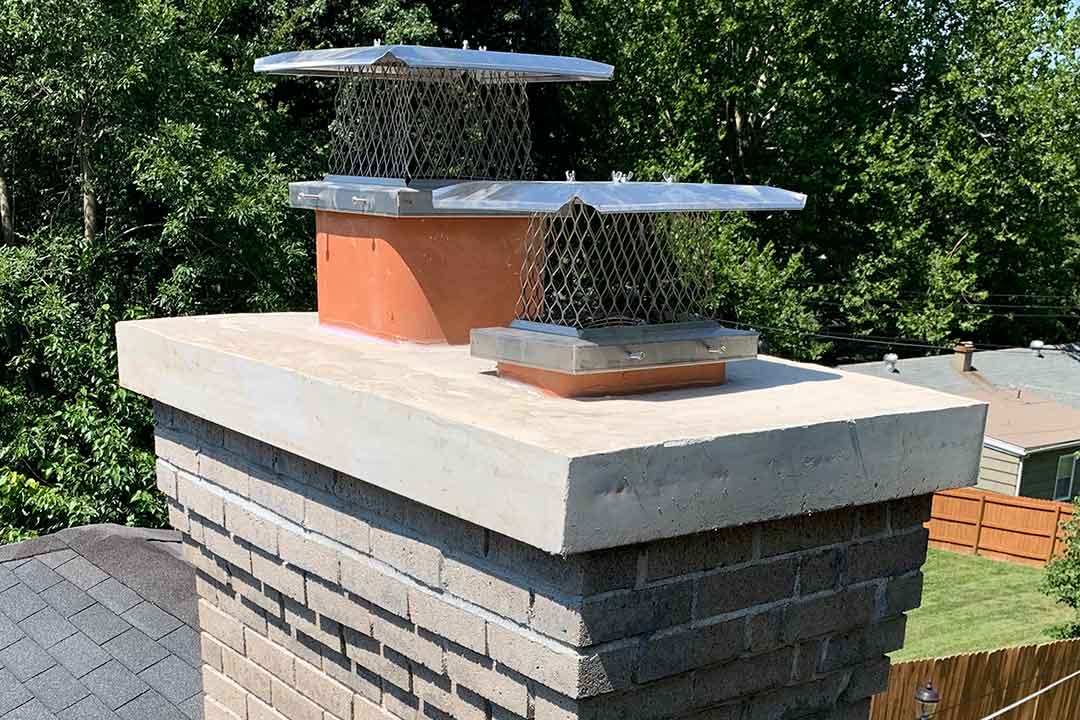
A chimney crown is the flat or sloped surface that covers the top of a masonry chimney around the flue openings. Its primary function is to shed water away from the chimney structure and prevent precipitation from entering the masonry below.
A properly constructed chimney crown should:
- Extend beyond the outer edges of the chimney on all sides
- Slope downward from the flue tile toward the outer edges
- Maintain a drip edge or overhang to direct water away from the brick face
- Form a sealed connection around each flue tile
- Be constructed from durable, weather-resistant material suited to the local climate
When a crown cracks, deteriorates or fails to shed water properly, moisture can reach the masonry beneath — leading to accelerated brick and mortar deterioration, especially in Minnesota’s freeze-thaw climate.
What Is Chimney Crown Repair?
Chimney crown repair is a professional service that addresses cracks, deterioration, missing material, poor drainage or structural failure in the crown so that it can continue protecting the masonry below from water entry.
Depending on the condition, crown repair may involve:
- Sealing minor surface cracks with an elastomeric crown sealant
- Filling and patching localized deterioration
- Rebuilding damaged or missing crown sections
- Completely removing and replacing a failed crown
- Correcting insufficient slope or missing overhang
- Sealing gaps around the flue tile or tiles
- Coordinating with masonry, cap or flashing service when multiple components are involved
Crown repair does not replace the chimney cap, repair flashing, restore deteriorated mortar joints, or address every source of chimney leakage. If other components are also contributing to water entry, additional evaluation and service may be recommended.
Professional Chimney Crown Repair for Minnesota Homes
Chimney Crickets helps Minnesota homeowners evaluate the crown’s condition before selecting a repair approach. Many chimney crowns in Minnesota were constructed from a basic mortar mixture rather than a properly designed concrete crown — making them more susceptible to cracking and moisture penetration over time.
A crown that has been exposed to decades of Minnesota weather without maintenance may show:
- Hairline cracks that have widened over time
- Missing or crumbled material along the edges
- Gaps between the crown and the flue tile
- Poor slope that allows water to pool
- Surface deterioration from freeze-thaw cycling
- Separation between the crown and the chimney masonry
- Previous patch attempts that have failed
The appropriate repair depends on the extent, depth and cause of the deterioration — not just the visible surface condition.
What Causes Chimney Crown Deterioration?
Several factors can contribute to crown failure. In Minnesota, the combination of moisture and freezing temperatures is the most significant.
Freeze-Thaw Cycling
Water that enters crown cracks freezes, expands and fractures the material further with each cycle. The Twin Cities metro can experience more than 50 freeze-thaw cycles per year, making this the single most destructive force on chimney crowns in Minnesota.
Unsuitable Original Construction
Many chimney crowns were built using a standard mortar mixture rather than a properly proportioned concrete or Portland cement blend. Mortar crowns tend to crack and deteriorate faster than properly designed crowns because they are not formulated for direct horizontal weather exposure.
Insufficient Slope or Overhang
A crown that is flat, has no overhang or slopes toward the flue rather than toward the outer edges will not shed water properly. Standing water accelerates deterioration.
Missing or Failed Sealant
A crown that was previously sealed may fail when the sealant ages, becomes brittle, separates or is no longer vapor-permeable. Failed sealant can trap moisture beneath the coating and accelerate damage.
Settlement or Chimney Movement
Chimney movement from settling, footing concerns, lateral wind loads or thermal expansion may crack a crown that was structurally sound at installation.
Age and Cumulative Exposure
Even a properly built crown will eventually deteriorate under decades of precipitation, UV exposure, wind and freeze-thaw cycling without maintenance or re-sealing.
Ice and Snow Load
Heavy snow accumulation, ice formation and ice-dam conditions near the chimney can subject the crown to sustained moisture exposure and mechanical stress.
Signs a Chimney Crown May Need Repair
Different crown symptoms can have different causes. An on-site evaluation determines the extent of damage and which components are involved.
| ⚠️ Symptom | 🔍 What It May Indicate |
|---|---|
| Crown Cracks | Freeze-thaw damage, age, movement, or an unsuitable original mix; may allow water deep into masonry |
| Broken or Missing Edges | Advanced deterioration, weather exposure or structural movement; reduces water-shedding ability |
| Surface Deterioration | Eroded, pitted, flaking or crumbling crown material — often from years of moisture and freeze-thaw cycling |
| Water Pooling on the Crown | Insufficient slope, settling, or improper original construction — accelerates further deterioration |
| Gaps Around the Flue Tile | Separation between crown and flue allows direct water entry into the chimney interior |
| Moisture or Staining Below the Crown | Water may be entering through crown defects and migrating into the masonry, visible as efflorescence, staining or damp areas |
| Interior Water Stains Near the Chimney | May involve the crown, but could also involve flashing, the cap, masonry or another component |
| Damaged Cap With No Crown Protection | A failing cap combined with crown cracks may expose the chimney to water from multiple entry points |
Important: Crown damage is often not visible from the ground. Many homeowners are unaware of crown deterioration until water staining, masonry damage or other symptoms appear lower on the chimney or inside the home. A roof-level or ladder evaluation is typically required to confirm the crown’s condition.
Why Chimney Crown Repair in Minnesota Is Different
Minnesota places extreme demands on chimney crowns that milder climates do not.
Temperature range: Seasonal temperatures can swing more than 100°F between summer highs and winter lows
Freeze-thaw frequency: More than 50 annual cycles in the Twin Cities metro area
Snow contact: Heavy seasonal snowfall means the crown surface may sit beneath snow and ice for extended periods
Wind-driven moisture: Horizontal precipitation may reach crown surfaces that vertical rain does not
Extended wet periods: Spring thaws and fall rains create prolonged moisture contact before freezing resumes
UV and thermal cycling: Summer sun on a dark crown surface followed by rapid cooling creates additional surface stress
Because of these conditions, chimney crowns in Minnesota may need repair, sealing or replacement earlier than identical crowns in milder states. Repairs should use materials rated for freeze-thaw exposure and allow adequate curing before the next cold season begins.
Industry guidance recommends annual chimney inspection, which should include the crown and other exterior components — a recommendation that is especially important in Minnesota’s climate.
Chimney Crown Repair Options Based on Condition
Crown repair is not one-size-fits-all. The appropriate approach depends on the type, extent and depth of deterioration, the original construction method, the number of flues, the surrounding masonry condition and whether moisture is still actively entering the system.
Elastomeric Crown Sealing
For crowns with minor surface cracks and no significant structural damage, a flexible, vapor-permeable elastomeric crown coat may be applied over the existing surface. This treatment fills hairline cracks, bridges small gaps and provides a waterproof barrier that flexes with temperature changes.
Elastomeric sealants are specifically designed for chimney crowns and differ from standard masonry sealers, roof caulk or silicone products that may trap moisture or fail to adhere properly.
Crack Filling and Localized Patching
Individual cracks or small deteriorated areas may be filled with a compatible repair material before sealing. This is appropriate when the surrounding crown material remains structurally intact.
Partial Crown Rebuild
When deterioration is concentrated along one edge, around a specific flue or in a defined section, the damaged portion may be removed and rebuilt without replacing the entire crown.
Full Crown Replacement
Extensive cracking, structural failure, missing material across the surface, or a crown built with an unsuitable mix may require complete removal and replacement with a properly designed crown. A replacement crown should include:
- Adequate thickness for the chimney size
- Proper slope from the flue tile toward the outer edges
- A drip edge or overhang past the chimney face
- A sealed bond around each flue tile
- Materials appropriate for Minnesota’s freeze-thaw climate
- Adequate curing time before weather exposure
Related Component Service
Crown repair may need to be coordinated with:
Cap replacement — A missing or damaged cap allows precipitation directly into the flue
Flashing repair — Failed flashing may contribute to water entry near the crown
Masonry repointing — Deteriorated mortar joints below the crown may also need attention
Waterproofing — A vapor-permeable masonry treatment may be applied to surrounding brick after crown and masonry repairs are complete
Chimney inspection — A more detailed evaluation may be needed if the crown damage suggests interior or concealed concerns
Important: Crown repair should not be treated as a substitute for needed masonry, flashing, cap or liner service. Similarly, waterproofing should not be used instead of crown repair when the crown itself has failed.
Chimney Crown vs Chimney Cap: What Is the Difference?
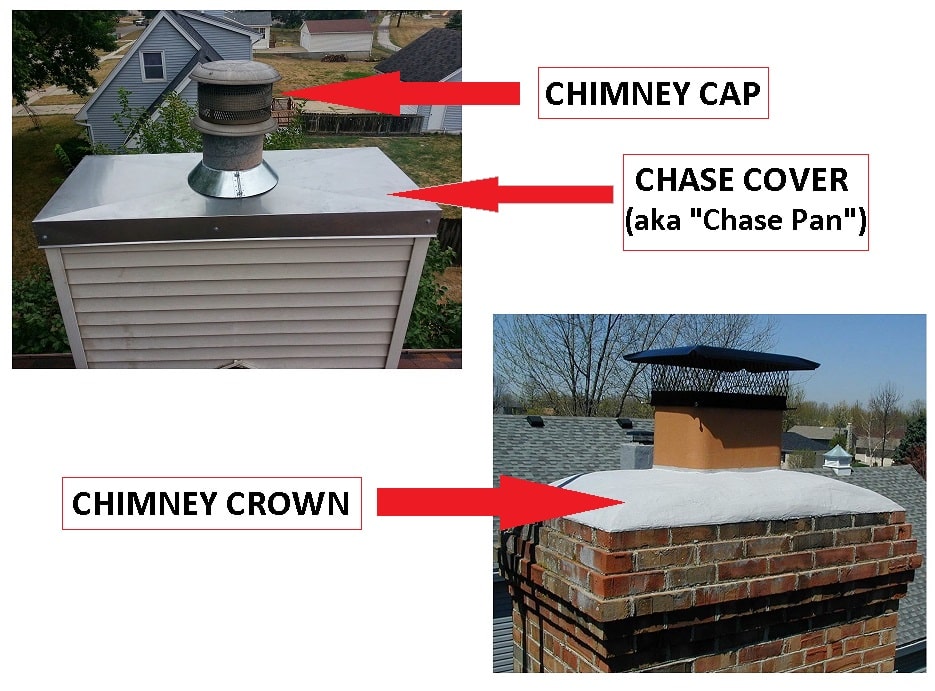
Homeowners frequently confuse these two components. They are different parts of the chimney with different functions.
| Feature | Chimney Crown | Chimney Cap |
|---|---|---|
| Location | Covers the entire top surface of the masonry chimney around the flues | Sits over the flue opening or openings |
| Material | Concrete, mortar, or a Portland cement mix cast in place | Metal — typically stainless steel, copper, or galvanized steel |
| Primary function | Sheds water away from the chimney masonry | Limits rain, snow, debris and animal entry into the flue |
| Failure signs | Cracks, crumbling, pooling, gaps around flue tiles | Rust, missing screening, loose attachment, displacement |
| Service | Sealing, patching, partial rebuild, or full replacement | Repair or replacement with a properly fitted cap |
| Can be missing | Uncommon — but some chimneys have a deteriorated or barely functional crown | Common — many chimneys have no cap at all |
Both components help protect the chimney from water, but they protect different parts in different ways. A chimney can have a damaged crown and a functional cap — or a new cap and a failed crown. Each should be evaluated independently.
How Chimney Crown Repair in Minnesota Works
Step 1
Describe the Concern
Contact Chimney Crickets and describe what you have noticed about the chimney or its performance. Helpful information includes:
- Property address in Minneapolis, Bloomington or the South Metro
- Visible crown cracks or crumbling from the ground or roof
- Water stains on the chimney exterior or interior walls
- Efflorescence or white mineral deposits on brick below the crown
- Debris or material falling from the chimney top
- Rust on the cap or damper
- Recent storm, ice or wind damage
- Known service or repair history
- Whether the property is being purchased or sold
- Photographs of the crown taken from the roof (when safely obtainable)
Step 2
Evaluate Accessible Conditions
A qualified technician evaluates the crown from an appropriate access point — not from the ground alone. The evaluation includes the crown surface, edges, slope, flue-tile connections, cap, nearby masonry and flashing as applicable.
Ground-level or photograph-only assessments may not reveal the full extent of crown deterioration, the depth of cracks, pooling patterns, or gaps around flue tiles.
Step 3
Confirm the Repair Scope
Evaluation findings determine whether the crown needs elastomeric sealing, crack filling, partial rebuild, full replacement, or whether related cap, masonry, flashing or waterproofing service should also be included.
The recommended scope is based on confirmed conditions — not an automatic upsell to full replacement when a seal or patch is appropriate, and not a superficial seal when the crown actually requires rebuilding.
Step 4
Complete the Repair
Crown repair work is performed using materials and methods suited to Minnesota’s climate. Curing times are respected before the crown surface is exposed to precipitation or freezing conditions.
Step 5
Review Findings and Next Steps
After the repair, Chimney Crickets reviews relevant findings and any additional conditions identified during the work. Whether follow-up inspection, masonry repair, waterproofing or other service should be considered is communicated clearly.
Chimney Crown Repair and Minnesota Conditions
Minnesota weather places extreme stress on chimney crowns. The crown is the most horizontally exposed surface on a masonry chimney — it receives direct rain, sits beneath accumulated snow, absorbs UV radiation in summer, and endures more freeze-thaw contact than any other chimney component.
Minnesota conditions that commonly contribute to crown deterioration:
- Freeze-thaw cycling — Water in crown cracks freezes, expands and widens the crack with each cycle
- Snow and ice accumulation — Snow sitting on the crown surface creates prolonged moisture contact
- Wind-driven precipitation — Horizontal rain drives water into cracks and gaps that vertical rain may not reach
- Spring and fall moisture — Extended wet periods allow deep moisture absorption before freezing resumes
- Thermal stress — Summer heating followed by rapid cooling contributes to surface-level fracturing
- Ice dam effects — Ice near the chimney base may redirect melt water toward the chimney top
For these reasons, chimney crowns in Minnesota benefit from periodic evaluation even when no visible symptoms are apparent from the ground. Damage that is minor at the beginning of one winter season can become structurally significant by the following spring.
Important Safety Information
Stop using the fireplace and request professional evaluation if:
- Large crown pieces or masonry fragments are falling from the chimney
- The chimney structure appears to lean, shift or separate
- Active water entry is occurring during precipitation
- A carbon monoxide alarm activates
- Smoke enters the living area
- A chimney fire may have occurred
If there is an immediate structural concern, an active fire or a carbon monoxide emergency, leave the affected area and contact emergency services. Crown deterioration can progress faster than visible interior symptoms suggest.
Other Chimney Services
Explore the full range of Chimney Crickets services for Minnesota homeowners:
🔍 Chimney Inspections — Start with a professional evaluation before any repair
🧱 Chimney Repointing — Restore deteriorated mortar joints in Minnesota masonry
👑 Chimney Crown Repair — Seal or rebuild a cracked or damaged chimney crown
🔩 Chimney Flashing Repair — Stop water entry at the roof-chimney junction
💧 Chimney Leak Repair — Trace and resolve active moisture entry
🛡️ Chimney Waterproofing — Protect repaired masonry from future moisture damage
🏗️ Full Masonry Repair — Comprehensive brick and mortar restoration
Chimney Crown Repair in Minnesota Homeowners Can Request From Chimney Crickets
Chimney Crickets helps Minnesota homeowners understand accessible chimney and fireplace conditions and determine an appropriate next step.
The company’s approach connects inspection findings with condition-based service recommendations. Depending on what is identified, the appropriate next step may involve cleaning, maintenance, repair, moisture protection or additional evaluation.
For a professional chimney crown repair in Minnesota homeowners can request for a chimney or fireplace concern, contact Chimney Crickets.
Chimney Crickets
2012 W 98th St
Bloomington, MN 55431
(612) 280-2467
MinneapolisBloomingtonBurnsvilleEaganApple ValleySavageShakopeePrior LakeLakeville
📍 View more Areas → Not sure if we serve your area? Call (612) 280-2467 to confirm.
Chimney Crown Repair FAQs — Minnesota Homeowners
What is chimney crown repair?
Chimney crown repair is a professional service that addresses cracks, deterioration, missing material or poor water shedding in the concrete or mortar surface covering the top of a masonry chimney. The scope depends on the extent of damage, the original construction and the chimney’s evaluated condition.
When should I request chimney crown repair in Minnesota?
Request an evaluation when you notice visible crown cracks, crumbling edges, water staining on the chimney exterior, efflorescence on brick below the crown line, interior moisture near the chimney, rust on the cap or damper, or debris falling from the chimney top.
What commonly causes chimney crown damage?
The most common cause in Minnesota is freeze-thaw cycling — water enters cracks, freezes, expands and fractures the material further with each cycle. Unsuitable original construction, insufficient slope, age, settlement and missing sealant also contribute.
Can Minnesota weather damage a chimney crown?
Yes. Minnesota’s combination of moisture, snow, ice, UV exposure, wind and more than 50 annual freeze-thaw cycles makes the state one of the most demanding environments for chimney crowns in the country.
Can chimney crown damage be seen from the ground?
Sometimes large cracks or missing material are visible from ground level. However, many crown problems — including surface deterioration, pooling, hairline cracks and gaps around flue tiles — require roof-level or ladder access to evaluate properly.
What is the difference between a chimney crown and a chimney cap?
A chimney crown is the concrete or mortar surface covering the top of the masonry chimney around the flues. A chimney cap is a metal cover that sits over the flue opening to limit rain, debris and animal entry. They are different components that protect different parts of the chimney.
Can a cracked chimney crown be sealed without full replacement?
Yes, in many cases. Minor surface cracks in an otherwise structurally sound crown can be sealed with a flexible elastomeric crown sealant. Full replacement is typically recommended only when the crown has extensive cracking, structural failure or was built with an unsuitable material.
What is an elastomeric chimney crown sealant?
An elastomeric crown coat is a flexible, waterproof sealant specifically designed for chimney crowns. It fills hairline cracks, bridges small gaps and remains flexible through temperature changes. It differs from standard caulk, roof sealant or impermeable masonry coatings.
Does every chimney have a crown?
Most masonry chimneys have some form of crown, although many older chimneys were constructed with only a thin mortar cap that deteriorates faster than a properly designed concrete crown. Some chimneys have crowns that are so deteriorated they are barely functional.
Does every damaged crown need full replacement?
No. Minor cracks may need sealing. Localized deterioration may need patching. Only one edge may need rebuilding. Full replacement is appropriate when damage is widespread, structural integrity is compromised or the original construction was unsuitable.
Will the chimney be inspected before crown repair?
Yes. The crown, flue connections, cap, nearby masonry and flashing should be evaluated from an appropriate access point before the repair scope is determined. Crown deterioration may also indicate related masonry, flashing or cap concerns that should be addressed.
Can chimney crown repair prevent chimney leaks?
Properly repairing the crown reduces one significant source of water entry. However, chimney leaks can also involve the cap, flashing, masonry, mortar joints or the roof connection. The water path should be evaluated rather than assuming the crown is the only source.
How long does chimney crown repair take?
Duration depends on the scope. Elastomeric sealing of a sound crown may be completed in a single visit. A partial or full crown rebuild requires additional time for forming, pouring and proper curing before the surface is exposed to weather.
When is the best time to schedule crown repair in Minnesota?
Late spring through early fall is generally optimal. Warmer temperatures support proper material curing, and the repair can be completed before freeze-thaw cycling resumes. However, urgent crown failure or active water entry should be evaluated promptly regardless of season.
Can chimney crown repair be done separately from masonry repair?
Yes, when the surrounding masonry is in acceptable condition. If mortar joints, brick or other masonry also need attention, coordinating the work may be more efficient and may protect the crown repair from continued moisture entry through adjacent surfaces.
Will waterproofing be applied after crown repair?
A vapor-permeable masonry waterproofing treatment may be recommended for the chimney’s brick surfaces after the crown and mortar joints have been repaired. Waterproofing should not substitute for crown repair and should not trap moisture inside the masonry.
Is chimney crown service only for wood-burning fireplaces?
No. Any masonry chimney with a crown — regardless of the connected appliance — may need crown evaluation and repair. Gas-appliance chimneys, furnace flues and unused chimneys can all have deteriorated crowns that allow water entry.
Can I use roofing cement or caulk to seal a chimney crown?
This is not recommended. Standard roofing cement, silicone caulk and non-breathable sealants may trap moisture beneath the coating, fail to bond properly or accelerate the deterioration they are intended to prevent. A chimney-specific elastomeric crown product is designed for this application.
What information should I provide when requesting crown repair?
Provide the property address, visible symptoms, how long the concern has been present, any recent storm or ice exposure, known chimney service history, and whether the property is being purchased or sold. Photographs taken from the roof are helpful when safely obtainable.
How do I request chimney crown repair in Minnesota?
Call Chimney Crickets at (612) 280-2467 or submit the online service-request form. Include your property address, a description of visible crown damage or related symptoms, and any relevant photographs.