
Chimney Rebuild Minneapolis: 5 Critical Warning Signs
As the crisp October winds sweep through the Twin Cities, homeowners are excitedly preparing their fireplaces for winter. However, this seasonal shift also brings a hard deadline for exterior home maintenance. If your brickwork is severely deteriorating, determining if you need a chimney rebuild Minneapolis professionals can execute is an absolute necessity before the deep freeze sets in.
Your chimney stands exposed to the absolute worst of Minnesota’s brutal weather. Decades of driving rain, heavy snow, and aggressive sub-zero temperatures inevitably break down the strongest masonry. When bricks begin to severely spall, mortar completely washes out, and the structure starts to lean, simple repairs are no longer an option.
Because of our extreme upper-Midwest climate, ignoring severe masonry decay is a dangerous gamble. This comprehensive guide explains exactly why a chimney rebuild Minneapolis homes require is sometimes unavoidable. We will cover the five critical warning signs of structural failure, how to distinguish between a partial rebuild and basic tuckpointing, and why October is your absolute last chance to fix it.
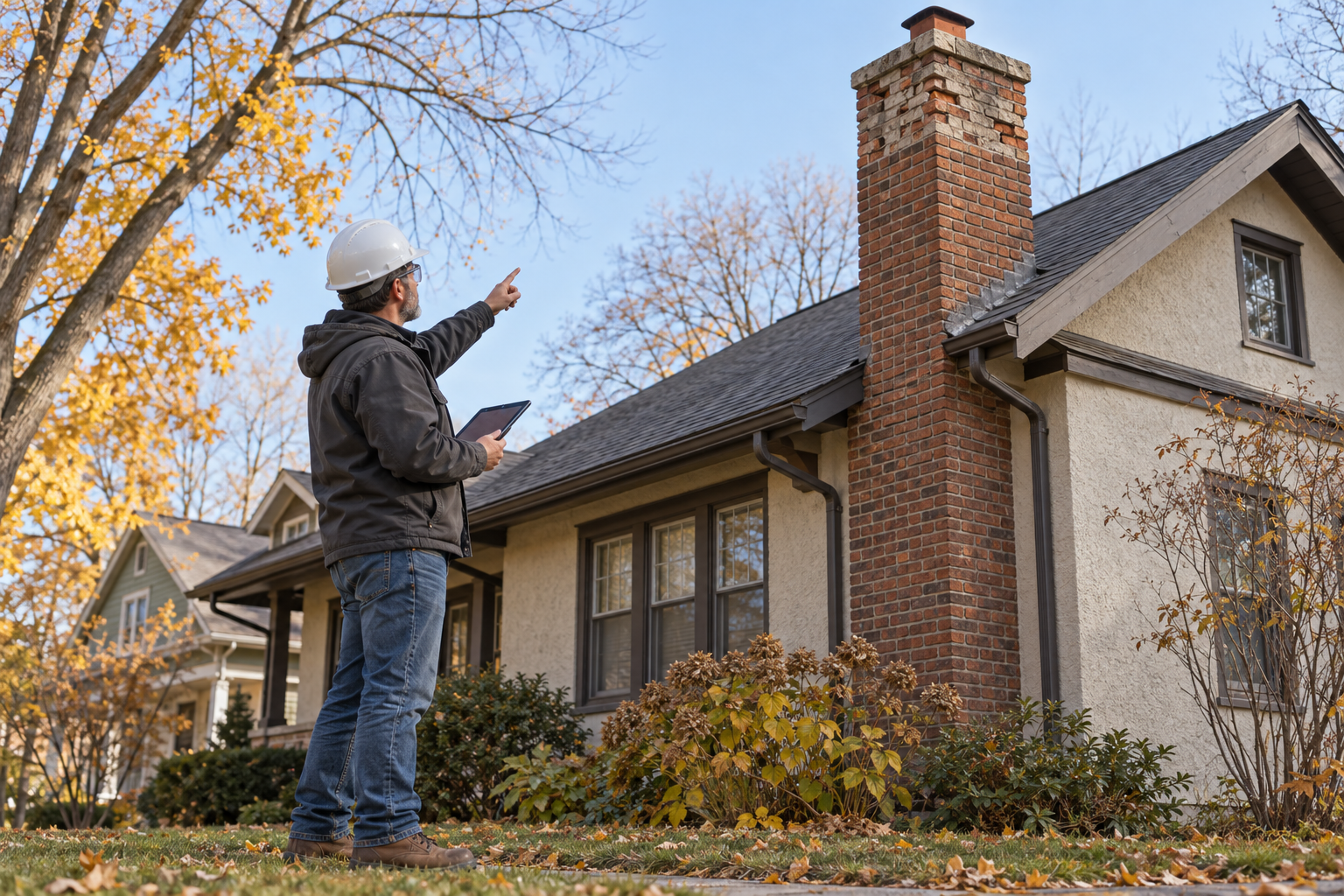
Why a Chimney Rebuild Minneapolis Homes Need is Crucial
A brick chimney is an incredibly heavy structure, often weighing several tons. The mortar joints act as the crucial glue holding this massive column safely above your roofline. When that structural integrity is lost, the entire chimney becomes a severe hazard.
Over time, continuous exposure to the elements causes the mortar to degrade and the bricks to shatter. Once the structural seal is entirely broken, water gains a direct, unrestricted pathway into your home’s framing, leading to catastrophic internal damage.
The Brutal Minnesota Freeze-Thaw Cycle
To understand the urgency of a chimney rebuild, Minneapolis residents must understand our state’s punishing freeze-thaw cycles. During a typical autumn or spring in the Twin Cities, daytime temperatures can easily rise above freezing, only to plummet well below zero overnight.
When rain or melting snow seeps into loose, porous brickwork, it settles deep inside the masonry. As the temperature drops, that trapped water freezes and expands by 9%. This immense internal pressure acts like a microscopic wedge, blowing the mortar and bricks apart from the inside out.
This vicious cycle repeats dozens of times per season. In just a few short years, what started as a single wobbly brick transforms into a massive structural failure that only a partial chimney rebuild Minneapolis masonry experts provide can solve.
Structural Hazards and Toxic Mold Risks
When bricks completely fail, water doesn’t just damage the exterior; it travels downward into your home. Moisture easily bleeds into the surrounding wooden roof framing, attic insulation, and interior drywall.
Warm, dark, damp spaces inside your walls create the perfect breeding ground for toxic mold. According to the EPA’s strict guidelines on moisture and mold control, indoor mold can begin growing within just 24 to 48 hours of a water intrusion event. A proactive, structural masonry restoration is the only way to prevent this costly interior nightmare and potential roof collapse.
Partial vs. Full Chimney Rebuild Minneapolis Guidelines
When homeowners discover severe decay, they often panic, assuming the entire chimney must be torn down to the foundation. Fortunately, this is rarely the case.
What is a Partial Chimney Rebuild?
A partial rebuild generally involves tearing down the chimney structure from the very top down to the roofline (or just below the flashing). Because the masonry exposed above the roof takes the hardest beating from the weather, it fails much faster than the protected masonry inside your home or attic.
A professional masonry crew will carefully demolish the degraded brickwork. They will then rebuild the structure from the roofline up, using brand new bricks, fresh mortar, new [metal chimney flashing], and a properly poured concrete [chimney crown].
When Tuckpointing Isn’t Enough
Homeowners often hope for a cheaper [chimney tuckpointing] repair. Tuckpointing involves grinding out old mortar and replacing it with fresh mortar. However, tuckpointing only works if the bricks themselves are still structurally sound.
If the bricks are shattering, turning to dust, or if the entire chimney is leaning, tuckpointing is like putting a band-aid on a broken leg. In these severe cases, a partial chimney rebuild Minneapolis contractors perform is the only safe, code-compliant option.
5 Critical Warning Signs You Need a Chimney Rebuild
Catching structural decay early is your best defense against a sudden winter collapse. Look for these five critical warning signs that indicate your chimney’s structure has failed beyond simple repairs.
1. Severe Spalling and Shattered Bricks
Spalling is a severe condition where the actual face of the brick begins to pop off, flake, or shatter. If you find massive chunks of brick resting on your roof or the lawn below, you have a critical moisture problem.
Spalling is the direct result of advanced water saturation and freezing. When more than 25% of the bricks on your chimney are severely spalling, the structure has lost its load-bearing capacity. At this stage, a chimney rebuild Minneapolis masons recommend is absolutely necessary.
2. A Visibly Leaning or Tilting Structure
Step back into your yard and look at your chimney’s profile. Does it look like it’s leaning away from the house or tilting heavily to one side?
When mortar completely washes out on one side of the chimney due to severe weather exposure, the structural balance is lost. A leaning chimney is an extreme emergency. It requires an immediate partial or full rebuild to prevent it from crashing through your roof during a heavy winter snowstorm.
3. Deep Mortar Washout and Missing Joints
While minor mortar decay can be tuckpointed, severe mortar washout cannot. If you can physically see straight through the mortar joints, or if the bricks are resting directly on top of each other with no mortar left between them, the structure has failed.
When mortar is entirely missing, the chimney relies solely on gravity to stay upright. High winds can easily topple a chimney in this condition, mandating a prompt chimney rebuild Minneapolis experts must handle.
4. A Completely Destroyed Chimney Crown
The chimney crown is the concrete slab that covers the top of the masonry structure. Its primary job is to shed water off the top of the chimney and away from the brickwork.
If the crown is completely shattered, missing large chunks, or separated entirely from the bricks below, it allows massive volumes of water to pour directly into the internal chimney chase. Once the internal structure is saturated and freezes, the masonry will blow apart from the inside, forcing a structural rebuild.
5. Massive Water Leaks Inside the Firebox
Water always follows the path of least resistance. When the exterior bricks become completely compromised, water travels right through the chimney chase and into your living room.
If you see deep puddles in your firebox, severe water stains on the ceiling near the fireplace, or heavy rust forming on your metal damper, your exterior masonry has failed. A rusted damper is a severe carbon monoxide hazard, a danger heavily emphasized by safety authorities like the NFPA (National Fire Protection Association).
Safe Homeowner Observations vs. Dangerous DIY
As a homeowner, your primary job is observation and documentation. You do not need to be a masonry expert to protect your home from winter water damage.
What You Can Safely Check from the Ground
You can gather incredibly valuable information for your local chimney technician without ever leaving the safety of the ground.
- Conduct a Monthly Binocular Inspection: Make it a habit to walk around your property in the fall. Use binoculars to scan the chimney top for leaning masonry, spalling bricks, or a shattered crown.
- Check the Firebox: Use a flashlight to inspect the interior damper for heavy rust or the firebox walls for white efflorescence stains.
- Document the Decay: If you spot signs that a chimney rebuild Minneapolis professionals handle is needed, take clear photos with your smartphone. These visual details greatly assist your technician during the initial consultation.
Why You Must Never Climb the Roof
❌ NEVER attempt to climb your roof to inspect or repair your chimney.
We cannot stress this enough: do not climb onto your roof to inspect crumbling masonry. Steep pitches, slick autumn leaves, and structurally unstable chimneys present severe, life-threatening fall hazards.
Furthermore, diagnosing and repairing severe masonry decay requires specialized tools, structural supports, and expert knowledge. Slapping hardware-store cement over a leaning chimney is incredibly dangerous. Always rely on a professional evaluation for high-altitude structural masonry repairs.
Professional Chimney Rebuild Minneapolis Solutions
When you hire a reputable local company like Chimney Crickets, you receive a thorough, safety-first restoration that removes the guesswork and secures your home.
Comprehensive Structural Diagnostics
A certified technician will safely access your roof using professional fall-protection gear. They will evaluate the structural integrity of the entire chimney, testing the mortar depth and assessing the brickwork for irreversible freeze-thaw decay.
They will also perform a of the interior flue using specialized cameras to ensure no hidden water damage has compromised the safety of the chimney liner. For peace of mind regarding industry safety standards, homeowners should always reference national authorities like the CSIA (Chimney Safety Institute of America). Additionally, platforms like Verified Chimney Pros offer highly valuable guidance on finding fully vetted, insured masonry contractors.
The October Deadline for Masonry Repairs
When battling severe decay, homeowners are racing against the clock. October is the absolute best and final time to execute a chimney rebuild Minneapolis weather will allow before the spring.
If you wait until November or December, the deep winter freeze arrives. Mortar requires temperatures consistently above freezing to cure correctly. Winter masonry work requires expensive, heated scaffolding enclosures to prevent the wet mortar from freezing and failing instantly. By rebuilding your failing chimney in October, you save money, ensure proper mortar curing, and guarantee a safe fireplace season.
Finalizing with Industrial Waterproofing
Once the partial rebuild is complete and the new mortar has cured, the final step in protecting your investment is applying a professional-grade [masonry water repellent].
This breathable sealant stops exterior rain and snowmelt from penetrating the new brick while allowing internal moisture vapors to safely escape. This ensures your newly rebuilt chimney will survive decades of Minnesota winters.
Our Services
Explore the full range of Chimney Crickets services for Minnesota homeowners:
🔍 Chimney Inspections — Start with a professional evaluation before any repair
🧱 Chimney Repointing — Restore deteriorated mortar joints in Minnesota masonry
👑 Chimney Crown Repair — Seal or rebuild a cracked or damaged chimney crown
🔩 Chimney Flashing Repair — Stop water entry at the roof-chimney junction
💧 Chimney Leak Repair — Trace and resolve active moisture entry
🛡️ Chimney Waterproofing — Protect repaired masonry from future moisture damage
🏗️ Full Masonry Repair — Comprehensive brick and mortar restoration
Serving Minnesota Homeowners
Chimney Crickets serves homeowners throughout Bloomington, Minneapolis, the South Metro and surrounding Minnesota communities.
Frequently Asked Questions
What is a partial chimney rebuild Minneapolis homes typically need?
A partial rebuild usually involves safely tearing down the degraded masonry from the top of the chimney down to the roofline, and then rebuilding it with fresh brick and mortar.
How do I know if I need a rebuild instead of just tuckpointing?
If your chimney is visibly leaning, if the bricks are severely spalling (shattering), or if the mortar is completely washed out through the entire depth of the brick, a structural rebuild is required.
How long does a partial chimney rebuild take?
Depending on the size of the chimney and the weather conditions, an experienced professional masonry crew can typically complete a partial roofline rebuild in 2 to 4 days.
Why did my chimney fail so quickly?
The primary culprit is Minnesota’s freeze-thaw cycle. Water enters porous brick and mortar. When temperatures drop below freezing, that water turns to ice, expands by 9%, and shatters the masonry from the inside.
Do you match the new bricks to my old house?
Yes. Professional masons take great care to source replacement bricks and mix mortar that matches both the structural strength and the historic visual color profile of your existing home.
Is it safe to use my fireplace if my chimney is leaning?
No. A leaning chimney indicates severe structural instability. Using the fireplace could allow extreme heat to escape through the compromised masonry into your home’s framing, creating a massive fire hazard.
Will a rebuild fix my chimney leak?
Yes. A proper rebuild replaces the degraded masonry, installs a new concrete crown, and applies new [metal chimney flashing], which completely seals the chimney against water intrusion.
Does homeowners insurance cover a chimney rebuild?
Generally, no. Insurance typically only covers sudden, catastrophic damage (like a fallen tree). Gradual structural deterioration caused by weathering, aging, and standard freeze-thaw cycles is considered routine maintenance.
Can you rebuild a chimney in the middle of winter?
It is highly discouraged and very expensive. Mortar requires temperatures consistently above freezing to cure correctly. Winter masonry work requires costly, heated scaffolding enclosures.
What is a chimney crown?
The crown is the flat concrete slab covering the top layer of masonry. It is rebuilt during a structural tear-down to ensure water sheds correctly away from the new bricks.
What is spalling?
Spalling is when the outer face of a brick flakes, chips, or completely pops off due to extreme water saturation and freeze-thaw damage. Severely spalled bricks must be replaced.
Why is there white powder on my chimney?
That is called efflorescence. It is a definitive indicator that moisture is moving through the brickwork due to a leak, dissolving internal salts, and leaving them on the surface.
How much does a chimney rebuild Minneapolis experts provide cost?
Costs vary widely depending on the height of the chimney, the steepness of the roof, and the extent of the teardown. A professional inspection is required to provide an accurate, written estimate.
Should I install a chimney cap after the rebuild?
Absolutely. A custom-fitted stainless steel [chimney cap] is required to keep rain, snow, and nesting wildlife out of your newly rebuilt flue system.
What areas does Chimney Crickets serve?
Chimney Crickets is based in Bloomington, MN, and proudly serves homeowners within an approximate 35-mile radius, encompassing the entire Minneapolis, St. Paul, and Twin Cities metro area.