
Sooty Fireplace Glass Minnesota: Essential Guide
Sooty fireplace glass Minnesota homeowners notice is more than a cleaning problem. The film on your glass shows how the fire is burning, how air moves through the firebox, and how much residue may be building in the flue. Knowing what the pattern means helps you decide what to change at home and when to call a professional.
Here is the short answer. A light, dry dusting after a hot, bright fire is common. Heavy black film, sticky brown residue, or soot that returns quickly after cleaning points to wet wood, restricted airflow, or creosote. Those signs deserve a professional look before the next fire.
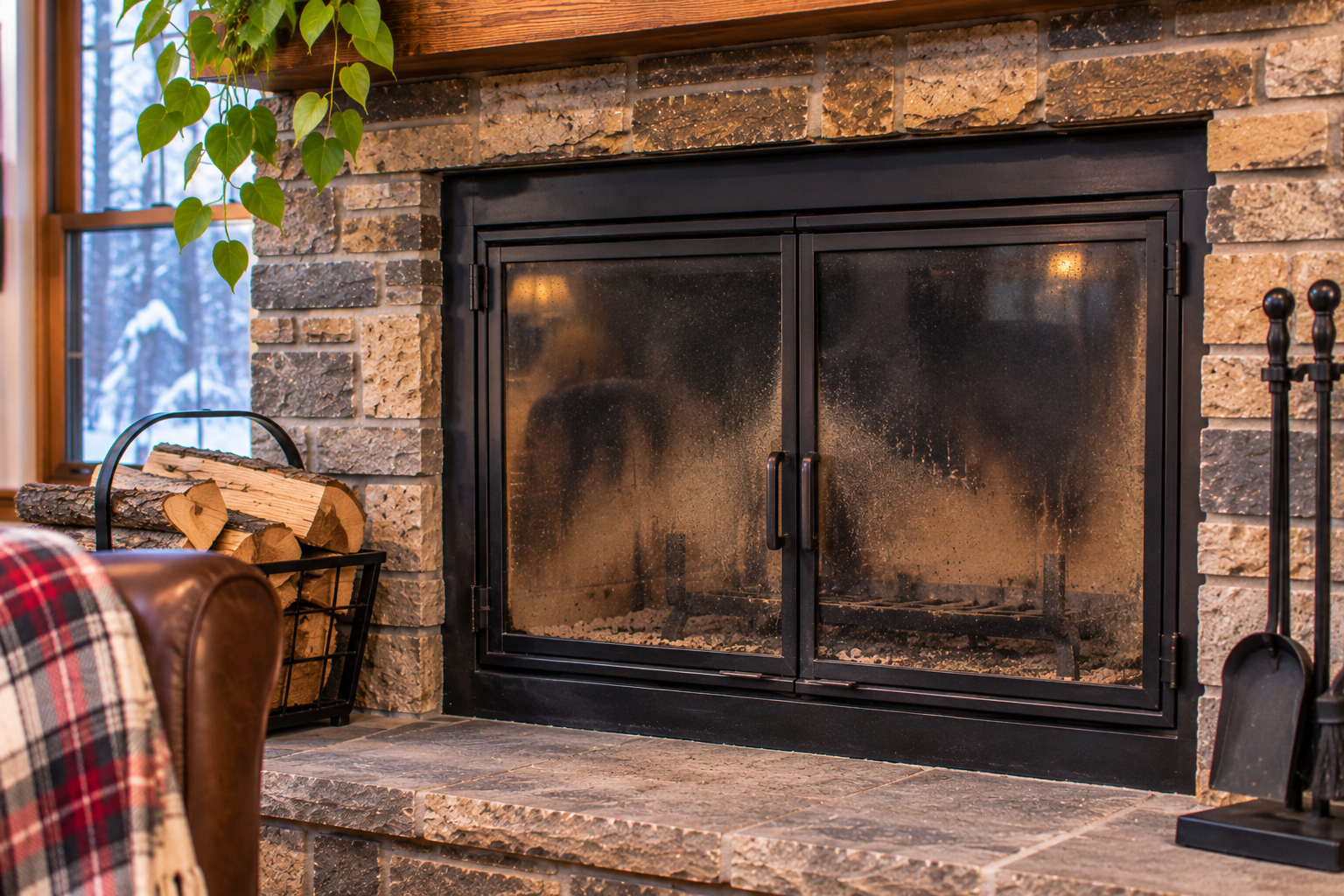
Why Sooty Fireplace Glass Minnesota Winters Are Common
Glass sits at the front of the firebox, so it catches the smoke that leaves the fire. Every log sends particles and vapors toward the opening. Some of those particles stick to the cooler glass and stay there.
Minnesota heating seasons run long. Many Twin Cities homes start fires in October and keep them burning into April. More hours of burning mean more chances for residue to collect on the glass and inside the flue.
Cold weather also changes how a chimney draws. When outdoor temperatures drop well below freezing, the flue walls cool, and smoke vapor condenses before it exits cleanly. The glass often shows that change first.
Wind adds another challenge. Strong gusts across a roofline can push air down the flue, a condition called downdraft. A downdraft can drive smoke back toward the room and leave a fresh film on the glass.
How Winter Weather Affects Chimney Water
Freeze-thaw cycles matter here too. Water that enters through a damaged crown, cap, or flashing can freeze, expand, and widen small cracks over time. Moisture inside the system can also affect draft and residue. A chimney leak inspection can locate where water is getting in.
What Different Sooty Fireplace Glass Patterns Mean
Not all soot looks the same. Color, texture, and location offer useful clues. Use these observations to describe the problem clearly to a technician, not to diagnose the chimney yourself.
Light, Dry Dusting
A powdery gray or light black dust that wipes away easily usually follows a short, hot fire. It often covers the glass evenly. Light dusting alone is common, but notice how quickly it comes back.
Heavy Black Film
A thick black coating that smears when touched often means the fire burned cool or smoky. Wet wood, closed air controls, and smoldering fires with little flame are common causes. Heavy film reduces visibility and suggests more residue is leaving the firebox than it should.
Dark Soot Along the Top Edge
Soot that gathers along the top edge or upper corners may show where smoke turns toward the flue. Uneven sooting along one side can reflect a draft change. Photograph the pattern before cleaning, so a technician can compare it later.
Sticky, Brown, or Tar-Like Residue
Glossy, brown, or tar-like deposits need more caution. These often connect to creosote, the residue that forms when unburned wood vapors cool and condense. Scrubbing hard can scratch the glass, and the deposit may point to a flue problem. A chimney cleaning technician can remove buildup safely once the stage is known.
Film That Returns Quickly
If the glass looks clean and turns dark again within a few fires, the cause has not changed. Repeated sooting usually means the wood, the fire, or the draft still needs attention. Keep a short log of wood type, moisture, and burn times so you can explain the pattern clearly.
Common Causes of Sooty Fireplace Glass Minnesota Homeowners Face
Wet Wood and Low Fire Temperature
Wet wood is the most common cause, and it is often the easiest to fix. Water in the log cools the fire, because energy goes into boiling moisture instead of burning gases. The result is more smoke and more soot on the glass. The U.S. Environmental Protection Agency’s Burn Wise program recommends wood with 20 percent moisture content or less.
Air Controls and Airflow
Air controls regulate how much oxygen reaches the fire. Closing them too far starves the flame, which slows combustion and leaves more unburned particles to coat the glass.
Many fireplaces run best with air fully open during the first few minutes, then reduced to a steady, bright flame. Check your appliance’s manual for specific settings. Adjust controls from the front of the fireplace only.
Flue Blockage, Liner Damage, and Creosote
A partly blocked flue, damaged liner, or heavy creosote buildup can change how smoke exits. When draft weakens, smoke lingers in the firebox and spills toward the glass. These problems sit inside the chimney, where only a trained technician can see and measure them.
Signs the Draft May Be Weak
Smoke that puffs into the room when you open the door, a smoky odor while the fire burns, or soot that appears within a few fires can all point to weak draft. These clues warrant a professional evaluation. A homeowner should never test the flue by reaching inside it.
Why Sooty Fireplace Glass Matters for Safety
When sooty fireplace glass Minnesota homeowners notice keeps returning, the glass is often a warning window. The larger risk may sit behind it. Heavy soot can mean creosote is building in the flue, and creosote is the main chimney fire hazard tied to regular fireplace use.
How Glass Soot Connects to Creosote
The Chimney Safety Institute of America (CSIA) describes creosote in three stages. Stage 1 is loose, dry soot that brushes away relatively easily. Stage 2 is flaky or crusty buildup that clings to the liner. Stage 3 is glazed, tar-like coating that is very hard to remove and creates serious fire risk.
The glass alone cannot tell you which stage is present. Sticky, heavy sooting may accompany later stages, but only a technician can confirm the condition of the flue. A glass pattern should prompt an inspection rather than a guess.
Carbon Monoxide and Smoke Spillage
Sooty glass can also signal smoke spillage, when smoke enters the room instead of rising up the flue. Spillage can expose household members to carbon monoxide, a gas you cannot see or smell. Test every carbon monoxide and smoke alarm before the first fire, and install CO alarms on each level of the home and near sleeping areas.
What You Can Safely Check on Sooty Fireplace Glass Minnesota
These checks happen at floor level, with the fireplace cold and fully out. None require climbing onto the roof, reaching into the flue, or touching the chimney exterior.
Review Your Firewood and Burn Habits
Start with the fuel. Stack wood off the ground, let it season, and check moisture with a pin-type meter on freshly split pieces. Burn small, hot fires instead of packing the firebox with damp logs.
Look at the Glass and Door Seal From the Front
Stand in front of the fireplace with the firebox cold. Look for cracks or chips in the glass, and confirm it sits flat in its frame. Check the door gasket for flattened, brittle, or missing sections, then close the door and see whether it seals fully.
Photograph the Pattern Before Cleaning
Take daylight photos of the glass from the front. Note where the soot sits, whether it wipes off, and how quickly it returns. Those photos give a technician useful information before any work begins.
Clean the Glass Only When It Is Cold
Wait until the firebox and glass are completely cool. Use a cleaner made for fireplace glass, or a damp cloth with a small amount of glass cleaner, and wipe in gentle circles. Avoid abrasive pads, razor blades, and oven cleaners, which can scratch or damage the glass surface.
Cleaning the glass removes the symptom, not the cause. If the film returns quickly, the flue still needs evaluation.
Test Your Alarms
Press the test button on every smoke alarm and carbon monoxide alarm in the home. Replace weak batteries and any unit that fails the test. Working alarms give early warning if smoke or gas reaches living space.
Work That Belongs to Chimney Professionals
Some tasks carry fall, fire, or structural risk. The table below separates what homeowners can observe from work that requires trained technicians.
| Homeowner Observations | Professional-Only Work |
|---|---|
| Photograph the glass pattern from the front | Inspect the flue, liner, and smoke chamber |
| Check the glass for cracks and the door gasket | Evaluate the damper, firebox, and smoke shelf |
| Test smoke and carbon monoxide alarms | Assess draft and smoke spillage |
| Track wood type, moisture, and burn habits | Remove creosote from the flue |
| Clean cold glass with a gentle cleaner | Repair liners, masonry, crowns, caps, and flashing |
Why the Flue Stays With Professionals
The flue is where the most serious danger hides. Climbing to the roof, reaching into the chimney, or running a brush through the flue creates fall and fire risks. Trained technicians can inspect the flue safely and explain what they find.
When to Call a Professional About Sooty Fireplace Glass Minnesota
Call a professional when an observation raises a question. A prompt evaluation costs far less than a chimney fire or a repair after water damage has spread.
Warning Signs That Need Prompt Attention
- Heavy black or sticky film that returns quickly after cleaning
- Tar-like or glossy deposits on the glass or near the firebox opening
- Smoke or odors that enter the room during normal use
- Smoke that spills out when the door opens
- Cracked glass or a damaged door gasket
- A damper that sticks or cannot be confirmed open
If you see any of these signs, schedule a chimney inspection before lighting another fire.
Chimney Fire Warning Signs
A chimney fire may sound like a roaring freight train or a jet engine. Other signs include popping or banging sounds, dense smoke from the top of the chimney, sparks near the cap, and unusual heat in nearby walls.
If you suspect a chimney fire, get everyone out of the home first. Call 911 from a safe location outside. Do not try to fight the fire or inspect the chimney yourself, and schedule a professional inspection before using the fireplace again.
What a Professional Inspection Covers
A technician evaluates the full system, from the firebox through the flue, liner, smoke chamber, damper, crown, cap, and flashing. Many inspections use a video camera to view the flue interior, so nobody needs to climb inside.
Level 1 and Level 2 Inspections
The National Fire Protection Association (NFPA) publishes NFPA 211, which defines chimney inspection levels. A Level 1 inspection covers readily accessible parts of the system. A Level 2 inspection adds areas such as attics and crawl spaces and often includes video scanning of the flue.
Level 2 inspections are commonly recommended after a chimney fire, when fuel or appliances change, or during a home sale. Ask your technician which level fits your situation and why.
Cleaning, Repairs, and Relining Decisions
If the flue has buildup, chimney cleaning removes it. If a crown, cap, or flashing has failed, chimney repair may stop water from reaching the flue. If the liner is cracked or deteriorated, chimney relining may be the right solution.
Ask for written findings with photos. Comparing reports from year to year shows whether soot patterns and flue conditions are stable or changing.
Choosing a Chimney Professional in the Twin Cities
Chimney Crickets is based in Bloomington and serves homeowners across Minneapolis and the Twin Cities, within about 35 miles of the metro. Comparing options before booking helps you find a good fit. Look for a technician who explains findings clearly and answers questions before work begins.
Use Verified Chimney Pros as a starting point when you research qualified professionals in your area.
Questions to Ask Before Booking
- Does the inspection include the flue, or only the firebox?
- Will you explain the creosote stage with photos?
- Can you assess draft and smoke spillage?
- Which repairs are urgent, and which can wait until spring?
Sooty Fireplace Glass Minnesota Checklist for Homeowners
Use this checklist before and during the season:
Before the first fire
- Glass checked from the front, with no cracks
- Door gasket intact, and the door seals fully
- Wood seasoned to 20 percent moisture or less
- Carbon monoxide and smoke alarms tested
- Chimney inspected within the past year, with a written report on file
During the season
- Fires kept small and bright rather than smoldering
- Glass pattern photographed each month
- Smoke and odors watched during each fire
After the season
- Glass cleaned once it is completely cold
- Notes and photos saved for the next inspection
Next Steps for Sooty Fireplace Glass Minnesota Homes
Sooty fireplace glass Minnesota homeowners see is useful information. Start with dry wood, safe observations, and careful cleaning. Then book a professional evaluation when the pattern returns, turns sticky, or comes with smoke in the room.
Our Services
Explore the full range of Chimney Crickets services for Minnesota homeowners:
🔍 Chimney Inspections — Start with a professional evaluation before any repair
🧱 Chimney Repointing — Restore deteriorated mortar joints in Minnesota masonry
👑 Chimney Crown Repair — Seal or rebuild a cracked or damaged chimney crown
🔩 Chimney Flashing Repair — Stop water entry at the roof-chimney junction
💧 Chimney Leak Repair — Trace and resolve active moisture entry
🛡️ Chimney Waterproofing — Protect repaired masonry from future moisture damage
🏗️ Full Masonry Repair — Comprehensive brick and mortar restoration
Serving Minnesota Homeowners
Chimney Crickets serves homeowners throughout Bloomington, Minneapolis, the South Metro and surrounding Minnesota communities.
Frequently Asked Questions
What does sooty fireplace glass Minnesota homeowners see usually mean?
Light dusting after a hot fire is usually normal. Heavy black, sticky, or quickly returning soot often points to wet wood, restricted airflow, or creosote in the flue. A professional should evaluate any pattern that keeps coming back.
Is a little soot on fireplace glass normal?
Yes, a light, dry film after a well-run fire is common. It should wipe off easily and should not return within a few fires. If it does, treat the pattern as a reason to investigate.
Why does my fireplace glass get sooty so quickly?
Common causes include wet firewood, closed or partly closed air controls, and smoldering fires with little flame. Weak draft can also push smoke toward the glass. Keep a log of wood and burn habits to help identify the cause.
Can wet firewood cause sooty fireplace glass in Minnesota?
Yes, wet wood is one of the most common causes. Water cools the fire and produces more smoke and residue. The EPA’s Burn Wise guidance recommends wood at 20 percent moisture content or less.
Does sooty glass mean my chimney has creosote?
It can, but the glass alone cannot confirm it. Sticky or heavy sooting may accompany creosote, and the CSIA describes three stages of buildup. Only a professional inspection can identify the stage inside the flue.
Is sooty fireplace glass a chimney fire risk?
It can be, especially when creosote is present in the flue. Thick, glazed creosote is the main fuel source for a chimney fire. Heavy soot is a reason to schedule an inspection before the next fire.
How do I clean fireplace glass safely?
Wait until the firebox and glass are fully cold. Use a cleaner made for fireplace glass or a damp cloth, and wipe gently in circles. Avoid abrasive pads, razor blades, and oven cleaners that can scratch the glass.
Should I use oven cleaner on sooty fireplace glass?
No, oven cleaners are harsh chemicals that can damage glass coatings and create unsafe fumes. Use a product made specifically for fireplace glass. Follow the manufacturer’s instructions for any special glass coating.
What air control setting reduces soot on fireplace glass?
Many fireplaces run cleanest with air fully open during startup, then reduced to a steady, bright flame. Closing controls too far can starve the fire and increase smoke. Check your appliance’s manual, and adjust controls only from the front.
Can a damaged door gasket cause soot on the glass?
A worn or missing gasket can let air leak around the door, which can change how the fire burns. It can also let smoke escape into the room. Check the gasket from the front when the fireplace is cold, and have a professional evaluate any damage.
What is smoke spillage, and how does it relate to glass soot?
Smoke spillage happens when smoke enters the room instead of rising up the flue. Sooty glass combined with smoke or odors in the room can signal weak draft. A technician can assess draft and spillage safely.
Should I test carbon monoxide alarms if my fireplace glass is sooty?
Yes, test every carbon monoxide and smoke alarm in the home. Replace weak batteries and any unit that fails the test. Carbon monoxide is colorless and odorless, so working alarms are an important safeguard.
How often should a Minnesota chimney be inspected if the glass gets sooty?
Many homeowners who burn wood schedule an annual inspection. If the glass shows heavy or recurring soot, schedule an evaluation sooner. Ask the technician whether a Level 2 inspection makes sense for your home.
Can freeze-thaw cycles affect how my fireplace draws?
Freeze-thaw cycles can widen cracks in crowns, caps, and flashing, allowing water into the chimney. Moisture and damage can affect draft and residue over time. If you also see water staining, a professional leak inspection is a good next step.
When should I call Chimney Crickets about sooty fireplace glass?
Call when soot is heavy, sticky, or returns quickly after cleaning, or when smoke enters the room. Chimney Crickets, based in Bloomington, serves Minneapolis, the Twin Cities, and communities within about 35 miles. Reach the team at (612) 280-2467 or visit https://chimneycrickets.net/.