
Fireplace Ash Management Minnesota: Essential Guide
Fireplace ash management Minnesota homeowners can count on starts with one clear rule: leave a thin layer of ash in the firebox, and remove the rest only after it is completely cold. A layer about one inch deep protects the firebox floor and helps the next fire start. Deep piles, however, block airflow and can hide embers for days.
Good fireplace ash management Minnesota habits protect your home, your family, and your chimney. This guide explains how much ash to leave, how to remove it safely, where to store it through a long winter, and when to call a professional.
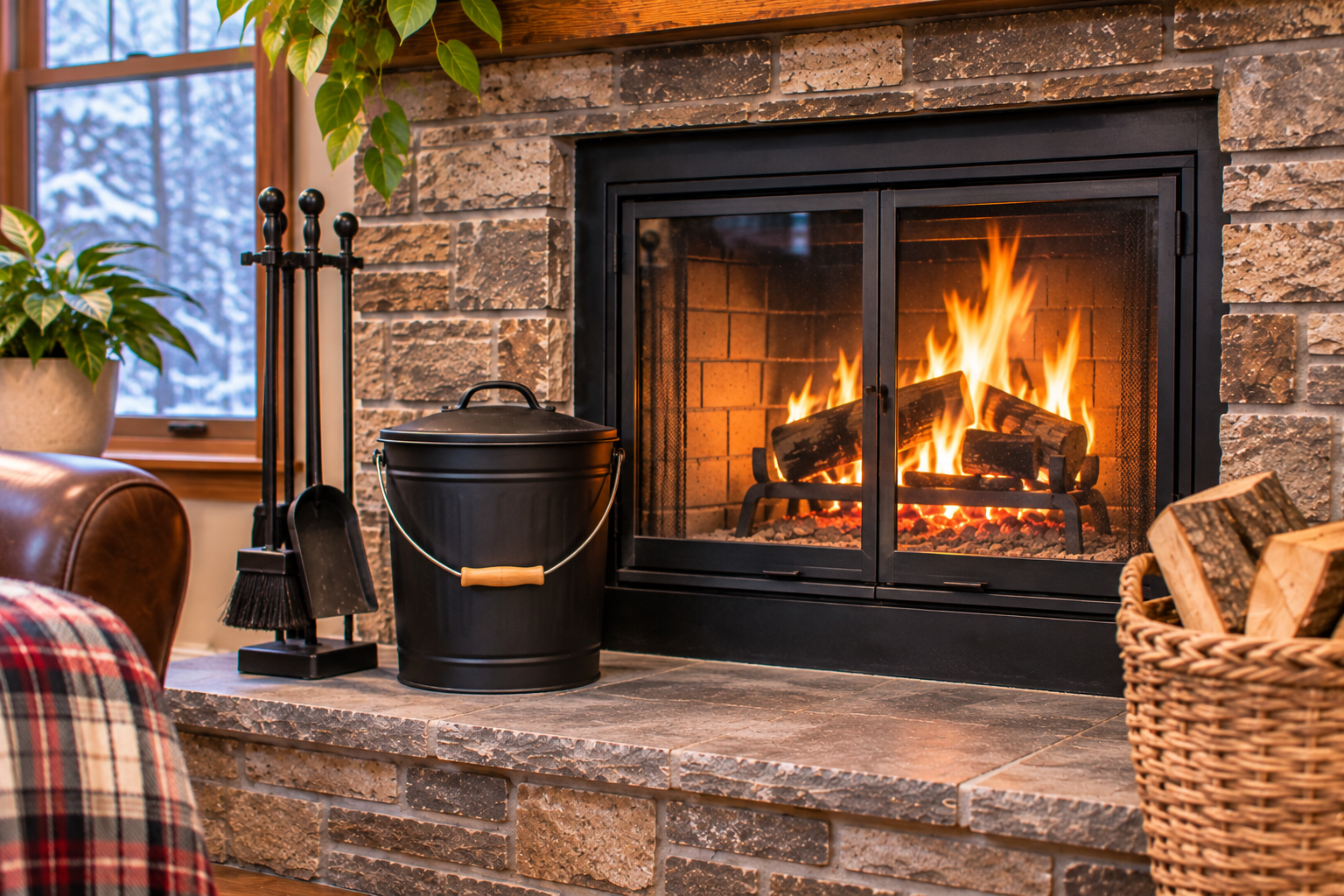
Why Fireplace Ash Management Minnesota Homes Cannot Ignore
Ash looks harmless. It is soft, gray, and often cool on top. Underneath, embers can stay hot long after the flames are gone.
Minnesota heating seasons run long. Many Twin Cities homes burn fires for months at a time, so ash builds up steadily from fall through spring. A little ash after each fire can turn into a deep pile before anyone notices.
Buried Embers Can Stay Hot for Days
Coals buried under the top layer can hold heat for several days. Ash should never go into a cardboard box, paper bag, or plastic trash can. A container that seems safe on Monday can still be dangerous on Thursday if embers were hiding in it.
Deep Ash Changes How the Fire Burns
Ash that rises toward the grate restricts the air that reaches the flames. A starved fire burns slowly and produces more smoke. That smoke leaves residue in the flue, which is where creosote begins.
How Much Ash Should You Leave in the Firebox?
For most wood-burning fireplaces, leave about one inch of ash on the firebox floor. Remove the excess once ash reaches the grate, covers the air openings, or starts to limit the fire. Confirm the depth in your appliance manual first.
Core Fireplace Ash Management Minnesota Rules
Many chimney professionals suggest keeping about one inch of ash on the firebox floor. That layer insulates the firebox bottom and gives new kindling a stable base. Removing every trace of ash after each fire is unnecessary.
Some manufacturers specify a different depth, and inserts or prefabricated fireboxes may have their own rules. When the manual and this guide differ, follow the manual.
Signs the Ash Is Too Deep
- Ash reaches the grate or covers the air openings
- Flames sit low, smolder, or struggle to stay lit
- Ash builds up near the front opening or glass door
- Ash blocks access to the ash pit door
When you see these signs, remove the excess after the firebox is fully cold. Never dig through a firebox while embers could still be active.
Safe Ash Removal Steps for Minnesota Fireplaces
Fireplace ash management Minnesota homes need a repeatable process. Follow these steps in order, because each one lowers the chance that hidden embers reach a container or the room.
Step 1: Confirm the Fire Is Completely Out
Wait until the last fire has burned out and the ash is fully cold. Many fire safety guides recommend waiting at least three days before handling ash. Plan removal for a day when no fire is planned.
Step 2: Use Metal Tools Dedicated to Ash
Use a metal shovel, scoop, or ash pan. Keep these tools for ash only, and store them away from kindling and wood. Work slowly, and remove ash in small amounts.
Step 3: Control Dust and Avoid Household Vacuums
Ash dust irritates the eyes and lungs, so consider wearing a dust mask. Do not use a standard household vacuum on fireplace ash, because hidden embers can ignite the bag or motor. Use only a vacuum rated for ash, and only when the ash is fully cold.
Step 4: Move Ash to a Closed Metal Container
Place cold ash in a metal container with a tight-fitting lid. Keep the lid closed at all times. Never add trash, leaves, or other combustible materials.
Where to Store Ash Outdoors Through a Minnesota Winter
Container and Location Rules
Store the container outside on a noncombustible surface such as concrete, brick, or gravel. Keep it at least 10 feet from the house, garage, shed, deck, and any woodpile. The National Fire Protection Association (NFPA) publishes home fire safety guidance that supports this kind of clearance.
Winter Challenges for Minnesota Homeowners
Minnesota winters make a sound fireplace ash management Minnesota routine harder but more important. Snowbanks can block access, and drifting snow can bury a container. Clear a path before the first hard freeze, and mark the container location so it is easy to find after a storm.
Never store ash in an attached garage, on a wood deck, or against siding. Cold outdoor air does not make ash safe. A container tucked into a snowbank can still hold heat for days.
How Ash Habits Affect Creosote and Chimney Fire Risk
Smoldering Fires Feed Creosote
When ash chokes the fire, combustion slows. Slow, smoky fires release more unburned particles and vapors into the flue. Over time, those deposits harden into creosote.
The Chimney Safety Institute of America (CSIA) describes creosote in three stages. Stage 1 is loose, dry soot. Stage 2 is flaky or crusty buildup, and Stage 3 is glazed, tar-like coating that is very hard to remove and creates serious fire risk.
Keeping airflow open is a core part of fireplace ash management Minnesota homeowners can control. The U.S. Environmental Protection Agency’s Burn Wise program promotes dry wood and efficient fires that produce less residue. If buildup is already present, a chimney cleaning technician can remove it once its stage is known.
Airflow and Draft Problems
Air reaches the fire through the front controls and, in many designs, from below the grate. Blocked air paths weaken the fire and can push smoke into the room.
If smoke spills into the room or sooty glass returns after ash builds up, schedule an inspection. Do not try to adjust the chimney or flue yourself.
Safe Observations vs. Professional-Only Work
Homeowners can safely handle the firebox floor and monitor the room. The flue, liner, damper, cap, and roof belong to trained technicians.
| Safe Homeowner Tasks | Professional-Only Work |
|---|---|
| Check ash depth from the front when the fire is cold | Inspect the flue, liner, and smoke chamber |
| Remove ash from the firebox floor when fully cold | Remove creosote from the flue |
| Store sealed ash in a metal container outdoors | Evaluate the damper, cap, crown, and flashing |
| Look for visible cracks at the firebox front | Repair masonry, liners, or firebox components |
| Note smoke, odors, and draft changes in the room | Diagnose draft and spillage inside the chimney |
Never climb onto the roof, reach up into the chimney, enter the flue, or attempt structural repairs. Those tasks carry serious fall and fire risks, and trained professionals should handle them.
When to Call a Professional About Ash and Firebox Problems
Warning Signs That Need Prompt Attention
Fireplace ash management Minnesota homeowners should watch for these warning signs:
- Ash that returns deep within a few fires
- Smoke or odors that enter the room during normal use
- Sooty, sticky, or tar-like deposits near the firebox opening
- Cracked firebrick, loose mortar, or a damaged ash pit door
- A damper that sticks or cannot be confirmed open or closed
If you notice any of these signs, schedule a chimney inspection before lighting another fire.
Chimney Fire Warning Signs
A chimney fire can sound like a roaring freight train or a jet engine. Other warning signs include popping or banging sounds, dense smoke from the top of the chimney, sparks near the cap, and intense heat from the chimney or nearby walls.
What to Do Right Away
Get everyone out of the home first. Call 911 from a safe location outside. Do not try to put out the fire or inspect the chimney yourself, and schedule a professional inspection before using the fireplace again.
What a Professional Inspection Checks Beyond the Ash Pit
A technician reviews the whole system, from the firebox through the flue, liner, smoke chamber, damper, crown, cap, and flashing. Many chimney inspection services include video scanning, so nobody has to climb inside. Ash handling is only one part of that picture.
Level 1 and Level 2 Inspections
NFPA 211 defines chimney inspection levels. A Level 1 inspection covers the readily accessible parts of the system. A Level 2 inspection adds areas such as attics and crawl spaces and often includes video scanning of the flue.
Cleaning, Repair, and Relining Decisions
If buildup is present, professional cleaning removes it safely. Water entering through a failed cap or crown may call for a chimney leak inspection and chimney repair. A cracked or deteriorated liner may need chimney relining.
Ask for written findings with photos. Comparing reports from year to year shows whether conditions are stable or changing.
Choosing a Chimney Professional in Bloomington
Chimney Crickets is based in Bloomington and serves homeowners across Minneapolis and the Twin Cities, within about 35 miles of the metro. Compare options before you book. A good technician explains findings clearly, puts recommendations in writing, and answers your questions before any work begins.
Use Verified Chimney Pros as a starting point when you research qualified professionals in your area.
Questions to Ask Before Booking
- Does the inspection cover the firebox, flue, and damper, or only the ash area?
- Will you provide written findings with photos?
- Can you explain the creosote stage you find?
- Which repairs are urgent, and which can wait until spring?
Fireplace Ash Management Minnesota Checklist for the Season
Before the first fire
- Ash depth checked from the front, around one inch
- Ash container with a tight lid, stored outside
- Chimney inspected within the past year, with a written report on file
- Carbon monoxide and smoke alarms tested
After each fire
- Ash left to cool for several days
- Ash removed with metal tools, in small amounts
- Ash moved into a closed metal container outside
Through the winter
- Path to the ash container kept clear of snow
- Container kept away from the garage, deck, and woodpile
- Notes kept on smoke, odors, or draft changes
Next Steps for Safer Ash Handling
A steady fireplace ash management Minnesota routine keeps fires cleaner and lowers risk all season. Start with a one-inch layer, cold removal, and a closed metal container stored outdoors. Call a professional when ash, smoke, or residue points to a problem inside the chimney.
Our Services
Explore the full range of Chimney Crickets services for Minnesota homeowners:
🔍 Chimney Inspections — Start with a professional evaluation before any repair
🧱 Chimney Repointing — Restore deteriorated mortar joints in Minnesota masonry
👑 Chimney Crown Repair — Seal or rebuild a cracked or damaged chimney crown
🔩 Chimney Flashing Repair — Stop water entry at the roof-chimney junction
💧 Chimney Leak Repair — Trace and resolve active moisture entry
🛡️ Chimney Waterproofing — Protect repaired masonry from future moisture damage
🏗️ Full Masonry Repair — Comprehensive brick and mortar restoration
Serving Minnesota Homeowners
Chimney Crickets serves homeowners throughout Bloomington, Minneapolis, the South Metro and surrounding Minnesota communities.
Frequently Asked Questions
How much ash should I leave in a wood-burning fireplace?
Leave about one inch of ash on the firebox floor unless your appliance manual says otherwise. Fireplace ash management Minnesota homes often follow this guideline, and the manual has the final word. Remove excess ash once it reaches the grate or covers the air openings.
Is it safe to remove ash the same day I burned a fire?
No. Ash can hold embers for several days, so wait until it is completely cold. Many fire safety guides recommend waiting at least three days before handling it.
What kind of container should hold fireplace ash?
Use a metal container with a tight-fitting lid. Keep it outside on a noncombustible surface, at least 10 feet from the house, garage, deck, and woodpile. Never use paper, cardboard, or plastic bags.
Can I store ash in my garage over the winter?
No. Garages often hold vehicles, stored items, and other combustibles that can ignite if embers escape. Keep ash outside in a closed metal container, even during cold weather.
Can I vacuum fireplace ash with a regular household vacuum?
No. Hidden embers can ignite a standard vacuum’s bag or motor. Use only a vacuum rated for ash, and only after the ash is fully cold.
How does a long Minnesota heating season affect ash buildup?
Long seasons mean more fires and more ash between cleanings. Deep ash can restrict airflow and produce more smoke. Plan for regular checks of the ash depth throughout the season.
Does ash buildup contribute to creosote in the chimney?
Indirectly, yes. Deep ash can restrict airflow, which slows the fire and produces more smoke and residue. Those byproducts can harden into creosote in the flue, so a professional should check any signs of buildup.
What is the difference between ash and creosote?
Ash is the mineral residue left after wood burns. Creosote is a tar-like byproduct of incomplete combustion that condenses inside the flue. Ash sits in the firebox, while creosote forms inside the chimney.
Can ash damage the firebox?
Ash rarely damages firebrick by itself, but removing it with the wrong tools can. Deep ash can also trap moisture against metal parts. If you see cracks or missing brick, have a professional evaluate the firebox.
What should I do with cooled fireplace ash?
Store it in a closed metal container outside until you can dispose of it according to local rules. Some homeowners spread small amounts of cooled wood ash on gardens, but wood ash is alkaline and not suitable for every plant. University of Minnesota Extension can offer local guidance.
How often should I remove ash from my fireplace?
Remove ash when it reaches your depth limit or starts to affect airflow, rather than on a fixed schedule. Check the depth from the front before each fire. Heavy use usually means more frequent removal.
What signs suggest a chimney problem rather than normal ash buildup?
Watch for smoke entering the room, sooty or sticky glass, persistent odors, or ash that returns deep within a few fires. Water staining near the fireplace or damaged mortar also deserves attention. A professional inspection can determine whether the source is inside the flue or outside the chimney.
How often should a Minnesota chimney be inspected?
Most homeowners who burn wood should have their chimney inspected at least once a year. Heavy use, a change in fuel, or a chimney fire may call for more frequent checks. Annual inspections create a baseline you can compare from year to year.
What should I do if I think my chimney is on fire?
Get everyone out of the home and call 911 from a safe location outside. Do not try to put out the fire or inspect the chimney yourself. After the emergency, schedule a professional inspection before using the fireplace again.
When should I call Chimney Crickets about fireplace ash management Minnesota concerns?
Call when ash, smoke, or residue points to a problem inside the chimney, such as spillage, sticky deposits, or recurring deep ash. Chimney Crickets, based in Bloomington, serves Minneapolis, the Twin Cities, and surrounding areas within about 35 miles. Reach the team at (612) 280-2467 or visit https://chimneycrickets.net/.