
Chimney Water Intrusion Minnesota: Why Leaks Continue After Roof Repair
You invest thousands in a new roof or roof repair. A roofer inspects your entire home, makes repairs, and assures you the problem is solved. Yet water still drips onto your fireplace interior or stains your ceiling near the chimney. This frustrating reality—chimney water intrusion Minnesota continuing after roof repair—confuses homeowners. Many assume the roofer missed something. Often, the problem isn’t the roof at all.
Chimney water intrusion Minnesota and roof leaks are different problems requiring different solutions. A roof repair professional focuses on roofing integrity. Chimney water intrusion Minnesota involves specific components—flashing, crowns, mortar—that roofers may not address. Understanding why chimney water intrusion Minnesota persists despite roof repair helps you get appropriate professional help and solve the actual problem.
This comprehensive guide explains chimney water intrusion Minnesota, why it continues despite roof repairs, what causes it specifically, and how to get it fixed properly. Whether water is actively dripping or you’re seeing stains, this information will help you understand what’s happening and what action is necessary.
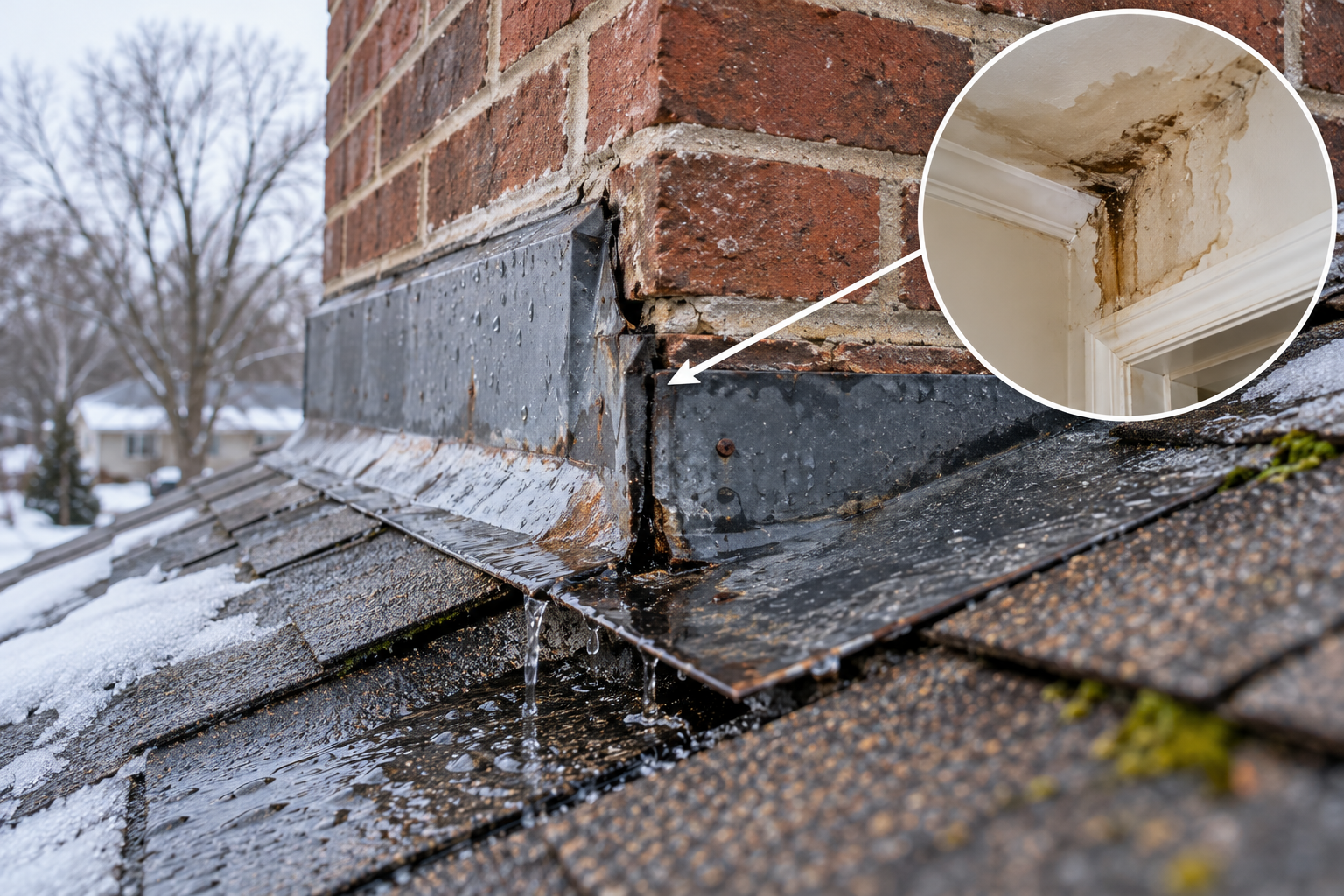
The Critical Difference: Roof Leaks Versus Chimney Water Intrusion Minnesota
Many homeowners confuse roof leaks with chimney water intrusion Minnesota. These are distinct problems.
Understanding Roof Leaks
A roof leak occurs when rain penetrates the roofing material itself—shingles, underlayment, or deck. Water enters through:
- Missing or damaged shingles
- Punctures or holes in roofing
- Deteriorated flashing around roof penetrations
- Improper installation
Roofers address these roof problems effectively. New shingles, proper flashing, and quality installation solve roof leaks.
Understanding Chimney Water Intrusion Minnesota
Chimney water intrusion Minnesota occurs when water enters the chimney structure itself—independent of roof integrity. Water enters through:
- Damaged chimney crown (top cap sealing the chimney)
- Deteriorated chimney flashing where chimney meets roof
- Cracked or deteriorated chimney masonry
- Missing or damaged chimney cap
- Mortar joint failure from freeze-thaw damage
- Flue liner cracks
Roofers don’t typically address chimney water intrusion Minnesota sources. They focus on roofing. Chimney professionals address chimney-specific water problems.
Why Chimney Water Intrusion Minnesota Continues After Roof Repair
A new roof doesn’t fix chimney water intrusion Minnesota because the water isn’t entering through the roof itself—it’s entering through chimney components. A roofer working on roofing integrity won’t identify or repair chimney-specific water entry points.
This explains the frustrating scenario: roof repair complete, but chimney water intrusion Minnesota persists.
Seven Causes of Chimney Water Intrusion Minnesota
Understanding these specific causes helps you recognize your situation and communicate with professionals.
Cause 1: Deteriorated Chimney Crown (Most Common)
The chimney crown is the concrete or stone cap covering the top of your chimney. It’s essential protection preventing rain from entering the flue. Minnesota’s freeze-thaw cycles deteriorate crowns rapidly.
How crown damage causes chimney water intrusion Minnesota:
Water enters through crown cracks, eroded areas, or deteriorated mortar. Once inside, water travels down interior chimney surfaces, entering your home through the fireplace or walls.
What you can observe:
Looking at your chimney from ground level, you might see visible cracks in the crown area or debris falling from the top. However, most crown damage is visible only from roof level or through professional inspection.
Why roofers miss crown damage:
Roofers focus on roof integrity. Chimney crowns aren’t their specialty. A roof replacement doesn’t include crown repair unless specifically contracted and budgeted separately.
Professional solution:
Crown repair ($800–2,500) or replacement ($1,500–4,000) eliminates this chimney water intrusion Minnesota source. This is a chimney-specific repair, not a roofing job.
Cause 2: Failing Chimney Flashing
Chimney flashing is the metal seal between your chimney and roof. It’s the critical barrier preventing water from entering where these structures meet. Minnesota’s weather stresses flashing constantly.
How flashing failure causes chimney water intrusion Minnesota:
Poor installation, corrosion, or deterioration allows water to flow between chimney and roof materials. Water enters both the roof structure and the chimney itself, creating chimney water intrusion Minnesota.
What you can observe:
Looking from ground level at where your chimney meets the roof, you might see loose, tilted, or corroded metal flashing. Water stains on the chimney exterior near the roof junction suggest flashing problems.
Why roofers might not fix flashing properly:
Some roofers focus on roofing and don’t understand chimney-specific flashing requirements. Improper flashing installation by roofing contractors is actually a common cause of chimney water intrusion Minnesota.
Professional solution:
Professional flashing inspection ($100–200). Repair or replacement ($500–1,500). Chimney professionals understand both roofing and chimney-specific requirements.
Cause 3: Freeze-Thaw Damage to Chimney Masonry
Minnesota’s 50–100+ annual freeze-thaw cycles damage chimney masonry severely. Water enters cracks, freezes, expands 9%, and shatters brick and mortar.
How freeze-thaw damage causes chimney water intrusion Minnesota:
Cracks and gaps in chimney bricks or mortar allow water entry directly into the chimney structure. Each winter cycle worsens damage, intensifying chimney water intrusion Minnesota.
What you can observe:
Visible exterior chimney damage (spalling brick, crumbling mortar, missing sections) indicates freeze-thaw damage. Water stains on exterior chimney walls suggest water is entering through damaged areas.
Why roofers don’t address masonry damage:
Masonry repair is chimney-specific work requiring expertise in brick, mortar, and chimney construction. Roofers don’t typically perform masonry repairs.
Professional solution:
Masonry repair ($500–3,000+ depending on extent). Repointing mortar joints ($1,000–3,000+). Professional assessment determines repair extent.
Cause 4: Missing or Damaged Chimney Cap
The chimney cap sits atop the flue, preventing rain and animals from entering. Missing or damaged caps allow direct water entry into the flue.
How cap problems cause chimney water intrusion Minnesota:
Without a functioning cap, rain falls directly into your chimney flue. Water travels down interior surfaces, entering your home through the fireplace or walls.
What you can observe:
Looking up at your chimney from ground level, you can often see if the cap is missing, damaged, or tilted. Debris accumulation around the chimney base suggests water and debris entering through a missing or ineffective cap.
Why roofers might overlook this:
Chimney caps aren’t part of roofing work. A roofer might not inspect or consider chimney caps as part of their roof repair project.
Professional solution:
New chimney cap installation ($300–800). This solves direct water entry through the flue opening.
Cause 5: Cracked or Deteriorated Flue Liner
Your chimney flue (interior passageway) has a liner—typically clay tile, metal, or poured cement. Minnesota’s freeze-thaw cycles crack liners. Cracks allow water to enter the chimney structure.
How liner damage causes chimney water intrusion Minnesota:
Water enters through flue liner cracks into the surrounding chimney structure and masonry. Once inside the chimney structure, water travels into your home.
What you can observe:
You cannot safely inspect flue liner damage from ground level. Professional video inspection reveals cracks and deterioration inside your flue.
Why roofers don’t address this:
Flue liners are interior chimney components. Roofers have no visibility or expertise here. Professional chimney inspection using video equipment is necessary to identify liner damage.
Professional solution:
Flue liner replacement (relining) ($1,500–4,000+). This is a major repair requiring chimney expertise.
Cause 6: Mortar Joint Deterioration
The mortar between chimney bricks deteriorates from freeze-thaw cycles, weathering, and age. Deteriorated joints become water entry points.
How mortar failure causes chimney water intrusion Minnesota:
Gaps where mortar has failed allow water to enter chimney masonry. Winter freeze-thaw cycles worsen deterioration annually.
What you can observe:
Visible gaps between bricks, missing mortar sections, or crumbling mortar indicates joint failure. These visible signs suggest water is entering through those gaps.
Why roofers don’t address this:
Mortar repointing is masonry work, not roofing. Roofers focus on their specialty; masonry repair is outside their scope.
Professional solution:
Repointing (replacing deteriorated mortar) ($1,000–3,000+). Professional masonry work ensures proper material and technique.
Cause 7: Water Intrusion at Chimney Base
Sometimes water enters where the chimney extends through your home’s exterior wall or basement. This requires proper sealing and integration with exterior moisture barriers.
How base water intrusion causes chimney water intrusion Minnesota:
Water enters where chimney foundation meets home structure. This creates both roof-line issues (where chimney extends through roof) and foundation-level concerns.
What you can observe:
Water stains on interior walls at chimney base level. Damp areas in basement or crawl space near chimney. Visible gaps or poor sealing where chimney meets exterior walls.
Why roofers might miss this:
Base-level water intrusion isn’t typically a roofing issue. It’s a foundation/exterior envelope problem requiring different expertise.
Professional solution:
Professional assessment to identify exact entry point ($100–200). Repairs vary: flashing improvement ($500–1,000), exterior sealing ($500–1,500), or more extensive work depending on findings.
Why Minnesota’s Climate Creates Severe Chimney Water Intrusion Minnesota
Minnesota’s specific weather patterns make chimney water intrusion Minnesota particularly common and damaging.
Freeze-Thaw Cycles Accelerate Damage
Minnesota’s 50–100+ freeze-thaw cycles annually create relentless stress on chimneys. Water enters tiny cracks, freezes, expands 9%, and breaks masonry further. Each cycle worsens damage, intensifying chimney water intrusion Minnesota.
Extended Wet Season
Minnesota’s spring and fall feature extended wet periods (rain, melting snow). Heavy precipitation stresses chimneys continuously. Chimneys with existing cracks experience heavy chimney water intrusion Minnesota during these periods.
Snow and Ice Accumulation
Chimneys collect snow and ice. As temperatures fluctuate, melting and refreezing occurs repeatedly—right on top of your chimney. This creates ideal conditions for chimney water intrusion Minnesota development.
Long Heating Season
November through March heating use means extended fireplace operation. Active fireplaces draw moisture-laden air up the flue. This moisture interacts with cold exterior temperatures, creating condensation that worsens chimney water intrusion Minnesota.
Age of Twin Cities Housing Stock
Many Minneapolis and Bloomington homes are 50+ years old. Older chimneys have deteriorated mortar, crowns, and flashing. These old chimneys are particularly susceptible to chimney water intrusion Minnesota.
Red Flags: When Chimney Water Intrusion Minnesota Requires Urgent Action
Certain situations indicate chimney water intrusion Minnesota is severe and needs immediate professional attention.
Red Flag 1: Active Water Dripping During Rain
If water actively drips into your fireplace or through ceiling during rain, chimney water intrusion Minnesota is severe. This indicates significant water entry.
Red Flag 2: Expanding Water Stains
Stains that grow or darken over time indicate active, ongoing water intrusion. This suggests chimney water intrusion Minnesota is worsening.
Red Flag 3: Visible Mold or Mildew
Black or green growth on interior fireplace surfaces indicates moisture problems creating health hazards. Professional assessment and water entry elimination are urgent.
Red Flag 4: Structural Damage Around Chimney
Soft, deteriorating wood near chimney indicates prolonged water damage. This suggests chimney water intrusion Minnesota has been occurring for an extended period.
Red Flag 5: Chimney Leaning or Tilting
If your chimney appears to lean away from your home or shows visible structural movement, freeze-thaw damage from water intrusion is severe. This is a structural safety concern requiring urgent professional attention.
Red Flag 6: Multiple Water Stains
If stains appear in multiple locations (ceiling, walls, basement), water is entering multiple points, suggesting complex chimney water intrusion Minnesota from several sources.
Step-by-Step: Diagnosing Chimney Water Intrusion Minnesota
Understanding the diagnostic process helps you work effectively with professionals.
Step 1: Observe Where Water Appears
Note exactly where water shows up:
- Does it drip into fireplace?
- Does it stain ceiling above fireplace?
- Does it appear on exterior chimney walls?
- Does it affect basement or crawl space?
Location helps professionals identify which component is failing.
Step 2: Note When Water Appears
When does water intrusion occur?
- During rain specifically?
- After snow melts?
- During freeze-thaw cycles?
- Continuously or intermittently?
Timing helps identify the cause. Heavy rain immediately followed by water suggests crown or cap problems. Gradual seeping suggests masonry deterioration.
Step 3: Examine Visible Exterior Chimney
From ground level (safely), observe:
- Is the cap missing, damaged, or tilted?
- Is the crown visibly cracked?
- Is exterior brick spalling or crumbling?
- Is mortar visibly deteriorated?
- Is flashing loose or corroded?
Visible damage often indicates the problem source.
Step 4: Check Inside Fireplace
Look inside your fireplace (if safe to do so):
- Are brick or mortar joints visibly damaged?
- Is there water staining or mineral deposits?
- Do you smell dampness or mold?
- Is there debris or loose material?
Interior damage indicates long-term water intrusion.
Step 5: Document Everything
Take photos of all observations. Document when water appears, where it shows up, and what weather conditions precede it. This information helps professionals diagnose chimney water intrusion Minnesota accurately.
Step 6: Call Professional for Definitive Diagnosis
Video inspection by CSIA-certified chimney professionals is the gold standard. Professionals see inside your flue, assess crown condition, evaluate flashing, and identify exact chimney water intrusion Minnesota causes.
Professional Solutions: Fixing Chimney Water Intrusion Minnesota
Once professionals identify the specific cause, solutions address that particular problem.
Solution 1: Crown Repair or Replacement
If the crown is damaged, repair ($800–2,500) or full replacement ($1,500–4,000) eliminates that water entry point.
Solution 2: Flashing Repair or Installation
Proper flashing installation or repair ($500–1,500) prevents water from entering where chimney meets roof.
Solution 3: Chimney Cap Installation
New or replacement cap ($300–800) prevents direct water entry through the flue opening.
Solution 4: Masonry Repair and Repointing
Damaged brick repair and mortar repointing ($500–3,000+) eliminates water entry through masonry.
Solution 5: Flue Liner Replacement (Relining)
If the flue liner is cracked, professional relining ($1,500–4,000+) creates a new, watertight interior surface.
Solution 6: Comprehensive Waterproofing
Some situations require multiple repairs addressing several water entry points simultaneously. Professional assessment determines comprehensive approach cost.
Prevention: Minimizing Future Chimney Water Intrusion Minnesota
Once chimney water intrusion Minnesota is fixed, these practices prevent recurrence.
Prevention 1: Annual Professional Inspection
Schedule annual inspection before heating season (August–September). Professional assessment identifies developing problems before they cause damage.
Prevention 2: Address Damage Promptly
If professionals identify deterioration or damage, address it immediately. Small problems become expensive when water continues entering.
Prevention 3: Maintain Chimney Cap
Keep your chimney cap clean and functional. Check annually (from ground level) to ensure it’s intact and properly positioned.
Prevention 4: Monitor for Stains
Watch for new water stains. Early detection prevents extensive damage. Address stains immediately with professional inspection.
Prevention 5: Maintain Gutters and Drainage
Proper roof drainage reduces water volume contacting your chimney. Keep gutters clean and ensure downspouts direct water away from chimney base.
Prevention 6: Monitor During Freeze-Thaw Seasons
Minnesota’s spring and fall bring intensive freeze-thaw activity. Monitor your chimney during these seasons. If new water intrusion appears, call professionals immediately.
When to Call Chimney Crickets: Professional Assessment for Chimney Water Intrusion Minnesota
Knowing when to seek professional help ensures chimney water intrusion Minnesota is properly diagnosed and solved.
Schedule Professional Assessment When:
- You notice water stains near chimney
- Water drips during or after rain
- You see visible chimney damage
- Roof repair didn’t solve water problems
- You haven’t had professional inspection in over 1 year
- You smell dampness or mold near chimney
- You plan to use fireplace this winter
- You want confirmation your chimney is watertight
Schedule Immediate Professional Service When:
- Active water dripping into home during rain
- Expanding water stains indicating active intrusion
- Visible mold or mildew growth
- Chimney structural damage or tilting
- Multiple water intrusion points
- Any situation making you concerned about safety
Chimney Crickets provides professional chimney water intrusion Minnesota diagnosis throughout Minneapolis, Bloomington, and the Twin Cities metro.
Our Services
Explore the full range of Chimney Crickets services for Minnesota homeowners:
🔍 Chimney Inspections — Start with a professional evaluation before any repair
🧱 Chimney Repointing — Restore deteriorated mortar joints in Minnesota masonry
👑 Chimney Crown Repair — Seal or rebuild a cracked or damaged chimney crown
🔩 Chimney Flashing Repair — Stop water entry at the roof-chimney junction
💧 Chimney Leak Repair — Trace and resolve active moisture entry
🛡️ Chimney Waterproofing — Protect repaired masonry from future moisture damage
🏗️ Full Masonry Repair — Comprehensive brick and mortar restoration
Serving Minnesota Homeowners
Chimney Crickets serves homeowners throughout Bloomington, Minneapolis, the South Metro and surrounding Minnesota communities.
Frequently Asked Questions
Why does my chimney leak if my roof is new?
Chimneys leak through chimney-specific components (crown, flashing, cap) independent of roof integrity. A new roof doesn’t repair chimney problems. Roofers focus on roofing; chimney professionals address chimney water intrusion Minnesota.
How much does professional chimney inspection cost?
Video inspection costs $100–200. This provides definitive diagnosis of your chimney water intrusion Minnesota causes.
Can I see flue liner damage from ground level?
No. Professional video inspection reveals internal flue conditions. You cannot safely or accurately assess interior flue damage yourself.
Does homeowner's insurance cover chimney water intrusion Minnesota?
Coverage varies by policy and whether damage is sudden vs gradual deterioration. Contact your insurance agent with photos of damage and professional assessment findings.
What's the difference between roofer and chimney professional for water problems?
Roofers repair roofing; chimney professionals repair chimney-specific components. For chimney water intrusion Minnesota, you need chimney expertise, not roofing expertise.
How quickly does water damage progress if untreated?
This depends on intrusion severity. Minor staining might progress slowly; active water intrusion causes significant damage within months.
Can I temporarily stop chimney water intrusion Minnesota myself?
Temporary measures might reduce intrusion (caulking obvious gaps), but permanent solutions require professional repair of the actual water entry point.
What's the most common cause of chimney water intrusion Minnesota?
Deteriorated chimney crowns are the most common cause. Minnesota’s freeze-thaw cycles damage crowns rapidly.
How long does chimney crown repair take?
Professional repair typically takes 1–2 days depending on extent of damage and accessibility.
Can chimney water intrusion Minnesota cause mold problems?
Yes. Ongoing moisture in and around chimneys promotes mold and mildew growth, creating health concerns.
Does Minnesota's freeze-thaw cycle specifically affect chimneys?
Yes. Minnesota’s 50–100+ annual freeze-thaw cycles create relentless stress on chimneys, making chimney water intrusion Minnesota particularly common.
What if I ignore chimney water intrusion Minnesota?
Water damage worsens annually. Structural damage accelerates. Mold and health hazards develop. Repair costs increase significantly over time.
Should I contact roofer or chimney professional for leaking chimney?
Contact chimney professional. Roofers focus on roofing; chimney professionals diagnose and fix chimney water intrusion Minnesota.
Can flashing be sealed temporarily to stop chimney water intrusion Minnesota?
Temporary sealing might reduce intrusion briefly, but proper flashing repair is necessary for permanent solution.
Where can I find qualified professionals for chimney water intrusion Minnesota?
Search Verified Chimney Pros for CSIA-certified inspectors in Minneapolis–Bloomington. Chimney Crickets provides professional assessment throughout Twin Cities.