
Chimney Flashing Problems Minnesota: Essential Guide to Water Leak Solutions
Your chimney penetrates your roof at a specific point where these two structures meet. This junction requires specialized protection called flashing—metal barriers designed to channel water away from where the chimney and roof connect. When chimney flashing problems Minnesota occur, water seeps into your home behind the flashing, creating costly damage. Many Minneapolis and Bloomington homeowners don’t understand what flashing is or recognize chimney flashing problems Minnesota until water damage becomes obvious.
Chimney flashing problems Minnesota are among the most common causes of residential water damage in the Twin Cities. Minnesota’s freeze-thaw cycles, ice dams, and heavy precipitation stress flashing constantly. Understanding what flashing does, how to recognize chimney flashing problems Minnesota, and when to call professionals helps you prevent expensive water intrusion damage.
This comprehensive guide explains chimney flashing, why chimney flashing problems Minnesota develop, how to spot warning signs, and what professional solutions involve. Whether you suspect flashing damage or want to prevent problems, this information will help you protect your home.
Chimney Flashing Problems Minnesota: Essential Guide to Water Leak Solutions
Your chimney penetrates your roof at a specific point where these two structures meet. This junction requires specialized protection called flashing—metal barriers designed to channel water away from where the chimney and roof connect. When chimney flashing problems Minnesota occur, water seeps into your home behind the flashing, creating costly damage. Many Minneapolis and Bloomington homeowners don’t understand what flashing is or recognize chimney flashing problems Minnesota until water damage becomes obvious.
Chimney flashing problems Minnesota are among the most common causes of residential water damage in the Twin Cities. Minnesota’s freeze-thaw cycles, ice dams, and heavy precipitation stress flashing constantly. Understanding what flashing does, how to recognize chimney flashing problems Minnesota, and when to call professionals helps you prevent expensive water intrusion damage.
This comprehensive guide explains chimney flashing, why chimney flashing problems Minnesota develop, how to spot warning signs, and what professional solutions involve. Whether you suspect flashing damage or want to prevent problems, this information will help you protect your home.
What Is Chimney Flashing and Why It Matters
Chimney flashing is often misunderstood. Understanding what it is and why it’s critical helps you recognize chimney flashing problems Minnesota.
Defining Chimney Flashing
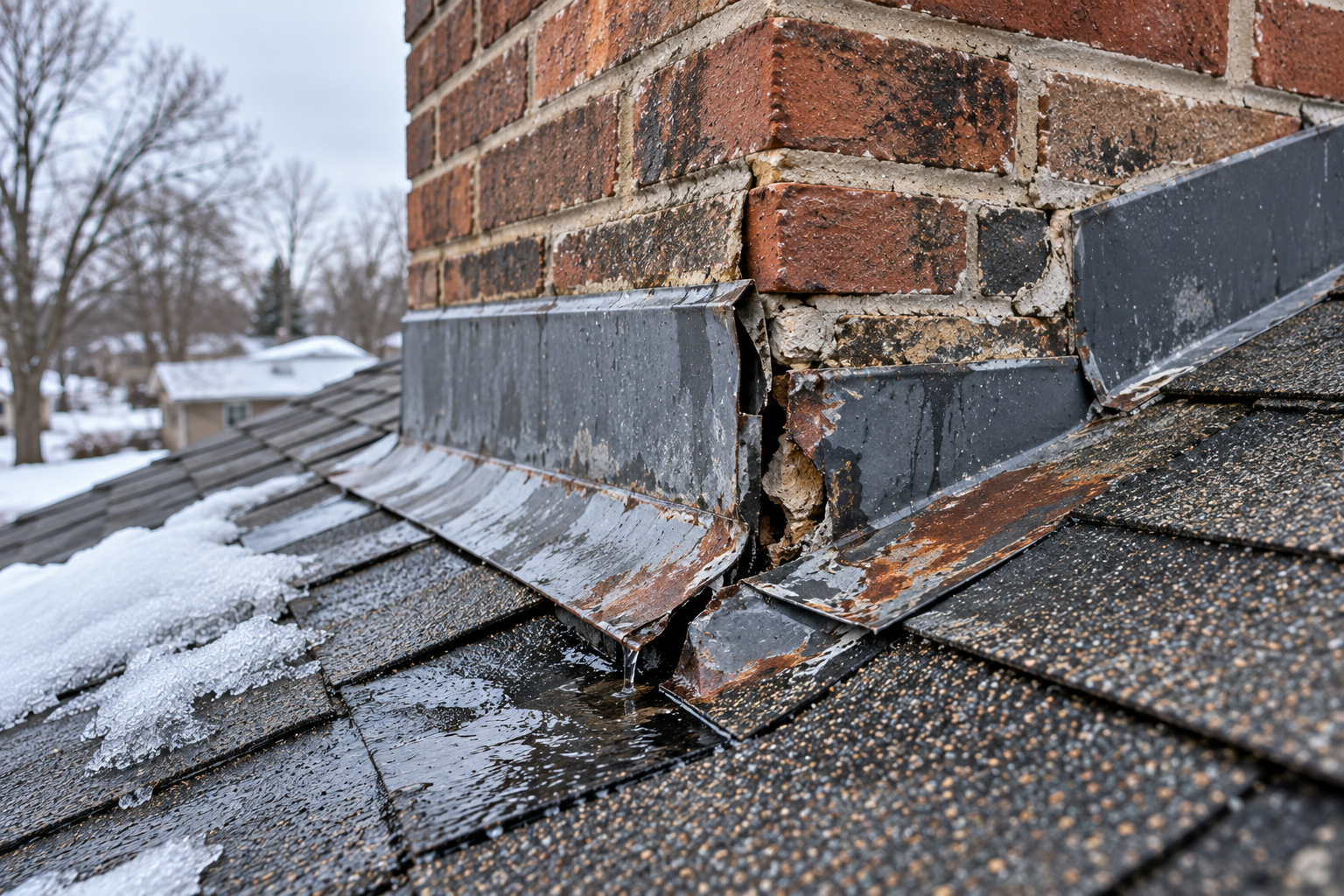
Chimney flashing is metal material (typically aluminum or galvanized steel) installed where your chimney meets your roof. It’s designed to overlap roofing materials and chimney masonry, creating a seal that channels water away from this vulnerable junction.
Proper chimney flashing acts like a roof gutter specifically for this chimney junction. Water hitting the flashing runs down and out, never penetrating the gap between chimney and roof.
How Chimney Flashing Works
Flashing has two critical components:
Counter-flashing: The upper portion embedded in or running over the chimney masonry. This component prevents water from running behind the flashing into the chimney structure.
Step-flashing: The lower portion that overlaps the roofing material. This directs water down the roof slope, away from the chimney junction.
Together, these components create a watertight seal at a naturally vulnerable junction.
Why Chimney Flashing Problems Minnesota Cause Serious Damage
When chimney flashing problems Minnesota occur—flashing fails, deteriorates, or pulls loose—water doesn’t drain away. Instead, it:
- Flows behind the flashing into the roof structure
- Seeps into attic spaces creating mold and rot
- Enters the chimney structure causing masonry damage
- Drips into upper floors or attic areas
- Promotes wood decay in roof framing
- Creates conditions for mold growth
- Causes insulation saturation reducing efficiency
Water damage from chimney flashing problems Minnesota escalates rapidly. Minor leaking quickly becomes structural damage requiring expensive restoration.
Minnesota’s Climate Intensifies Chimney Flashing Problems
Minnesota’s harsh weather creates specific challenges for chimney flashing:
Freeze-thaw cycles: Minnesota’s 50–100+ annual freeze-thaw cycles expand and contract flashing repeatedly. This stress causes cracks, separation, and deterioration in flashing seals.
Ice dams: Minnesota winters create ice dams on roofs. Ice damming pressure stresses chimney flashing, forcing water behind seals. Heavy ice accumulation can physically separate flashing from roof or masonry.
Snow accumulation: Snow piling around chimneys during Minnesota winters holds moisture against flashing. Extended snow contact accelerates flashing deterioration.
Heavy precipitation: Spring and fall in Minnesota bring heavy rains. Intense precipitation tests flashing seals extensively. Compromised flashing fails during heavy rain.
Extended heating season: November through March fireplace use means active chimneys creating temperature differentials. Temperature fluctuations stress flashing materials continuously.
These Minnesota-specific factors make chimney flashing problems Minnesota particularly common and damaging.
Seven Causes of Chimney Flashing Problems Minnesota
Understanding these causes helps you recognize what might be happening with your flashing.
Cause 1: Poor Original Installation
Sometimes chimney flashing problems Minnesota result from improper installation at construction or during previous roof work.
How installation failure causes flashing problems:
Incorrectly installed flashing doesn’t seal properly. Gaps, improper overlaps, or materials not bedded in roof sealant create immediate water entry points.
What you can observe:
Looking at your chimney from ground level, flashing should appear continuous and tightly integrated with both roofing and chimney. Gaps, visible gaps between flashing and masonry, or obviously loose flashing indicate installation problems.
Why this matters:
Poor installation means chimney flashing problems Minnesota develop immediately or within the first few years, sometimes before roofing warranty expires. Professional inspection and proper repair installation prevents years of water damage.
Cause 2: Corrosion and Material Deterioration
Metal flashing corrodes over time, especially in Minnesota’s moisture-rich environment.
How corrosion causes flashing problems:
Aluminum or steel flashing oxidizes and corrodes when exposed to moisture and temperature cycling. Corrosion creates pitting, holes, and weakened areas where water penetrates.
What you can observe:
Looking at visible flashing sections, you might see discoloration, rust stains, or visible pitting. However, interior flashing corrosion isn’t visible until it causes water damage.
Why Minnesota accelerates corrosion:
Minnesota’s humidity, salt application (road salt and snow-melt treatments), and moisture promote rapid corrosion. Flashing deteriorates faster in Minnesota than in dry climates.
Professional solution:
Corroded flashing requires replacement ($500–1,500). Repair isn’t possible; new flashing must be installed properly with quality materials.
Cause 3: Improper Maintenance and Debris Accumulation
Leaves, twigs, and debris accumulating near chimney flashing trap moisture against seals.
How debris causes flashing problems:
Trapped moisture promotes corrosion and deteriorates flashing seals. Debris also prevents proper water drainage, causing water to pool against flashing instead of running off.
What you can observe:
From ground level, you might see debris accumulation around your chimney base or visible leaves/twigs near the flashing area. Gutters overflowing near the chimney suggest improper drainage exacerbating flashing stress.
Why maintenance matters:
Regular cleaning and maintenance extend flashing life significantly. Neglected flashing deteriorates much faster due to debris-trapped moisture.
Cause 4: Freeze-Thaw Stress and Seasonal Movement
Minnesota’s extreme freeze-thaw cycles stress flashing seals continuously.
How freeze-thaw causes flashing problems:
Temperature swings cause expansion and contraction. Water entering small gaps freezes and expands 9%, widening cracks. Repeated cycles widen gaps progressively. Over months and years, this stress fractures flashing and deteriorates seals.
What you can observe:
Visible cracks in flashing or separation between flashing and masonry indicate freeze-thaw damage. Flashing that appears “pulled” or separated from where it should contact masonry suggests thermal stress.
Why Minnesota is uniquely challenging:
Minnesota’s 50–100+ annual freeze-thaw cycles create relentless stress. This continuous cycling means flashing deteriorates faster than in stable-temperature climates.
Cause 5: Ice Dam Damage
Minnesota’s ice dams create intense pressure on chimney flashing during winter.
How ice dams damage flashing:
Heavy ice accumulation on roofs creates massive weight and pressure. Ice dams physically push against chimney flashing, separating it from masonry or roof. Water backed up by ice dams flows behind flashing into interior spaces.
What you can observe:
During Minnesota winters when ice dams are visible, water stains appearing near chimneys during the ice dam period indicate flashing failure under ice pressure.
Why prevention matters:
Preventing ice dams (improved attic ventilation, proper insulation) protects flashing from ice dam stress.
Cause 6: Improper Roof Repairs or Replacement
Sometimes chimney flashing problems Minnesota result from roofing work done without proper flashing consideration.
How roof work causes flashing problems:
New roofing installed without properly addressing flashing, or with flashing reinstalled improperly, causes immediate problems. Roofers sometimes don’t understand chimney-specific flashing requirements.
What you can observe:
Water problems developing immediately after roof replacement suggest flashing was compromised during roofing work.
Why professional coordination matters:
When roof work involves chimney flashing, coordination between roofers and chimney professionals ensures proper installation and sealing.
Cause 7: Sealant Failure and Seal Degradation
Roofing sealant (caulk) used to seal flashing seams degrades over time.
How sealant failure causes flashing problems:
Sealant cracks, shrinks, and separates from flashing as it ages. Minnesota’s UV exposure and temperature cycling accelerate sealant degradation. Failed sealant allows water to enter gaps between flashing and masonry.
What you can observe:
Visible gaps between flashing and chimney masonry, or flashing that appears separated, might indicate failed sealant. Cracked or missing caulk where flashing meets roof is a clear sign of sealant failure.
Professional solution:
Sealant re-application ($200–500) extends flashing life. However, if underlying flashing is corroded or damaged, full replacement is necessary.
Red Flags: Warning Signs of Chimney Flashing Problems Minnesota
Recognizing these signs helps you catch chimney flashing problems Minnesota before extensive damage occurs.
Red Flag 1: Water Stains Inside Home Near Chimney
Any water staining on interior walls or ceilings near your chimney indicates water intrusion. This is the most obvious sign of chimney flashing problems Minnesota.
Red Flag 2: Water Dripping During or After Rain
If water actively drips into your home during rainfall, especially near or above the fireplace, chimney flashing problems Minnesota are severe.
Red Flag 3: Visible Exterior Flashing Damage
Gaps between flashing and chimney, visible corrosion, or obviously corroded metal indicate flashing damage requiring immediate professional attention.
Red Flag 4: Wet Attic Space Near Chimney
If your attic shows moisture, water stains, or soft wood near where the chimney extends through the roof, flashing failure is likely.
Red Flag 5: Mold or Mildew Growth
Mold growth on interior walls or ceilings near chimney indicates moisture intrusion from chimney flashing problems Minnesota. This is a health concern requiring immediate action.
Red Flag 6: Staining or Discoloration on Exterior Chimney
Water stains running down exterior chimney walls suggest water entering the chimney structure, often from chimney flashing problems Minnesota.
Red Flag 7: New or Expanding Water Damage
If water damage increases over time or appears in new locations, chimney flashing problems Minnesota are worsening and require urgent professional attention.
How to Spot Chimney Flashing Problems Minnesota: Visual Assessment
You can safely observe certain signs of chimney flashing problems Minnesota from ground level.
Step 1: Examine Visible Flashing From Ground Level
Look at where your chimney meets your roof. Flashing should appear:
- Continuous (no gaps)
- Properly integrated with both roof and chimney
- Secure and not pulling away
- Free of obvious corrosion or rust
- Properly sealed
Anything appearing loose, corroded, separated, or obviously damaged suggests chimney flashing problems Minnesota.
Step 2: Check Interior for Water Evidence
Inspect your attic and upper floors near the chimney for:
- Water stains on wood framing
- Wet insulation
- Mold or mildew growth
- Soft or rotted wood
- Water dripping or visible moisture
Interior evidence indicates active chimney flashing problems Minnesota.
Step 3: Look for Exterior Staining
Examine your exterior chimney for water stains running down walls. Stains indicate water is flowing down the exterior, often from flashing problems.
Step 4: Check Gutters Near Chimney
Look at gutters adjacent to your chimney for debris accumulation or improper water flow. Poor drainage near chimneys exacerbates chimney flashing problems Minnesota.
Step 5: Schedule Professional Inspection
Visual observation identifies obvious problems, but comprehensive assessment requires professional expertise. Video inspection reveals flashing condition and identifies problems not visible from ground level.
Professional Assessment for Chimney Flashing Problems Minnesota
Professional chimney inspection definitively identifies chimney flashing problems Minnesota and recommends solutions.
What Professional Assessment Includes
CSIA-certified inspectors will:
- Perform visual inspection of visible flashing
- Look for evidence of water intrusion (interior)
- Check for interior water stains, mold, or moisture
- Assess flashing installation and integration
- Evaluate sealant condition
- Identify corrosion or material deterioration
- Determine if water is actively entering
- Provide written assessment with photographs
- Recommend specific repair solutions
Cost of Professional Assessment
Professional inspection costs $100–200. This investment identifies chimney flashing problems Minnesota accurately, preventing guesswork and unnecessary work.
Solutions for Chimney Flashing Problems Minnesota
Once professionals identify your specific problem:
- Sealant re-application: $200–500 (extends life, doesn’t address underlying damage)
- Flashing repair: $500–1,000 (for minor damage)
- Flashing replacement: $800–1,500 (complete flashing system replacement)
- Flashing plus masonry repair: $1,000–3,000 (if flashing damage involved chimney masonry)
- Water damage restoration: $2,000–10,000+ (if water already caused interior damage)
Prevention: Protecting Against Future Chimney Flashing Problems Minnesota
Once flashing is repaired, these practices prevent recurrence.
Prevention 1: Annual Professional Inspection
Schedule annual inspection (August–September, before heating season). Professional assessment identifies developing problems early.
Prevention 2: Maintain Gutters and Drainage
Keep gutters clean and ensure proper drainage near your chimney. Good water drainage prevents excess moisture around flashing.
Prevention 3: Address Damage Promptly
If professionals identify flashing concerns, address them immediately. Small problems become expensive when water continues entering.
Prevention 4: Monitor for Water Stains
Watch for new interior or exterior water stains. Early detection prevents extensive damage.
Prevention 5: Manage Debris
Keep debris away from chimney flashing. Clear leaves and twigs that accumulate near the chimney.
Prevention 6: Professional Roof Work Coordination
If roof repairs or replacement are planned, coordinate with chimney professionals to ensure flashing is properly addressed.
When to Call Chimney Crickets: Professional Flashing Assessment
Knowing when to seek professional help ensures chimney flashing problems Minnesota are properly diagnosed and solved.
Schedule Professional Assessment When:
- You notice water stains near chimney interior or exterior
- You see visible flashing damage or corrosion
- You haven’t had professional inspection in over 1 year
- You’re planning roof repair or replacement
- You want confirmation your flashing is adequate
- You suspect water intrusion but aren’t certain
- You see mold or moisture in attic near chimney
- You’re preparing for winter heating season
Schedule Immediate Professional Service When:
- Water actively dripping into home during rain
- Large visible gaps in or separation of flashing
- Extensive corrosion or obvious flashing damage
- Mold growth on interior walls
- Multiple water stains in different locations
- Structural damage or soft wood near chimney
- Any situation where you suspect active water damage
Chimney Crickets provides professional chimney flashing problems Minnesota diagnosis throughout Minneapolis, Bloomington, and the Twin Cities metro.
Our Services
Explore the full range of Chimney Crickets services for Minnesota homeowners:
🔍 Chimney Inspections — Start with a professional evaluation before any repair
🧱 Chimney Repointing — Restore deteriorated mortar joints in Minnesota masonry
👑 Chimney Crown Repair — Seal or rebuild a cracked or damaged chimney crown
🔩 Chimney Flashing Repair — Stop water entry at the roof-chimney junction
💧 Chimney Leak Repair — Trace and resolve active moisture entry
🛡️ Chimney Waterproofing — Protect repaired masonry from future moisture damage
🏗️ Full Masonry Repair — Comprehensive brick and mortar restoration
Serving Minnesota Homeowners
Chimney Crickets serves homeowners throughout Bloomington, Minneapolis, the South Metro and surrounding Minnesota communities.
Frequently Asked Questions
What does chimney flashing do exactly?
Chimney flashing is metal that creates a watertight seal where your chimney meets your roof. It channels water away from this vulnerable junction, preventing water from entering your home.
How long does chimney flashing typically last?
Quality flashing lasts 15–20+ years depending on materials, Minnesota climate stress, and maintenance. Proper installation extends life; poor installation shortens it significantly.
Can I repair chimney flashing myself?
Simple sealant re-application might be possible for very minor issues, but most flashing problems require professional installation. Improper repairs create worse problems.
How much does professional flashing replacement cost?
Flashing replacement costs $800–1,500 typically. Additional costs apply if chimney masonry damage accompanies flashing failure.
Why is Minnesota's climate particularly hard on flashing?
Minnesota’s 50–100+ annual freeze-thaw cycles create relentless stress. Ice dams, heavy precipitation, and snow accumulation all stress flashing beyond what milder climates experience.
Should I have flashing inspected when I have roof work done?
Yes. Professional roofers should coordinate with chimney professionals to ensure flashing is properly installed or reinstalled during roof replacement.
Can I see if my flashing is damaged from inside my home?
Possibly. Water stains, mold, or soft wood near the chimney suggest flashing problems. However, professional inspection reveals problems not visible from interior.
What's the difference between counter-flashing and step-flashing?
Counter-flashing is embedded in the chimney masonry. Step-flashing overlaps roofing. Together they create a complete seal preventing water intrusion.
Does homeowner's insurance cover flashing damage?
This depends on your specific policy. Contact your insurance agent to determine coverage for water damage from flashing failure.
Why do roofers sometimes not install flashing properly?
Some roofers lack expertise in chimney-specific flashing requirements. Coordination between roofers and chimney professionals ensures proper installation.
Can ice dams damage my chimney flashing?
Yes. Heavy ice dam pressure can physically separate flashing from roof and masonry. Water backed up behind ice dams flows behind flashing causing intrusion.
How quickly does water damage progress from flashing failure?
This varies. Minor leaking might progress slowly; active water intrusion causes significant damage within months if untreated.
Can I temporarily seal chimney flashing problems to stop water?
Temporary sealant might reduce intrusion briefly, but permanent flashing repair is necessary for long-term solution.
What if flashing is damaged but I haven't noticed water damage yet?
Damaged flashing will eventually cause water intrusion if left unrepaired. Professional repair prevents water damage from developing.
How do I know if my current fireplace spark protection Minnesota is adequate?
Search Verified Chimney Pros for CSIA-certified inspectors in Minneapolis–Bloomington. Chimney Crickets provides professional assessment throughout Twin Cities.