
Chimney Crown Cracks Minnesota—Essential Guide for Homeowners
Chimney crown cracks Minnesota homeowners overlook cause serious water intrusion problems. Your chimney crown—the concrete or mortar cap at the top of your chimney structure—bears Minnesota’s harsh weather year-round. When chimney crown cracks develop, water infiltrates your entire chimney system, weakens mortar joints, and penetrates interior walls.
Chimney crown cracks Minnesota homeowners ignore today become expensive water damage tomorrow. This guide explains what crown cracks mean for your home, why Minnesota’s freeze-thaw cycles accelerate deterioration, what you can safely observe from the ground, and when to call a professional for inspection and repair.
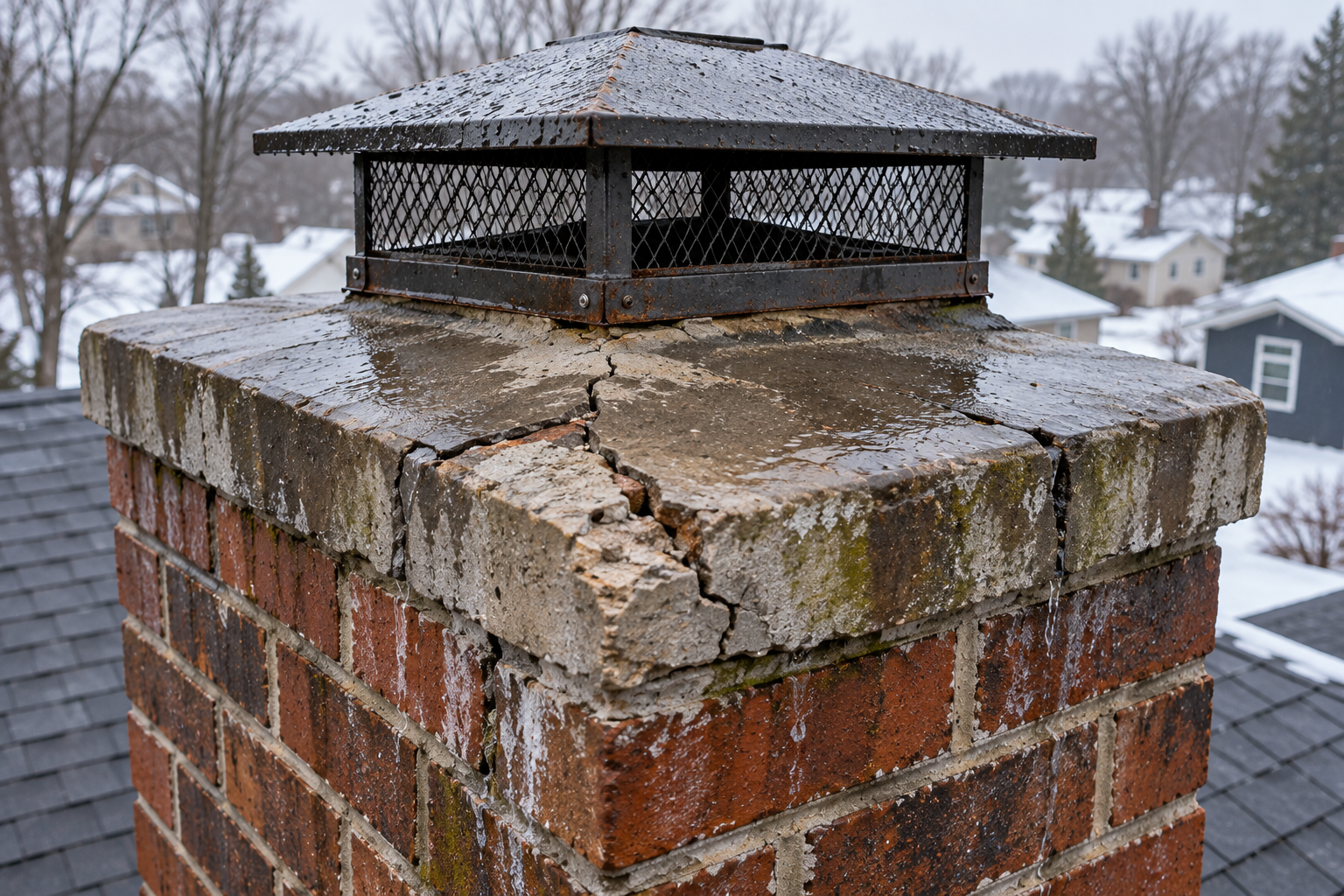
Chimney Crown Cracks Minnesota—Essential Guide for Homeowners
Chimney crown cracks Minnesota homeowners overlook cause serious water intrusion problems. Your chimney crown—the concrete or mortar cap at the top of your chimney structure—bears Minnesota’s harsh weather year-round. When chimney crown cracks develop, water infiltrates your entire chimney system, weakens mortar joints, and penetrates interior walls.
Chimney crown cracks Minnesota homeowners ignore today become expensive water damage tomorrow. This guide explains what crown cracks mean for your home, why Minnesota’s freeze-thaw cycles accelerate deterioration, what you can safely observe from the ground, and when to call a professional for inspection and repair.
Why Chimney Crown Cracks Matter in Minnesota’s Climate
Your chimney crown serves one critical purpose: keeping water out of your chimney structure. The crown sits atop the chimney walls, typically 1–2 feet below the flue opening, and extends slightly beyond the outer walls to direct rain and snow away from the chimney itself.
Minnesota homeowners face unique challenges that accelerate chimney crown cracks formation and deterioration. The state experiences 50 to 100+ annual freeze-thaw cycles—more than nearly any other U.S. region. When water enters a micro-crack in concrete or mortar, freezing expands it by approximately 9%. That expansion force pushes the crack wider. When spring thaw comes, water drains, and the crack slightly contracts. Each cycle makes the crack bigger and more dangerous.
Over 5–10 years, minor chimney crown cracks become major water entry points. According to the National Fire Protection Association (NFPA), annual chimney inspections are essential for chimneys serving fireplaces—and Minnesota’s climate makes crown maintenance even more critical. The Chimney Safety Institute of America (CSIA) emphasizes that chimney crowns are your first line of defense against water intrusion and structural deterioration.
Water Always Finds the Path Downward Through Chimney Crown Cracks
When rain falls on a properly functioning chimney crown, water is directed down the sides and away from the flue opening. Chimney crown cracks change that equation dramatically.
Water seeps through cracks and follows the path of least resistance—downward. Inside the chimney, water travels through mortar joints between bricks, flue liner seams, interior walls adjacent to the chimney, firebox and hearth areas, and basement walls where the chimney passes through the foundation.
Even small chimney crown cracks allow surprisingly large volumes of water inside during Minnesota’s heavy spring snowmelt or summer thunderstorms. You might not see water immediately; it can travel laterally through mortar before appearing as staining, mold growth, or efflorescence (white mineral deposits) weeks or months later.
This delayed appearance is why many homeowners don’t connect chimney crown cracks to interior water damage until significant deterioration has already occurred. According to the EPA, moisture intrusion is a leading cause of mold growth and indoor air quality problems in homes nationwide.
What Causes Chimney Crown Cracks in Minnesota Homes
Understanding the root causes of chimney crown cracks helps you recognize urgency and take preventive action immediately.
1. Freeze-Thaw Cycles Create Chimney Crown Cracks
Minnesota’s 50–100+ annual freeze-thaw cycles create extraordinary stress on concrete and mortar. Water trapped in micro-pores of the crown material expands when frozen, contracts when thawed, and slowly widens existing cracks. This is the primary driver of chimney crown cracks deterioration in Minnesota homes.
2. Age and Material Fatigue
Chimney crowns built more than 20–30 years ago were often constructed with cement mortar (not reinforced concrete). Mortar cracks naturally over time as stress accumulates. Older crowns are significantly more vulnerable to Minnesota’s climate cycles and freeze-thaw damage.
3. Poor Original Installation
Some older crowns lack proper slope, adequate overhangs, or weather-resistant mortar. These crowns fail faster and show early chimney crown cracks and deterioration patterns.
4. Inadequate Maintenance
Crowns that have never been sealed or recoated deteriorate more quickly. Unsealed concrete and mortar absorb water like a sponge, accelerating freeze-thaw damage dramatically and creating chimney crown cracks.
5. Settling or Structural Movement
If the chimney has shifted slightly due to foundation settling or structural issues, the crown may crack at stress points where movement concentrates.
6. Direct Physical Damage
Roof work, fallen branches, or impacts during storms can crack the crown directly and create immediate water entry points.
7. Tree Damage or Root Pressure
Large trees near the chimney can shift soil, causing foundation or chimney settling that stresses the crown and creates chimney crown cracks.
What You Can Safely Observe: Red, Yellow, and Green Flags for Chimney Crown Cracks
Homeowners should never climb roofs or get on the chimney itself. However, you can make safe observations from the ground using binoculars or from a safe indoor vantage point.
RED FLAGS (Urgent—Call a Professional Immediately for Chimney Crown Cracks)
- Large, visible chimney crown cracks (wider than 1/4 inch) running across the crown surface
- Multiple chimney crown cracks forming a pattern across the crown indicating widespread damage
- Water staining on interior walls, ceiling, or around the fireplace interior
- Mold or efflorescence (white, chalky deposits) on interior chimney walls or exterior surfaces
- Missing chunks of concrete or mortar from the crown top
- Water pooling on the crown surface after rain (indicates poor slope or drainage failure)
- Spalling (flaking or peeling of concrete surface)
- Chimney leaning or visible structural misalignment
YELLOW FLAGS (Important—Schedule Inspection Within 30 Days for Chimney Crown Cracks)
- Small chimney crown cracks (1/8 to 1/4 inch wide) visible on the crown
- Hairline chimney crown cracks that appear to be expanding or spreading
- Light discoloration or staining on the crown surface (indicates water absorption)
- Mortar deterioration or gaps between crown and chimney walls
- Crown without slope (water should run off, not pool)
- Crown overhang missing or inadequate (less than 1 inch beyond chimney walls)
- Crown not sealed or sealed coating visibly deteriorating
GREEN FLAGS (Monitor—Include in Annual Inspection)
- No visible chimney crown cracks on crown surface at all
- Proper slope visible on crown (water runs off immediately)
- Sealed appearance to concrete or mortar (slightly darker/glossy than unsealed)
- Clean crown surface with no discoloration, efflorescence, or staining
- Chimney plumb (not leaning or tilting)
Why Professional Inspection Reveals What Homeowners Can’t See About Chimney Crown Cracks
A professional chimney inspection, especially during fall or spring in Minnesota, determines the crown’s actual condition and water intrusion risk. Here’s what CSIA-certified inspectors evaluate regarding chimney crown cracks:
Structural Assessment of Chimney Crown Cracks
Professionals examine crown thickness, slope angle, overhang distance, and mortar composition. They determine if the crown was built to industry standards (NFPA Standard 211 specifies minimum requirements for chimney crowns).
Water Intrusion Testing for Chimney Crown Cracks
Using specialized tools, inspectors identify whether water is already entering the chimney structure due to chimney crown cracks. They assess the extent of water damage in mortar joints, flue liners, and interior walls.
Crack Analysis and Severity Assessment
Not all chimney crown cracks are equally serious. A hairline crack on a sealed crown might need monitoring, while a 1/2-inch crack in an unsealed mortar crown may require immediate repair before winter weather intensifies damage.
Deterioration Rate Evaluation
Inspectors compare current condition to historical photos (if available) to estimate how quickly chimney crown cracks are progressing. This helps prioritize repair urgency.
Repair Options and Costs for Chimney Crown Cracks
Professionals outline repair choices: resealing, patching, or full replacement. They explain what each option accomplishes and what protection you can expect in Minnesota’s climate. The Verified Chimney Professionals Directory lists inspectors certified to rigorous standards in the Minneapolis/Bloomington area, allowing you to verify credentials and insurance before scheduling an appointment.
What Happens Without Repairing Chimney Crown Cracks: The Domino Effect
Leaving chimney crown cracks unrepaired accelerates damage in Minnesota homes rapidly.
Year 1–2: Early Water Entry Through Chimney Crown Cracks
Water begins entering the chimney structure through cracks. You might notice minor discoloration or a damp smell inside the fireplace on humid days or after rain.
Year 2–5: Mortar Deterioration from Chimney Crown Cracks
Water moves through mortar joints continuously. Freeze-thaw cycles continue expanding chimney crown cracks. Mortar loses strength, and the crown begins separating from the chimney walls visibly.
Year 5–10: Structural Compromise from Chimney Crown Cracks
Water reaches the flue liner causing damage. Efflorescence (white deposits) appears inside and outside the chimney. Interior chimney walls may show water staining. Mold growth becomes visible in damp areas.
Year 10+: Major Damage from Untreated Chimney Crown Cracks
Flue liners crack or separate. Water intrudes into walls adjacent to the chimney. Foundation cracks may develop where water pools around the chimney base. Repair costs multiply from hundreds (crown resealing) to thousands (full chimney relining).
The Cost Multiplication Effect
A $500–$1,000 crown repair caught early can prevent $3,000–$8,000 in water damage repairs later. Minnesota’s climate compresses this timeline; freeze-thaw cycles accelerate deterioration faster than in milder climates.
Safe Actions You Can Take Right Now for Chimney Crown Cracks
1. Schedule a Professional Inspection
Contact a CSIA-certified chimney inspector before November (the busiest season in Minnesota). Fall inspections allow time for repairs before winter storms intensify damage and cause costly emergency repairs.
2. Document Current Condition
Take clear binocular photos of the crown from ground level. Document any visible chimney crown cracks, discoloration, or concerns. This creates a baseline for monitoring deterioration over time.
3. Clear Debris Around the Base
Leaves, needles, and debris accumulate around the chimney base and trap moisture. Clear away debris to allow proper drying and reduce moisture problems.
4. Inspect Interior Regularly
Look for water staining, mold, discoloration, or moisture inside the fireplace and around the chimney interior. These are early warning signs of chimney crown cracks and problems developing.
5. Address Gutter and Drainage Issues
Ensure gutters direct water away from the chimney. Poor drainage around the chimney base accelerates crown deterioration significantly.
6. Trim Overhanging Branches
Branches that hang over the chimney can damage the crown and block drainage. Trim them back to prevent damage and keep drainage clear.
7. Avoid Climbing or DIY Attempts
Never attempt to repair or inspect the crown yourself. Climbing a roof or chimney risks falls (leading cause of home injuries). Improper repairs can worsen chimney crown cracks exponentially.
Crown Repair Options: What Professionals Recommend for Chimney Crown Cracks
Once a professional inspection reveals crown condition, repair options depend on chimney crown cracks severity.
Option 1: Crown Resealing (Preventive)
Cost: $200–$500
Best for: Sealed crowns showing small cracks, no water intrusion yet
What it does: Applies weather-resistant sealant over the crown surface, filling micro-cracks and preventing water entry. Extends the crown’s life 5–10 years in Minnesota’s climate.
Option 2: Partial Crown Repair
Cost: $800–$2,000
Best for: Specific areas with damage (edge separation, localized cracks)
What it does: Removes damaged sections and rebuilds with cement or mortar. Restores crown integrity in problem areas and prevents further deterioration.
Option 3: Full Crown Replacement
Cost: $2,500–$5,000+
Best for: Extensive cracking, major deterioration, structural issues from chimney crown cracks
What it does: Removes the entire crown and rebuilds it from scratch, typically with reinforced concrete that includes overhang, proper slope, and integrated flashing. Provides 30–40 years of protection in Minnesota’s climate.
Option 4: Crown Guard or Cap System
Cost: $1,500–$3,500
Best for: Crowns in early-to-mid deterioration stages showing chimney crown cracks
What it does: Installs a metal crown cap that protects the existing crown while allowing ventilation. Extends life and prevents further water entry effectively.
Minneapolis and Bloomington chimney professionals typically recommend crown replacement for homeowners experiencing significant chimney crown cracks or water intrusion. The upfront cost is higher, but protection is comprehensive and long-lasting.
When to Act in Minnesota’s Season for Chimney Crown Cracks
September–October (Pre-Winter Prime Time)
Schedule inspections and repairs before November’s rush. Minnesota homeowners typically prioritize fall maintenance; professional availability is good in early October before the busy season begins.
November–March (Water Intrusion Peak)
Minnesota’s wet snow, freeze-thaw cycles, and storms accelerate water damage during winter months. Chimney crown cracks that seemed minor in October can worsen dramatically by March.
April–May (Spring Snowmelt)
Rapid snowmelt creates heavy water loads on your chimney. Chimney crown cracks allow significant water intrusion. Spring inspections reveal winter damage and prioritize repairs before next winter.
June–August (Drying and Planning)
Chimney exteriors dry out during summer months. This is the ideal time for crown repairs (weather is favorable) and for sealing work. Plan repairs for summer if not completed in fall.
November Deadline for Bloomington and Minneapolis
Homeowners using fireplaces should complete crown inspections and repairs by November 1st. This ensures protection before the heating season and Minnesota’s most intense weather arrives.
Why Chimney Crown Cracks Matter Beyond Water Damage
Water intrusion from chimney crown cracks triggers secondary problems that affect your entire home’s integrity.
Structural Integrity
Water damages the chimney structure, mortar joints, and flue liners. Over time, the chimney may lean or shift, creating safety and aesthetic concerns for homeowners.
Indoor Air Quality
Water and mold growth inside the chimney can affect indoor air quality significantly. Mold spores travel into living spaces, triggering allergies and respiratory issues, especially in homes with forced-air heating systems.
Energy Loss
A damaged chimney with water intrusion can create air leaks that increase heating costs substantially. Water damages insulation around the chimney, reducing energy efficiency throughout your home.
Home Value
Water damage from chimney crown cracks is a red flag for home inspectors. Significant damage can reduce home value and complicate sales negotiations with potential buyers.
Insurance and Liability
Some home insurance policies cover chimney damage caused by failure to maintain the chimney properly. Lack of inspections might void coverage for water damage claims when you need it most.
The Professional Inspection Process: What to Expect for Chimney Crown Cracks
When you schedule a professional chimney crown inspection in the Minneapolis or Bloomington area, expect this process:
Phone Consultation
Describe what you’ve observed to the inspector. They ask about water staining, chimney age, previous repairs, and usage patterns. This helps them prioritize what to examine during the visit.
On-Site Visual Assessment
The inspector examines the crown from ground level and safe vantage points (ladders placed safely, never on the roof). They document visible chimney crown cracks, discoloration, and overall condition carefully.
Interior Inspection
They examine the interior chimney, fireplace, and surrounding walls for water staining, deterioration, or existing damage from past water intrusion.
Testing and Documentation
Using specialized tools, they assess structural integrity, water infiltration risk, and deterioration rate. They take photos and document findings thoroughly for your records.
Written Report
You receive a detailed report with findings, photos, and repair recommendations prioritized by urgency. The report explains what each recommendation accomplishes and why it matters for your home.
Cost Estimate
For recommended repairs, the professional provides itemized cost estimates for each option. This helps you make informed decisions about your chimney’s future.
A thorough inspection typically costs $150–$350 but provides complete clarity on what’s happening inside your chimney and what protection you need.
Prevention: Maintaining Your Crown in Minnesota After Repairing Chimney Crown Cracks
Once your crown is repaired or resealed, maintenance extends its life significantly.
Annual Inspections
Fall inspections (September–October) catch problems before winter arrives. Spring inspections (April–May) reveal winter damage and deterioration.
Resealing Every 5–7 Years
In Minnesota’s climate, sealant deteriorates faster than in milder regions. Resealing every 5–7 years prevents freeze-thaw damage from progressing and extends crown life.
Debris Removal
Clear leaves, branches, and debris from the crown and around the chimney base regularly. Trapped debris holds moisture and accelerates deterioration noticeably.
Gutter and Drainage Maintenance
Ensure gutters and downspouts direct water away from the chimney consistently. Poor drainage around the base accelerates crown damage dramatically.
Address Roof Issues Promptly
Roof leaks near the chimney can damage the crown and flashing. Fix roof problems immediately to prevent chimney damage.
Monitor for Changes
Take regular photos of the crown from the same vantage point. Compare images year to year to spot deterioration trends early and catch new chimney crown cracks before they worsen.
Our Services
Explore the full range of Chimney Crickets services for Minnesota homeowners:
🔍 Chimney Inspections — Start with a professional evaluation before any repair
🧱 Chimney Repointing — Restore deteriorated mortar joints in Minnesota masonry
👑 Chimney Crown Repair — Seal or rebuild a cracked or damaged chimney crown
🔩 Chimney Flashing Repair — Stop water entry at the roof-chimney junction
💧 Chimney Leak Repair — Trace and resolve active moisture entry
🛡️ Chimney Waterproofing — Protect repaired masonry from future moisture damage
🏗️ Full Masonry Repair — Comprehensive brick and mortar restoration
Serving Minnesota Homeowners
Chimney Crickets serves homeowners throughout Bloomington, Minneapolis, the South Metro and surrounding Minnesota communities.
Frequently Asked Questions
What's the difference between chimney crown cracks and a chimney cap?
A chimney crown is the concrete or mortar cap at the very top of the chimney structure, typically 1–2 feet below the flue opening. A chimney cap is a metal or mesh cover that sits on top of the flue opening itself. Both protect the chimney from water and animals, but they cover different areas.
How long does a chimney crown last before chimney crown cracks appear in Minnesota?
Sealed concrete crowns last 20–30 years in Minnesota’s climate. Unsealed crowns deteriorate much faster (10–15 years) because freeze-thaw cycles accelerate damage. Regular resealing every 5–7 years extends life significantly.
Can I repair chimney crown cracks myself?
No. Crown repair requires working at heights on the chimney top, specialized tools, and understanding of proper slope and flashing requirements. DIY attempts often create worse leaks and safety hazards. Always hire a licensed professional.
How much does chimney crown repair cost in Minneapolis?
Resealing costs $200–$500. Partial repairs cost $800–$2,000. Full replacement costs $2,500–$5,000+. Prices vary based on crown size, damage extent, and accessibility. Get multiple estimates to compare costs.
Is chimney crown damage covered by homeowner's insurance?
Most standard policies don’t cover wear-and-tear or lack of maintenance. However, if a storm or falling tree damages the crown, damage may be covered. Check your policy; some insurers offer chimney coverage riders.
What's the difference between chimney crown cracks and flashing problems?
Chimney crown cracks allow water into the top of the chimney structure directly. Flashing problems (gaps where the chimney meets the roof) allow water to enter where the chimney intersects the roof. Both cause water intrusion; both need professional repair.
Can I just seal small chimney crown cracks myself?
Small cracks (hairline to 1/8 inch) on sealed crowns can be managed with high-quality sealant. Larger cracks (1/4 inch+) require patching or replacement. A professional assessment determines whether sealing is sufficient.
What causes white, chalky deposits on chimney crown cracks?
Efflorescence is mineral deposits from water moving through mortar or concrete. It indicates moisture is present and moving through the chimney structure. Efflorescence is a warning sign that water intrusion is occurring.
Does Minnesota's winter make chimney crown cracks worse?
Yes. Minnesota experiences 50–100+ freeze-thaw cycles annually. Each cycle expands water in cracks by ~9%, widening damage faster than in milder climates. Freeze-thaw is the primary driver of crown deterioration.
When should I schedule inspection for chimney crown cracks in Minnesota?
Fall (September–October) is ideal for inspections and repairs before winter. Spring (April–May) inspections reveal winter damage. Complete inspections and repairs by November 1st.
What does a professional chimney inspection cost in Bloomington?
Level 1 (visual) inspections cost $150–$250. Level 2 (visual + interior + testing) inspections cost $250–$350. Level 3 (comprehensive, includes camera) costs $350–$500+. Prices vary by inspector.
Can chimney crown cracks cause mold in my home?
Yes. Water intrusion from crown cracks creates damp conditions inside and around the chimney. Mold thrives in damp environments and can spread to adjacent walls, insulation, and living spaces.
How do I know if water damage is from chimney crown cracks or flashing?
Crown leaks typically show water staining inside the chimney top and along the entire interior wall. Flashing leaks show water staining at the roof-chimney junction. A professional inspector can distinguish between the two.
Is chimney crown replacement worth the cost?
Yes. Full crown replacement ($2,500–$5,000) prevents $3,000–$8,000 in water damage repairs. In Minnesota’s accelerated freeze-thaw climate, replacement provides 30–40 years of protection.
What should I look for when hiring a professional for chimney crown cracks in Minneapolis?
Verify CSIA certification, current licensing, and insurance. Check references and online reviews. Ask about warranty on repairs. Get written estimates from multiple providers. Avoid contractors who push for immediate work.