
Winter Chimney Masonry Minnesota: Essential Homeowner Guide
Winter chimney masonry Minnesota homeowners rely on faces severe stress every time snow, sleet, and freezing temperatures arrive. Brick and mortar look solid from the driveway, yet both materials are naturally porous and absorb moisture like a rigid sponge. When trapped water freezes inside those tiny pores, it expands and begins breaking down mortar joints and brick faces from the inside out.
Understanding how moisture affects winter chimney masonry Minnesota properties feature helps you catch early warning signs before costly structural damage develops. This guide explains why Minnesota weather is especially hard on brickwork, what you can safely check from the ground, and when to call a chimney professional.
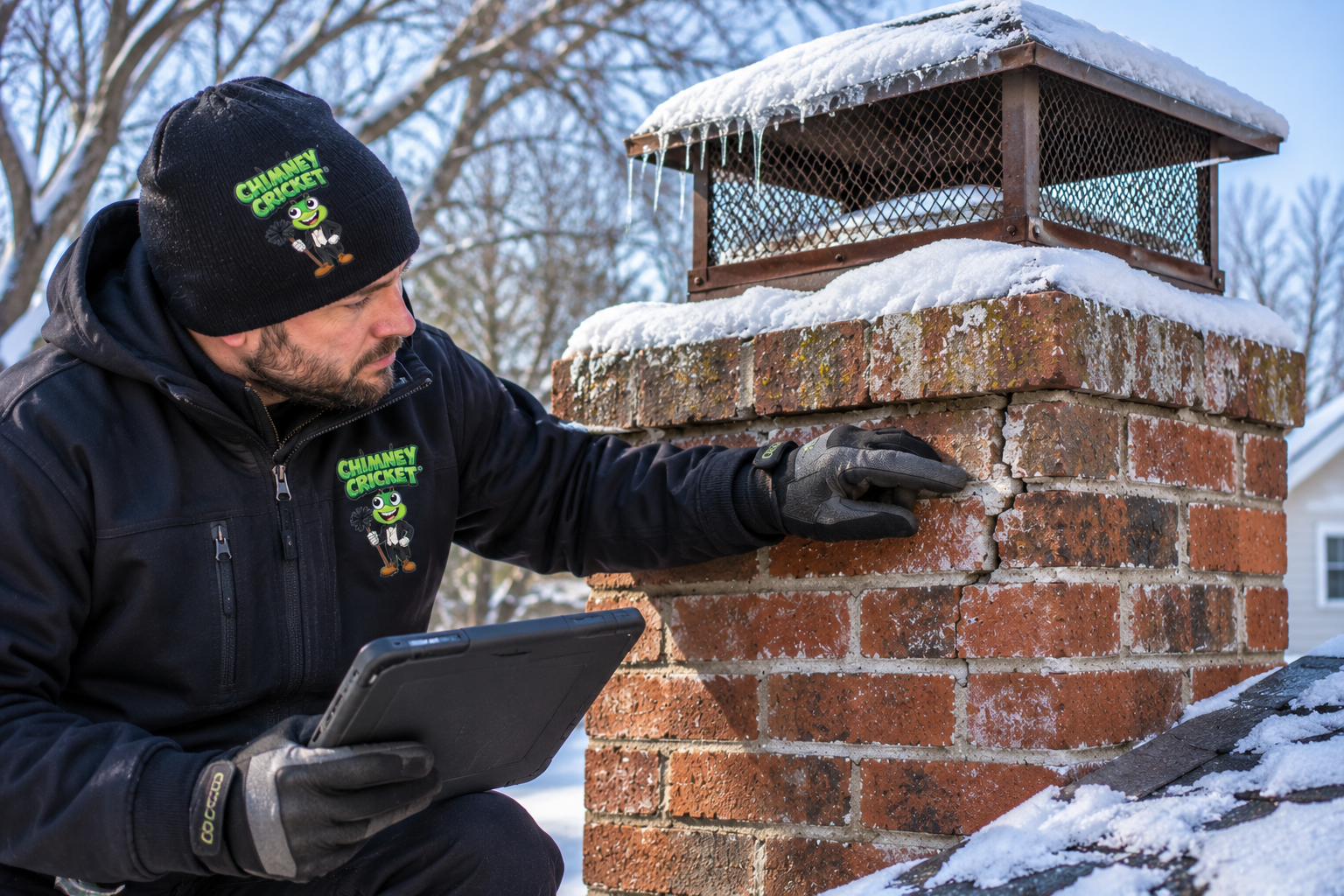
Why Winter Chimney Masonry Minnesota Properties Need Extra Protection
A chimney rises above the roofline, exposing all four sides to wind, drifting snow, and direct winter sun. Unlike siding or metal flashing, brick and mortar have millions of microscopic pores that draw liquid water inward through capillary action.
Protecting winter chimney masonry Minnesota wide starts with understanding how water interacts with temperature swings. Minnesota routinely experiences 50 to 100 or more freeze-thaw cycles between November and April. Daytime sun warms south- and west-facing chimney brick above 32°F, melting accumulated snow so liquid water soaks deep into mortar joints.
After sunset, temperatures plunge back below freezing. Water expands by roughly 9 percent as it turns to ice, exerting thousands of pounds of outward pressure inside tiny masonry voids. Because these temperature swings happen dozens of times each season, winter chimney masonry Minnesota systems endure far more stress than chimneys in milder states.
The Chimney Safety Institute of America (CSIA) notes that water penetration is one of the primary drivers of masonry chimney deterioration nationwide. Similarly, the National Fire Protection Association (NFPA) recommends annual chimney inspections under NFPA 211 to verify that structural masonry and flue components remain sound before regular heating-season use.
How Moisture Damages Winter Chimney Masonry Minnesota Wide
Left unsealed or unmaintained, winter chimney masonry Minnesota homes depend on can absorb surprising amounts of melted snow. Damage rarely happens overnight; instead, moisture breaks down the chimney structure through three progressive stages.
Moisture Absorption in Porous Masonry
Standard clay brick and traditional lime-based or cement-based mortar are designed to breathe, meaning they allow water vapor to pass through them. However, when heavy wet snow sits against a chimney shoulder or atop an unsealed crown, liquid water saturates the outer surface.
If mortar joints already have hairline shrinkage cracks, water penetrates even deeper. Gravity then pulls that moisture downward through the core of the chimney structure.
Freeze-Thaw Expansion in Winter Chimney Masonry Minnesota Systems
Once liquid water sits inside mortar pores or hairline cracks, dropping temperatures turn that moisture into expanding ice crystals. Each freeze event widens micro-cracks slightly, allowing even more meltwater to enter during the next warm afternoon.
This repeated expansion is the leading cause of crumbling mortar joints in winter chimney masonry Minnesota structures. Over several winters, mortar turns sandy, loses its bond with the brick, and falls out of the joints.
Spalling Brick Faces and Structural Weakening
Brick is made with a hard, kiln-fired outer crust and a softer, more porous interior core. Once mortar fails or the outer crust wears down, water saturates the softer clay layer just behind the brick face.
When moisture freezes just beneath the outer clay surface, it pops the face right off the brick—a destructive process known in winter chimney masonry Minnesota inspections as spalling. Once the protective outer crust is gone, the exposed inner clay erodes rapidly with every rainstorm and snowmelt.
Why Older Twin Cities Brick Chimneys Face Higher Risk
Many homes built decades ago across Minneapolis, St. Paul, and older Bloomington neighborhoods were constructed with softer, lower-fired clay bricks and softer lime-rich mortar. While durable when maintained, these historic materials absorb water faster than modern dense brick.
Historic neighborhoods across Minneapolis and Bloomington often feature softer clay bricks that make winter chimney masonry Minnesota care especially delicate. Using overly hard modern mortar during a patch job on older brick can actually force freeze-thaw stress onto the softer brick edges, causing them to crack and flake even faster.
Warning Signs of Winter Chimney Masonry Minnesota Deterioration
Spotting exterior trouble early keeps winter chimney masonry Minnesota repair projects manageable. You do not need specialized equipment to notice the earliest clues, provided you know what changes to look for around your roofline and fireplace.
Exterior Signs Homeowners Can Spot From the Ground
Walk around your yard on a clear day and inspect the visible chimney stack from ground level. Look closely for these five exterior indicators:
- Efflorescence: White, chalky powder on the brick surface—called efflorescence—proves that water is moving through winter chimney masonry Minnesota walls and leaving mineral salts behind as it evaporates.
- Recessed or crumbling mortar: Mortar joints should sit nearly flush with the brick edges. Deep grooves, missing chunks, or sandy grit at the base of the chimney indicate active mortar erosion.
- Spalling or flaking brick: Look for rough, pitted brick faces or small red clay chips resting on the roof shingles or patio below the chimney.
- Rust stains on masonry: Orange or brown streaks running down the brick often point to a corroding damper, firebox frame, or damaged chimney cap letting water inside.
- Cracked crown or loose flashing: Gaps where the chimney meets the roof or visible cracks in the top concrete slab allow meltwater to pour directly behind the outer brick wythe.
Interior Warning Signs Near Your Fireplace
Moisture inside winter chimney masonry Minnesota structures rarely stays confined to the exterior stack. Once water penetrates the outer brick, it can travel through the masonry mass and show up indoors.
Check the walls, ceiling, and fireplace opening for these interior symptoms:
- Damp spots, bubbling paint, or peeling wallpaper on walls adjacent to the chimney
- Musty, earthy odors coming from the firebox, especially during wet weather or spring thaws
- White mineral deposits or flaking masonry inside the firebox walls
- A fireplace damper that is rusted, stiff, or difficult to open and close
- Soot stains or water drips inside the hearth after heavy snowmelt
According to the Environmental Protection Agency (EPA), persistent moisture intrusion inside building walls creates ideal conditions for hidden mold growth and indoor air quality concerns. Addressing exterior masonry leaks promptly protects both your chimney structure and the living spaces around it.
Safe Ground Checks vs. Professional Winter Chimney Masonry Minnesota Work
Evaluating winter chimney masonry Minnesota homes safely never requires climbing onto an icy roof. Roof surfaces in late fall and winter become slick with frost, black ice, and loose snow, making roof access dangerous for homeowners.
You can safely perform a helpful visual check from the ground using a pair of binoculars. Scan all visible sides of the chimney stack, check the ground around an exterior chimney base for fallen brick flakes, and inspect interior ceilings and walls near the fireplace for fresh water marks.
Leave all elevated and structural tasks to trained chimney professionals:
- Climbing ladders to reach the roofline or chimney crown
- Leaning ladders against brick chimneys (which can shift weakened masonry)
- Entering the firebox or flue space to probe liner joints
- Grinding out deteriorated mortar or tuckpointing joints
- Applying masonry sealers or repairing chimney crown cracks
Avoid quick DIY fixes with hardware-store caulk or premixed cement. Hardware-store cement is often too hard for residential brick and can trap water inside winter chimney masonry Minnesota walls, accelerating spalling.
What Happens When Winter Chimney Masonry Minnesota Damage Goes Unrepaired
Ignoring minor mortar gaps in winter chimney masonry Minnesota exteriors triggers a predictable chain reaction. Because freeze-thaw cycles repeat every winter, moisture damage compounds rather than leveling off.
First Season: Surface Mortar Erosion
Hairline cracks open in mortar joints and around the crown edge. Water enters the outer brick layer, leaving faint efflorescence stains but little interior evidence.
Second and Third Seasons: Spalling and Liner Exposure
Freeze-thaw expansion pushes mortar out of the joints and pops faces off saturated bricks. Moisture reaches the interior flue liner, where temperature swings during fireplace use can crack clay flue tiles.
Long-Term: Structural Instability and Interior Leaks
By the third or fourth heating season, neglected winter chimney masonry Minnesota damage often spreads from surface joints into the flue liner and interior framing. Water stains appear on drywall, roof decking near the flashing rots, and the chimney stack may begin leaning or separating.
Catching eroded mortar early typically calls for targeted tuckpointing and waterproofing. Waiting until bricks spall deeply or the stack leans can require a partial or full chimney rebuild.
Professional Solutions for Winter Chimney Masonry Minnesota Restoration
A thorough evaluation determines which repairs will best protect winter chimney masonry Minnesota homes from ongoing moisture. Depending on what an inspector finds, professionals generally recommend one or more of the following proven solutions.
Comprehensive Level 1 and Level 2 Masonry Inspections
Before recommending repairs, a technician inspects the exterior brickwork, crown, flashing, and interior firebox, often using a specialized flue camera to check the liner. A professional chimney inspection separates superficial staining from active structural water intrusion.
Tuckpointing and Mortar Joint Restoration
When mortar joints erode more than a quarter-inch deep, technicians perform tuckpointing. Tuckpointing removes deteriorated mortar to a uniform depth and packs fresh, compatible mortar into winter chimney masonry Minnesota joints.
Matching the mortar’s strength and breathability to the existing brick is essential. Properly matched mortar flexes slightly with seasonal temperature shifts and prevents stress fractures in surrounding bricks.
Spalled Brick Replacement and Rebuild Options
If freeze-thaw cycles have stripped the outer faces off individual bricks, mortar patching alone will not restore strength. Technicians carefully chisel out damaged bricks and tooth in matching replacement bricks with fresh mortar.
When widespread spalling or severe leaning affects the upper chimney above the roofline, rebuilding that upper section restores structural stability and safety.
Vapor-Permeable Masonry Waterproofing
Applying a vapor-permeable water repellent helps shield winter chimney masonry Minnesota bricks from liquid water while letting trapped interior vapor escape. Unlike film-forming acrylics or paints that trap moisture and peel off during freezes, professional siloxane- or silane-based repellents bond chemically inside the pores.
This breathable barrier sheds wind-driven rain and snowmelt while allowing the chimney to exhale natural moisture from heating cycles. Note that waterproofing works best on sound masonry after cracks and open mortar joints are repaired.
Crown and Flashing Repairs That Keep Masonry Dry
Brick walls cannot stay dry if water pours in from above or behind. Professionals often pair masonry work with chimney flashing repairs or crown rebuilding so the entire top-to-bottom water-shedding system works together.
Preparing Winter Chimney Masonry Minnesota Systems Before November Storms
Taking proactive steps each fall keeps winter chimney masonry Minnesota exteriors resilient through January and February. Build these five habits into your autumn home maintenance routine:
- Schedule an annual fall inspection before deep cold arrives. Late summer through early November gives technicians dry, above-freezing weather needed for mortar curing and masonry repairs.
- Keep gutters and downspouts clear of autumn leaves. Overflowing gutters near a chimney soak adjacent brickwork and accelerate freeze-thaw erosion.
- Clear leaves and snow away from an exterior chimney base. Trapped organic debris holds moisture against lower brick courses and foundation joints.
- Take dated ground-level photos each autumn. Comparing photos year over year makes subtle changes in mortar depth, efflorescence, or brick color easy to spot.
- Test smoke and carbon monoxide alarms before lighting your first fire. Moisture-damaged flue liners or blocked passages can affect draft, making working alarms vital for household safety.
When to Call a Pro for Winter Chimney Masonry Minnesota Concerns
Knowing when to schedule service protects both your fireplace and your winter chimney masonry Minnesota investment. Use these practical timing guidelines to decide your next step:
- Call promptly if you see flaking brick pieces on the roof or yard, notice deep gaps in mortar joints, or spot damp stains on walls near the fireplace.
- Schedule within 30 days if you observe white efflorescence powder, hairline crown cracks, or rusted metal components at the top of the chimney.
- Book a routine check before your first fire if your brickwork looks intact from the yard, yet more than a year has passed since your last chimney cleaning and inspection.
When choosing a masonry specialist, verify licensing, liability insurance, and industry training. You can check regional service providers through the Verified Chimney Professionals Directory and confirm whether technicians hold CSIA credentials.
If you live in Bloomington, Minneapolis, or nearby Twin Cities suburbs, scheduling a fall evaluation ensures your winter chimney masonry Minnesota structure is ready before deep cold settles in. Chimney Crickets is based in Bloomington, Minnesota, and serves homeowners within roughly 35 miles across the Minneapolis metro area with thorough chimney repair and inspection services.
Our Services
Explore the full range of Chimney Crickets services for Minnesota homeowners:
🔍 Chimney Inspections — Start with a professional evaluation before any repair
🧱 Chimney Repointing — Restore deteriorated mortar joints in Minnesota masonry
👑 Chimney Crown Repair — Seal or rebuild a cracked or damaged chimney crown
🔩 Chimney Flashing Repair — Stop water entry at the roof-chimney junction
💧 Chimney Leak Repair — Trace and resolve active moisture entry
🛡️ Chimney Waterproofing — Protect repaired masonry from future moisture damage
🏗️ Full Masonry Repair — Comprehensive brick and mortar restoration
Serving Minnesota Homeowners
Chimney Crickets serves homeowners throughout Bloomington, Minneapolis, the South Metro and surrounding Minnesota communities.
Frequently Asked Questions
How does freeze-thaw weather damage winter chimney masonry Minnesota homes have?
Brick and mortar are porous and absorb melted snow during daytime warm-ups. When temperatures drop below freezing at night, that trapped water expands by about 9 percent, widening micro-cracks and gradually crumbling mortar joints and brick faces.
What is the white powdery substance on my exterior chimney bricks?
That white, chalky deposit is called efflorescence. It forms when moisture moves through brick and mortar, dissolves natural mineral salts, and leaves them behind on the surface as the water evaporates—an early sign of moisture intrusion.
What does spalling brick look like on a chimney?
Spalling occurs when the hard outer face of a brick flakes, peels, or pops off, exposing the softer clay interior. You will often see pitted, rough brick surfaces on the chimney stack or small red brick chips on the roof or ground below.
Can I apply hardware-store sealer to winter chimney masonry Minnesota brick myself?
No, film-forming sealers from hardware stores can trap moisture vapor inside the brick, causing the outer faces to blow off when temperatures freeze. Professionals use vapor-permeable repellents after repairing mortar joints, and roof-level application carries serious fall risks.
What is tuckpointing, and when does a chimney need it?
Tuckpointing is the process of grinding out deteriorated, crumbly mortar to a uniform depth and packing fresh, compatible mortar into the joints. A chimney typically needs tuckpointing once mortar erodes more than a quarter-inch deep or develops visible cracks.
Can chimney masonry repairs be done during a Minnesota winter?
Traditional mortar and waterproofing products require above-freezing temperatures to cure properly. While emergency tarping or temporary protection can be placed in mid-winter, permanent tuckpointing and brick replacement are best scheduled in spring, summer, or fall.
How does damaged chimney mortar lead to interior water stains?
Open mortar joints allow rain and snowmelt to pass behind the outer brick layer and travel downward through the masonry core. That trapped water eventually seeps into adjacent drywall, ceiling framing, or the firebox area.
How often should winter chimney masonry Minnesota systems be inspected?
The National Fire Protection Association (NFPA) recommends annual chimney inspections for all active chimneys and fireplaces. Scheduling that inspection in early fall allows time to complete masonry repairs before freezing weather arrives.
Why do older Minneapolis and Bloomington chimneys need special mortar matching?
Older Twin Cities homes often feature softer clay bricks built with softer lime-based mortar. Using overly rigid modern cement mortar on softer brick prevents natural movement and transfers freeze-thaw stress onto the brick edges, causing them to crack.
Does a cracked chimney crown contribute to brick and mortar damage?
Yes, the chimney crown acts as an umbrella over the masonry stack below it. When the crown cracks, snowmelt runs straight down into the mortar joints and behind the outer brick wall, accelerating freeze-thaw damage.
Is chimney masonry damage covered by homeowners insurance?
Standard homeowners policies generally exclude gradual wear, freeze-thaw deterioration, and deferred maintenance. Sudden damage from a severe storm or falling tree branch may be covered, depending on your policy terms.
Can moisture inside chimney masonry damage the flue liner?
Yes, water saturating the masonry structure can reach clay flue tiles and weaken liner mortar joints. During fireplace use, rapid heating of damp clay tiles increases the risk of liner cracking.
How can I safely check my chimney masonry without climbing a ladder?
Stand in your yard with binoculars on a bright day to inspect mortar depth, brick faces, and the crown edge from all visible angles. You can also check the ground near the chimney for fallen brick chips and inspect interior walls near the fireplace for damp stains.
Does waterproofing a brick chimney stop it from breathing?
Not when professionals use a vapor-permeable siloxane or silane water repellent. These treatments repel liquid rain and snowmelt on the outside while allowing internal water vapor to escape naturally.
What should I look for when hiring a contractor for winter chimney masonry Minnesota repairs?
Verify state licensing, liability insurance, and credentials through resources like the Verified Chimney Professionals Directory and CSIA. Ask for clear inspection photos, a written itemized estimate, and confirmation that mortar strength will be matched to your existing brick.