
Chimney Roofline Problems Minnesota: Essential Guide for Homeowners
Chimney roofline problems Minnesota homeowners face most often start with water. The roofline is the junction where the chimney meets the roof, and it depends on several seals that wear out over time. When those seals fail, water can reach the structure long before stains appear inside the house.
In short, a roofline problem is any defect where the chimney, roof surface, and flashing meet. The most common examples are worn flashing, cracked crowns, and missing or damaged chimney caps. Minnesota’s freeze-thaw cycles make each of these defects worse.
This guide explains the warning signs, why Minnesota winters accelerate damage, what you can safely check from the ground, and when to bring in a professional.
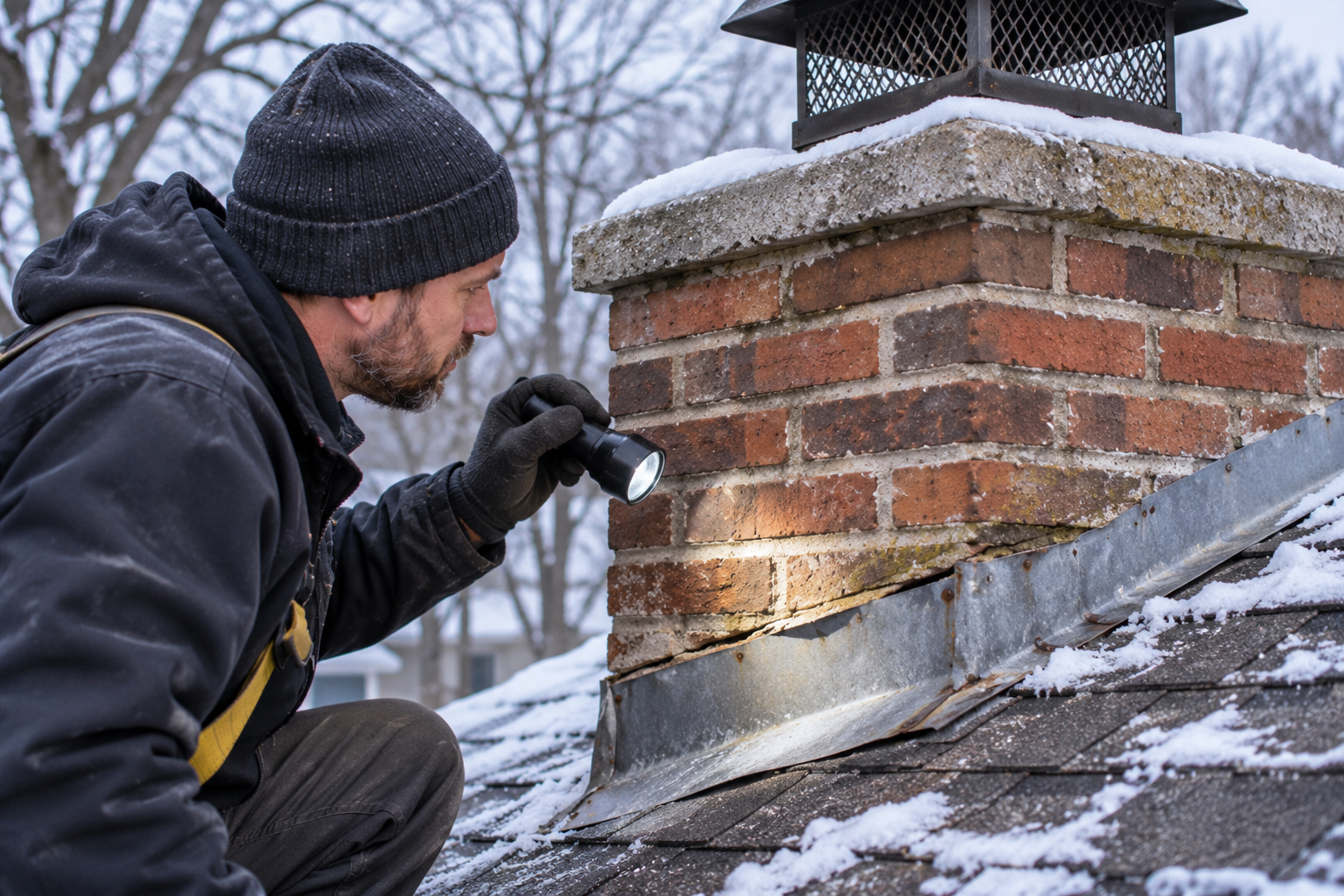
What Chimney Roofline Problems Minnesota Homes Commonly Develop
The roofline brings several building materials together. Shingles, metal flashing, masonry, and sealant all meet at one joint. Each material expands and contracts at a different rate, so small gaps form over the years.
Parts of the Roofline That Work Together
Four components do most of the work at the roofline:
- Flashing: A metal barrier that seals the seam between the roof and the chimney.
- Counter-flashing: Metal set into the masonry that overlaps the base flashing.
- Crown: The sloped top of the chimney that sheds water away from the flue.
- Chimney cap: A cover over the flue opening that keeps out rain, snow, debris, and animals.
When one component fails, the others carry extra load. That is why a small defect can grow into a larger leak.
Key Defects at the Flashing and Crown
Flashing Gaps and Failed Sealant
Sealant stays flexible for a time, but it dries and cracks with age. Once it separates, rain can slip behind the flashing. Rust, peeling paint, or dark streaks near the metal can signal this problem.
Crown Cracks and Surface Damage
Hairline cracks in the crown let water soak into masonry. Freeze-thaw cycles widen those cracks each winter. Flaking mortar or small missing pieces near the top of the chimney also deserve attention.
Missing or Damaged Chimney Caps
A bent, cracked, or missing cap lets rain and snow enter the flue. Wind can loosen caps over time. A damaged cap adds moisture to a system that may already be under stress.
Why Chimney Roofline Problems Matter in Minnesota Winters
Many chimney roofline problems Minnesota homeowners report begin as small gaps that winter weather enlarges. Freeze-thaw cycles, ice dams, and heavy snow all put stress on the roofline. Understanding these forces explains why small issues escalate quickly.
Freeze-Thaw Cycles Widen Small Cracks
Water expands about nine percent when it freezes. Water trapped in a hairline crack pushes outward as it freezes, which widens the gap. Each thaw lets more water in, and the next freeze widens the gap again.
Over several winters, a small crack can become a steady path for water. Early repairs usually involve less masonry work than repairs made after years of exposure.
Ice Dams Push Water Toward the Chimney
Heat escaping from the attic can melt snow on the roof. That meltwater runs toward colder eaves, refreezes, and forms an ice dam. Trapped water can back up under shingles and find its way toward flashing and masonry near the chimney.
Hidden Water Often Travels Before It Shows
Water rarely drops straight down. It can run along rafters, soak insulation, or follow a chimney wall before a stain appears on the ceiling. By the time homeowners see staining, moisture may have spread across a wider area.
How Roofline Water Damage Develops Over Time
Roofline damage usually moves through three stages. Knowing these stages helps you act before the damage reaches living space.
Stage One: Small Gaps Begin to Form
Sealant cracks, flashing lifts slightly, or mortar loosens. Water may not reach the house yet. This stage offers the best chance to catch chimney roofline problems Minnesota homeowners would otherwise miss.
Stage Two: Moisture Reaches the Structure
Water soaks into sheathing, framing, or insulation near the chimney. Persistent dampness can encourage mold growth. The EPA’s mold guidance emphasizes moisture control as the key step in preventing mold.
Stage Three: Visible Damage Appears Inside
Stains on ceilings or walls near the fireplace, peeling paint, or a musty smell after storms can signal an ongoing leak. Damage at this stage often spreads into drywall, trim, or insulation. Repairs take longer and cost more than early fixes.
Safe Observations Homeowners Can Make Without Climbing
You can learn a great deal without touching the roof. Keep every observation on the ground or inside the home. Stop immediately if the ground is icy, your footing feels unsteady, or anything looks unstable.
What to Check From Your Yard
- Stand on level ground well away from the house and look up at the chimney.
- Look for rust, dark streaks, or visible gaps near the flashing.
- Check whether the chimney cap sits straight and appears intact.
- Look for lifted, cracked, or missing shingles near the chimney.
- Watch for icicles or ice buildup along the eaves during winter.
- Take dated photos from the same spot so you can compare changes over time.
What to Check Inside the Home
- Look at ceilings and walls near the fireplace for stains or bubbling paint.
- Notice any musty odor after heavy rain, wind, or snowmelt.
- Watch for drips or dampness on the hearth or wall near the firebox after storms.
- Write down when each sign appears, such as after rain, wind, or thaw.
Safety Limits for Homeowners
Do not climb onto the roof. Do not enter or climb inside the chimney or its chase. Do not apply sealant, tarps, or patches to the roof or chimney. Do not attempt masonry or structural repairs.
These tasks create fall hazards, hide structural damage, and affect fire safety. Leave them to qualified professionals.
Professional-Only Work for Chimney Roofline Repairs
Chimney roofline problems Minnesota technicians handle often require ladders, fall protection, specialized tools, and masonry skills. The table below separates what homeowners can observe from what professionals should handle.
| Task | Homeowner Safe? | Who Handles It |
|---|---|---|
| Viewing the chimney from the ground | Yes | Homeowner |
| Photographing visible stains or gaps from the yard | Yes | Homeowner |
| Checking ceilings and walls inside the home | Yes | Homeowner |
| Walking on or working on the roof | No | Trained professional |
| Inspecting flashing, crown, and cap up close | No | Chimney professional |
| Repairing or replacing flashing | No | Chimney professional |
| Repointing or rebuilding masonry | No | Chimney professional |
| Sealing or patching the crown | No | Chimney professional |
| Video scanning the flue | No | Chimney professional |
A professional can check the flashing, crown, cap, and surrounding roofing as one system. That full view matters because water often enters at one spot and shows up somewhere else. If flue damage is also present, a technician may discuss chimney relining options. Chimney Crickets also provides chimney repair options once a technician confirms the cause.
What to Do When You Spot Warning Signs
Step 1: Record What You Observed
Write down the date, location, and conditions. Take clear photos from the ground. Note whether the sign appeared after rain, wind, or thaw.
Step 2: Skip Temporary Fixes on the Roof
Tarps and sealants can seem helpful, but they may trap water, damage shingles, or cause falls. Do not climb to apply temporary covers. Wait for a qualified technician.
Step 3: Book a Professional Evaluation
Request a chimney leak inspection and share your notes and photos. Ask the technician to check the flashing, crown, cap, and nearby roofing during the same visit. Compare the findings with your records to track changes over time.
When to Call a Professional Right Away
Call promptly if you see active dripping, large ceiling stains, or water near the fireplace. Soft or sagging ceilings also need prompt attention. A quick evaluation can prevent further damage to the home.
What to Do During a Chimney Fire
If you suspect a chimney fire, call 911 right away. Get everyone out of the home. Do not try to fight the fire yourself.
Understanding NFPA 211 Inspection Levels
The National Fire Protection Association publishes NFPA 211, which defines chimney inspection levels. A Level 1 inspection covers readily accessible parts of the chimney and venting system. A Level 2 inspection adds areas such as attics and crawl spaces, and it often includes video scanning of the flue.
A roofline concern may call for more than a basic look. Your technician will recommend the level that fits your home and the signs you describe. Learn more about chimney inspection services before you book.
Choosing a Qualified Chimney Professional in the Twin Cities
Homeowners across the Twin Cities often ask how to pick the right technician. Start with clear communication, written findings, and a plan that explains each repair option.
Questions to Ask Before Booking
- Will you inspect the flashing, crown, and cap during this visit?
- Will you provide photos or written notes of what you find?
- Which inspection level do you recommend, and why?
- Will you explain repair options before any work begins?
Using Trusted Resources to Compare Options
The Chimney Safety Institute of America publishes homeowner information about chimney safety and inspection. Verified Chimney Pros can help you research qualified professionals in your area. Compare several options, ask detailed questions, and choose the company that explains its findings clearly.
Chimney Crickets, based in Bloomington, serves Minneapolis and nearby communities within about 35 miles. You can contact our team with questions about your roofline.
Seasonal Checklist for Minnesota Roofline Care
Use this schedule to get ahead of the chimney roofline problems Minnesota winters tend to create:
- Late summer or early fall: Check the chimney from the ground for gaps, cap damage, and crown cracks. Consider chimney cleaning if soot or buildup is present before the heating season.
- Early winter: Watch for icicles and ice buildup at the eaves. Note any new stains near the fireplace.
- Late winter and spring: Check ceilings and walls after snowmelt. Look for musty odors and new discoloration.
- Summer: Compare your photos from earlier seasons. Book repairs before the next freeze.
Next Steps for Protecting Your Chimney Roofline
Chimney roofline problems Minnesota homes face rarely fix themselves. Early attention keeps repairs smaller and protects the rest of the house. Chimney Crickets helps homeowners across the Twin Cities understand their options and plan the next step with confidence.
Our Services
Explore the full range of Chimney Crickets services for Minnesota homeowners:
🔍 Chimney Inspections — Start with a professional evaluation before any repair
🧱 Chimney Repointing — Restore deteriorated mortar joints in Minnesota masonry
👑 Chimney Crown Repair — Seal or rebuild a cracked or damaged chimney crown
🔩 Chimney Flashing Repair — Stop water entry at the roof-chimney junction
💧 Chimney Leak Repair — Trace and resolve active moisture entry
🛡️ Chimney Waterproofing — Protect repaired masonry from future moisture damage
🏗️ Full Masonry Repair — Comprehensive brick and mortar restoration
Serving Minnesota Homeowners
Chimney Crickets serves homeowners throughout Bloomington, Minneapolis, the South Metro and surrounding Minnesota communities.
Frequently Asked Questions
What are chimney roofline problems Minnesota homeowners should know about?
The most common issues are failed flashing, cracked crowns, and missing or damaged chimney caps. These defects let water reach the chimney structure and eventually the home. Catching them early keeps repairs smaller.
What are the first signs of chimney roofline problems Minnesota?
Watch for stains on ceilings near the fireplace, peeling paint, and musty odors after storms. From the ground, look for rust, gaps, or lifted shingles near the chimney. Record what you see and share it with a professional.
Why do Minnesota winters make roofline damage worse?
Repeated freeze-thaw cycles let water enter small cracks, freeze, and widen them. Water expands about nine percent when it freezes, adding pressure to masonry and sealant. Ice dams near the eaves can also push water toward the chimney.
What is chimney flashing, and why does it matter?
Flashing is a metal barrier that seals the seam where the chimney meets the roof. It directs water away from that joint. When flashing lifts, rusts, or loses sealant, water can enter.
How do I know if my chimney crown is cracked?
From the ground, you may notice hairline cracks, flaking, or missing pieces at the top of the chimney. The crown is the sloped surface that sheds water away from the flue. Only a qualified professional can confirm the extent of crown damage.
Can I fix chimney roofline problems myself?
Homeowners should not climb onto the roof or perform masonry or structural repairs. Temporary tarps and sealants can trap water and create fall hazards. Contact a qualified chimney professional for any roofline repair.
Is a chimney roofline leak an emergency?
Active dripping, large ceiling stains, or water near the fireplace need prompt attention. Schedule a professional evaluation as soon as you notice these signs. If you suspect a chimney fire, call 911 instead.
What does a chimney leak inspection include?
A technician checks the flashing, crown, chimney cap, and surrounding roofing. The technician also reviews interior signs of moisture. Ask for photos and written notes to plan any repairs.
What is the difference between a Level 1 and Level 2 chimney inspection?
NFPA 211 defines Level 1 as a review of readily accessible parts. Level 2 adds attics, crawl spaces, and often video scanning of the flue. Your technician will recommend the level that fits your home.
Does Chimney Crickets serve homeowners outside Bloomington?
Chimney Crickets is based in Bloomington, Minnesota, and serves the Minneapolis metro area within about 35 miles. Homeowners across the Twin Cities can call (612) 280-2467. Visit https://chimneycrickets.net/ to learn more.
How do ice dams relate to chimney roofline damage?
Attic heat melts snow that refreezes at colder eaves, forming ice dams. The trapped water can work under shingles and reach flashing near the chimney. A roofing or chimney professional can advise on the right fix for your home.
What should I photograph before calling a professional?
Take clear photos of stains, gaps, and damaged caps from the ground. Note the date and whether the problem followed rain, wind, or thaw. Share these notes with the technician to speed up the evaluation.
Can a damaged chimney cap cause roofline leaks?
A missing or bent cap lets rain and snow enter the flue. This added moisture can contribute to problems at the top of the chimney. A professional can recommend a replacement if needed.
How should I choose a chimney professional in the Twin Cities?
Ask whether the company inspects the flashing, crown, and cap during one visit. Request written findings and photos before approving any work. Verified Chimney Pros can help you research qualified professionals.