
Chimney Attic Inspection Minnesota: Essential Guide for Homeowners
Chimney attic inspection Minnesota homeowners should understand starts with one question: what is happening where the chimney passes through the attic? A chimney attic inspection reviews the framing, insulation, moisture, and gaps around the flue. These areas can reveal heat damage, water problems, and fire-safety concerns long before they appear in the living space.
Homeowners can make safe visual observations from the attic access. A qualified chimney professional, however, must complete the full evaluation. Minnesota winters make this check more urgent, because cold air, heavy snow, and warm indoor air all push moisture toward the chimney.
This guide explains what a chimney attic inspection Minnesota homes need covers, how to look safely, which signs need fast action, and when to call a professional.
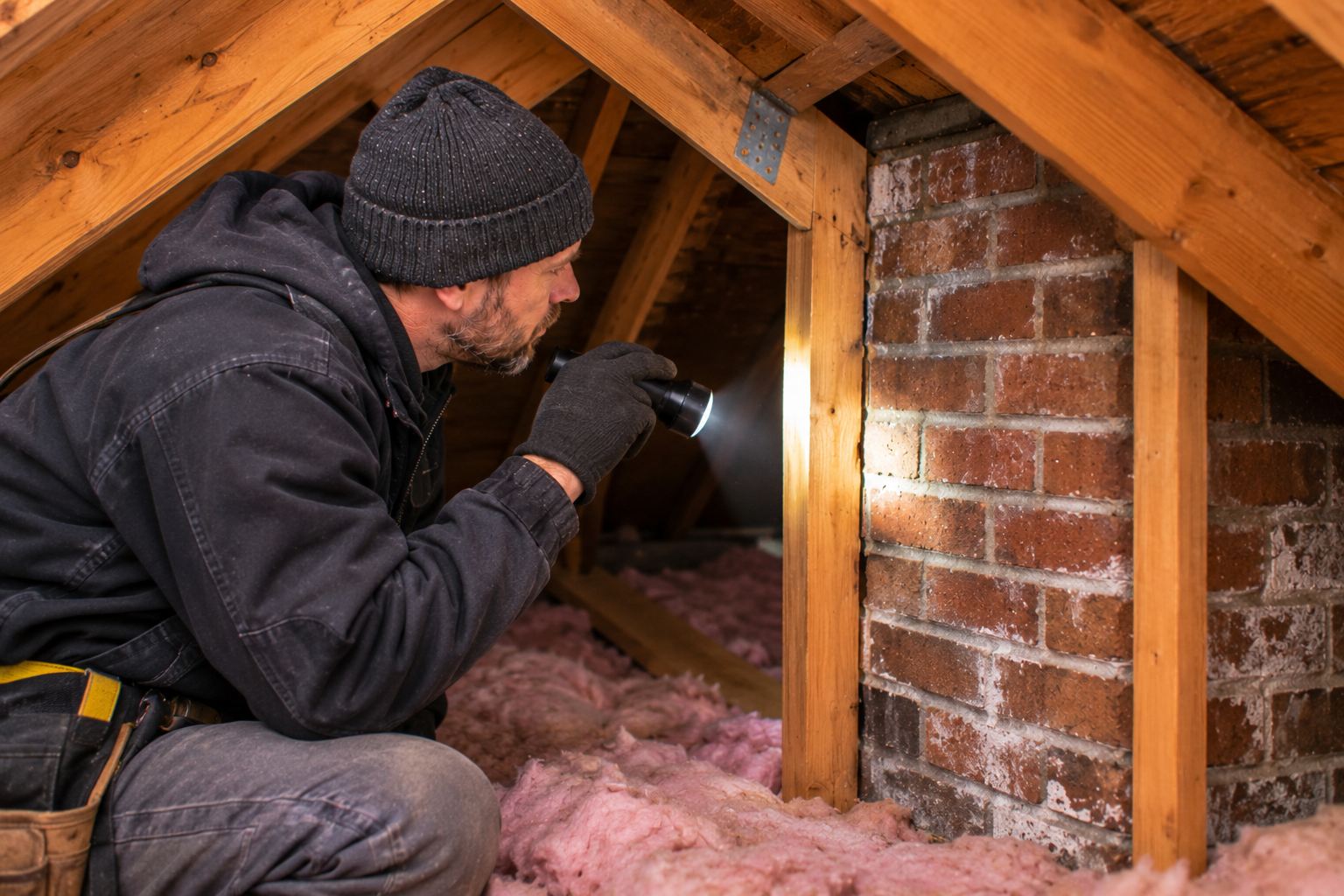
Chimney Attic Inspection Minnesota: What It Covers
A chimney attic inspection focuses on the parts of the chimney system that sit inside the attic. The chimney often passes through the ceiling, attic floor, and roof framing on its way out of the home. At each contact point, the structure needs proper clearance, firestop material, and dry, sound wood.
Where the Chimney Meets Attic Framing
Most chimneys rise through the attic before exiting through the roof. Wood framing, insulation, and ventilation sit close to the masonry or metal flue along that path. Each material reacts differently to heat and moisture, so each one needs a separate look.
Why Minnesota Attics Need a Closer Review
Many Minnesota homes have thick insulation and tight air sealing. Those features save energy, but they can also trap moisture when attic ventilation is limited. Cold nights can turn warm, humid air into frost or condensation on nearby surfaces.
Twin Cities homeowners often notice these changes during long cold snaps. A winter chimney attic inspection Minnesota check can catch small issues before the spring thaw reveals larger stains.
Why Attic Chimney Clearance Matters for Fire Safety
How Heat Travels From the Flue
A chimney carries hot smoke and gases out of the home. Heat moves through the masonry or metal flue, so nearby framing must stay at a safe distance. This separation protects wood from long-term heat exposure.
The National Fire Protection Association publishes NFPA 211, a standard covering chimneys, fireplaces, vents, and solid fuel-burning appliances. Its requirements help guide safe chimney construction and inspection practices.
Moisture, Frost, and Condensation
Warm, humid air from the living space can leak into the attic through small gaps. When that air meets a cold surface, it condenses. In winter, that moisture can freeze on nails, sheathing, or insulation near the chimney.
Wet framing and damp insulation can also encourage mold. The EPA’s mold guidance identifies moisture control as the key step in preventing mold growth.
If the moisture seems to come from the roof side rather than the attic, a chimney leak inspection can help identify the source.
Smoke and Scorch Signs
Smoke staining, scorched wood, or a burnt odor near the chimney signals a serious concern. These signs can point to flue leakage, poor clearance, or fire damage. Treat them as urgent, even when the rest of the house looks normal.
Safe Observations During a Chimney Attic Inspection Minnesota Check
Safety Limits Before You Look
Look only from the attic access opening or a stable, fixed walkway. Stay off insulation and do not crawl across joists. Do not move insulation, touch the chimney, or disturb any firestop material.
Never seal, patch, or insulate around the chimney yourself. If you cannot see the chimney area safely from the opening, skip the observation and call a professional. Stop immediately if the access feels unstable or you feel unwell.
What to Look For From the Hatch
- Dark staining or scorching on wood framing near the chimney
- Rust or flaking on nails, metal straps, or nearby ductwork
- Frost, damp insulation, or wet wood near the chimney in winter
- Gaps where the chimney meets the attic floor, ceiling, or roof framing
- Insulation pushed against or piled near the chimney (note it, but do not move it)
- A sooty or burnt smell in the attic
Use a flashlight and take a photo of each area. Write down the date, the weather, and whether the room below showed any changes. Clear records help a technician understand the pattern.
Heat, Smoke, and Moisture Clues
Heat and Smoke Clues
Scorched or charred wood, smoke staining, or a strong burnt smell near the chimney need prompt professional attention. Call a chimney professional right away rather than waiting for a routine visit. Do not touch the wood or chimney to test the area.
Moisture Clues
Dripping water, a soaked ceiling below the chimney, or insulation that stays wet after a thaw warrants a prompt call. Water near the chimney can spread into framing and sheathing quickly. Early attention keeps repairs smaller.
Step-by-Step Chimney Attic Inspection Minnesota Guide for Homeowners
Step 1: Choose a Calm, Well-Lit Time
Pick a dry day with good light. Avoid checking during ice, high wind, or after heavy snow that makes access slippery. A calm, planned check is faster and safer.
Step 2: Observe From the Hatch Only
Stand at the access opening with a flashlight. Look at the framing, insulation, and areas near the chimney. Do not move or touch anything you see.
Step 3: Compare Attic Clues With Room Signs
Check the ceiling and walls below the chimney for stains, bubbling paint, or a musty smell. Matching attic clues with room signs helps a technician locate the source. Note any differences between the attic and the living space.
Step 4: Request a Professional Attic Review
Call (612) 280-2467 or visit Chimney Crickets to request a visit. Share your photos, dates, and notes. Ask the team to include the attic area and to confirm the chimney inspection scope that fits your observations.
Professional-Only Attic Chimney Work
Some attic chimney tasks require training, tools, and code knowledge. The table below separates what homeowners can observe from what professionals should handle.
| Task | Homeowner Safe? | Who Handles It |
|---|---|---|
| Viewing framing and insulation from the attic hatch | Yes, from the hatch only | Homeowner |
| Photographing stains, frost, or gaps from the hatch | Yes | Homeowner |
| Checking ceilings below the chimney for stains | Yes | Homeowner |
| Walking or crawling across attic insulation | No | Avoid; not recommended |
| Moving insulation or touching the chimney | No | Chimney professional |
| Measuring clearance to combustible framing | No | Chimney professional |
| Inspecting or repairing firestop material | No | Chimney professional |
| Video scanning the flue | No | Chimney professional |
| Repairing damaged framing or sheathing | No | Qualified professional |
A professional reviews the attic, chimney, and roofline as one system. Heat, moisture, and airflow often interact, so one visit can explain several symptoms. When the flue needs attention, a technician may discuss chimney relining options. Learn more about chimney repair once the cause is confirmed.
Warning Signs That Need Immediate Action
If You Suspect a Chimney Fire
Call 911 right away. Get everyone out of the home. Do not try to fight the fire yourself.
If an Alarm Sounds or Smoke Is Visible
Leave the home and call 911 from outside. Do not return until emergency responders say it is safe. Schedule a professional chimney evaluation after the emergency is resolved.
Test Your Smoke and Carbon Monoxide Alarms
Test smoke and carbon monoxide alarms regularly, especially before the heating season begins. A working alarm gives early warning if smoke or gases reach living spaces. Replace batteries as the manufacturer directs.
How a Professional Chimney Attic Inspection Minnesota Visit Works
Level 1 and Level 2 Coverage
NFPA 211 describes two common inspection levels. A Level 1 inspection reviews readily accessible parts of the chimney and venting system. A Level 2 inspection adds areas such as attics and crawl spaces, and it often includes video scanning of the flue.
Attic concerns often call for a fuller review. Ask whether the visit includes a Level 2 evaluation before you book. Your technician will recommend the level that fits your home and your observations.
What a Technician Should Document
A thorough chimney attic inspection should end with written findings and photos. Ask the technician to explain what is safe, what needs monitoring, and what requires repair. Clear documentation helps you compare options and track changes from season to season.
Choosing a Qualified Chimney Attic Inspection Minnesota Professional
Homeowners across the Twin Cities often ask how to choose the right technician. Look for clear communication, written findings, and a plan that explains each option.
Questions to Ask Before Booking
- Will the visit include the attic area around the chimney?
- Which NFPA 211 inspection level do you recommend, and why?
- Will you provide photos and written findings?
- Will you explain repair options before any work begins?
Using Trusted Resources to Compare Options
The Chimney Safety Institute of America publishes homeowner information about chimney safety and inspection. Verified Chimney Pros can help you research qualified professionals in your area. Compare several options before you decide.
Chimney Crickets is based in Bloomington and serves Minneapolis and nearby communities within about 35 miles. You can contact our team with questions about your attic and chimney.
Seasonal Attic Checklist for Minnesota Winters
A seasonal routine helps you catch chimney attic problems before they grow. Use this schedule as a starting point:
- Late summer or early fall: Schedule a chimney inspection before the heating season. Consider chimney cleaning if soot or buildup is present.
- First cold snap: Look from the hatch for frost on nails or damp insulation. Photograph anything new.
- Midwinter: After heavy snow, check ceilings below the chimney for stains or a musty smell.
- Spring thaw: Compare your photos from earlier months. Note any staining or dampness that appeared during winter.
- Summer: Book repairs before the next heating season.
Next Steps for Chimney Attic Inspection Minnesota Homes
Your attic often shows the first clues about your chimney’s condition. Regular observation, clear photos, and timely professional review keep small concerns from becoming larger repairs. Chimney Crickets helps homeowners understand their options and plan the next step.
Our Services
Explore the full range of Chimney Crickets services for Minnesota homeowners:
🔍 Chimney Inspections — Start with a professional evaluation before any repair
🧱 Chimney Repointing — Restore deteriorated mortar joints in Minnesota masonry
👑 Chimney Crown Repair — Seal or rebuild a cracked or damaged chimney crown
🔩 Chimney Flashing Repair — Stop water entry at the roof-chimney junction
💧 Chimney Leak Repair — Trace and resolve active moisture entry
🛡️ Chimney Waterproofing — Protect repaired masonry from future moisture damage
🏗️ Full Masonry Repair — Comprehensive brick and mortar restoration
Serving Minnesota Homeowners
Chimney Crickets serves homeowners throughout Bloomington, Minneapolis, the South Metro and surrounding Minnesota communities.
Frequently Asked Questions
What should a chimney attic inspection Minnesota homeowners expect to include?
A chimney attic inspection reviews the framing, insulation, clearances, and moisture around the chimney where it passes through the attic. A professional can also check firestop material and the surrounding structure. Homeowners can make safe visual observations from the attic hatch, but the full evaluation belongs to a qualified technician.
Can I check the attic around my chimney myself?
You can make visual observations from the attic access opening or a stable walkway. Do not move insulation, touch the chimney, or step off the walking surface. If you cannot see the area safely, call a professional instead.
What signs in the attic point to a chimney problem?
Look for dark staining, scorched wood, rust on nails or straps, frost, damp insulation, and gaps around the chimney. A burnt smell or smoke staining is especially serious. Photograph anything you see and share it with your technician.
Why does moisture matter around chimney framing in Minnesota?
Warm indoor air can leak into the attic and condense on cold surfaces during winter. That moisture can freeze on nails and sheathing, then thaw and return. Persistent dampness can also encourage mold, which is why the EPA emphasizes moisture control.
Why does clearance between a chimney and attic framing matter?
A chimney releases heat through its walls, so nearby framing needs a safe distance from the flue. Clearance protects wood from long-term heat exposure. A technician can measure clearances and identify areas that need attention.
What is NFPA 211?
NFPA 211 is a standard from the National Fire Protection Association that covers chimneys, fireplaces, vents, and solid fuel-burning appliances. It defines chimney inspection levels that help homeowners understand what a visit covers. Ask your technician which level applies to your home.
What is the difference between a Level 1 and Level 2 chimney inspection?
A Level 1 inspection reviews readily accessible parts of the chimney and venting system. A Level 2 inspection adds areas such as attics and crawl spaces and often includes video scanning of the flue. Attic concerns usually call for a fuller review.
Is smoke staining in the attic an emergency?
Smoke staining near the chimney should be treated as urgent. It can signal flue leakage, poor clearance, or fire damage. Contact a chimney professional promptly, and if an alarm sounds or smoke is visible, leave the home and call 911 from outside.
Does insulation near a chimney create a fire risk?
Insulation placed too close to a chimney can be a concern, especially if it is piled against the flue or framing. Do not move it yourself. Note its location and ask a professional to evaluate the clearance.
How often should a chimney attic inspection happen in Minnesota?
Many homeowners schedule an inspection before each heating season. Check the attic after the first cold snap, after heavy snow, and after the spring thaw. Ask your technician how often your system should be reviewed.
Should I seal gaps around the chimney in my attic?
No. Sealing, patching, or insulating around a chimney can affect clearances and firestop performance. Leave repairs to a qualified chimney professional who can select the right materials and method.
What should I photograph before calling a professional?
Take clear photos of stains, frost, scorched areas, and gaps from the hatch. Include the date, the weather, and any matching ceiling stains below. These notes help a technician plan the visit.
Can ice dams affect the attic near a chimney?
Heat escaping into the attic can melt snow that refreezes at colder eaves, forming ice dams. Water can then travel toward the chimney and reach framing or insulation. A professional can help determine whether the attic and roofline need attention.
Does Chimney Crickets serve homeowners outside Bloomington?
Chimney Crickets is based in Bloomington, Minnesota, and serves the Minneapolis metro area within about 35 miles. Homeowners across the Twin Cities can call (612) 280-2467. Visit https://chimneycrickets.net/ to learn more.
How do I choose a chimney professional for an attic inspection in the Twin Cities?
Ask whether the visit includes the attic area around the chimney and which NFPA 211 level the technician recommends. Request written findings and photos before approving any work. Verified Chimney Pros at https://verifiedchimneypros.com/ can help you research qualified professionals.