
Before Next Fireplace Fire Minnesota: Essential Guide
Before next fireplace fire Minnesota homeowners enjoy, complete a short readiness check. Clear the space around the hearth, test your smoke and carbon monoxide alarms, look over the firebox from the front, and confirm your chimney was inspected within the past year. Anything you cannot confirm from the living room should go to a professional before the first fire of the season.
A quick pre-season chimney check often takes less than an hour. It can reveal problems that would otherwise grow quietly through a long heating season.
Before Next Fireplace Fire Minnesota: Why Timing Matters
Minnesota places unusual demands on fireplaces. Many homes sit idle through warm months, then run for hours at a time once temperatures drop below freezing. Shifts from mild autumn afternoons to subzero nights test every part of the system, from the damper to the seals around the glass doors.
Minnesota Cold Keeps Fireplaces Idle, Then Busy
Picture a typical Twin Cities household that lights the fireplace on a few October evenings, then runs it nightly once January arrives. Problems that started during the off-season show up quickly under that heavier load. Winter fireplace preparation works best when it happens before the first hard freeze.
How Freeze-Thaw Chimney Damage Starts
Water finds small openings in chimney crowns, mortar joints, and flashing. In Minnesota, that water freezes, expands, and widens each gap. Repeated freeze-thaw cycles through spring and fall can turn a hairline crack into an opening that lets rain and snowmelt reach the flue.
Hidden water rarely announces itself. White mineral staining, damp odors near the fireplace, or flaking brick may be the first clues. A chimney leak inspection can confirm where water enters before it causes larger damage.
How Creosote Buildup Forms Between Seasons
Your chimney keeps a record of past fires. Residue from last season does not disappear during summer. It stays on the flue liner until a trained technician removes it.
Creosote Stages Explained
The Chimney Safety Institute of America (CSIA) describes creosote in three stages. Stage 1 is loose, dry soot that brushes away relatively easily. Stage 2 is flaky or crusty buildup that clings to the liner. Stage 3 is glazed, tar-like coating that is very difficult to remove and creates serious fire risk.
You cannot identify these stages from the living room. A professional can determine the stage during a pre-season inspection, which is one reason a pre-season visit matters before next fireplace fire Minnesota begins.
Ash, Debris, and Old Embers
Ash and debris can collect near the firebox over the warm months. Leftover embers can stay hot for days, even when ash looks gray and cool. Store ashes in a closed metal container outside the home, and keep that container away from walls, decks, and wood piles.
Pre-Season Checks You Can Safely Complete
These checks happen before next fireplace fire Minnesota, at floor level, in the living room, and around the hearth. None require climbing onto the roof, reaching into the flue, or touching the chimney exterior. Complete them in order, and stop if anything looks unusual.
Step 1: Clear the Hearth and Keep Combustibles Back
Remove rugs, decorations, baskets, and furniture from the area in front of the fireplace. Many fire safety guides recommend keeping at least three feet of clear space in front of the opening. Move curtains, paper, and stored items well away from the firebox.
Step 2: Inspect the Firebox and Glass Doors From the Front
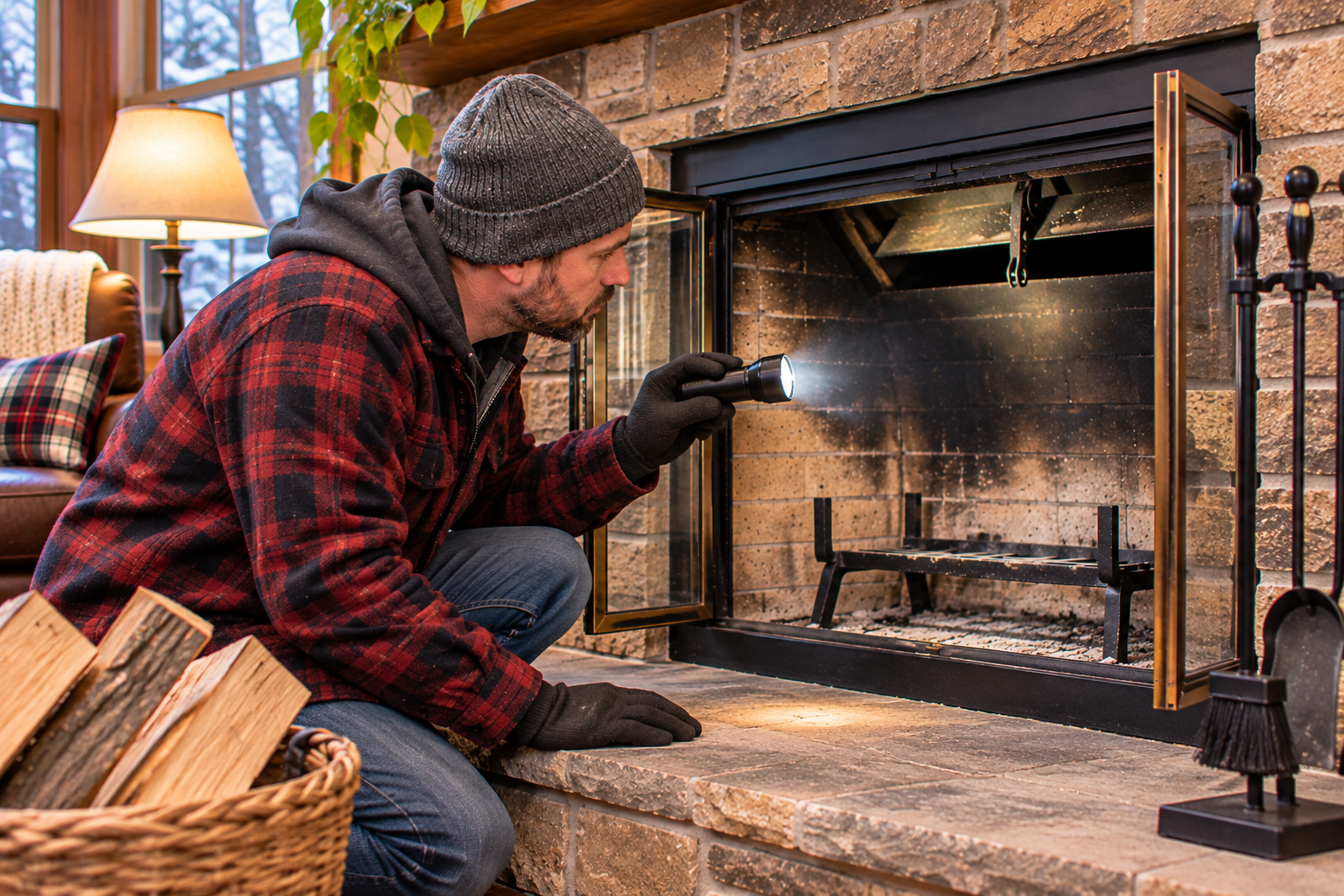
With the fireplace cold and fully out, look at the firebox from the front. Note any cracks, missing firebrick, or loose mortar you can see. Check that glass doors close fully and that the gasket seals the opening.
What to Look For at the Firebox
- Hairline or wider cracks in the firebrick
- Gaps around the glass door or gasket
- A loose, bent, or missing fire screen
- Debris or nesting material visible at the front
Do not reach up into the firebox to inspect the damper or flue. Report what you see to a professional instead.
Step 3: Test Smoke and Carbon Monoxide Alarms
Press the test button on every smoke alarm and carbon monoxide alarm in the home, especially those near the fireplace and bedrooms. Replace batteries that chirp or fail the test. Working alarms give early warning if smoke or carbon monoxide reaches living space.
Step 4: Confirm Your Firewood Is Ready
Burn only seasoned wood, ideally at 20 percent moisture content or less. The U.S. Environmental Protection Agency’s Burn Wise program encourages dry wood for cleaner, more efficient fires. Stack wood off the ground, and never burn trash, cardboard, or painted wood.
Step 5: Review Your Last Inspection Report
Find your last inspection report and read the date and recommendations. If the report called for repairs, confirm they were completed. If you cannot locate a report, or your last visit was more than a year ago, schedule a chimney inspection before winter through our chimney inspection services.
Safe Observations Versus Professional-Only Work
Knowing where your responsibility ends keeps your household safe. The table below separates what you can observe from what requires trained technicians.
| Safe Homeowner Observations | Professional-Only Work |
|---|---|
| Measure clear space around the hearth | Inspect the flue, liner, and smoke chamber |
| Look at the firebox front for visible cracks | Evaluate crowns, caps, and flashing |
| Test smoke and carbon monoxide alarms | Remove creosote through chimney cleaning |
| Note staining, odors, or drafts in the room | Repair masonry, liners, or damper components |
| Keep notes on fires and unusual sounds | Work on the roof or inside the chimney |
Homeowners should never climb onto the roof, enter the chimney, or attempt structural repairs. Those tasks carry serious fall and fire risks, and trained professionals should handle them.
When to Call a Professional Before Lighting Your Fireplace
If any checklist item raises a question, call a professional before next fireplace fire Minnesota starts. A short delay costs far less than a chimney fire or an emergency repair during a cold snap.
Warning Signs That Need Prompt Attention
- Staining or white mineral deposits on brick or around the firebox
- Odors or smoke that enter the room when no fire is burning
- Flaky, shiny, or tar-like deposits near the firebox opening
- Water stains on ceilings or walls near the fireplace
- A damper that sticks, rusts, or cannot be confirmed open or closed
If you notice any of these signs, book a chimney inspection before you light the next fire.
Chimney Fire Warning Signs
A chimney fire often sounds like a roaring freight train or a jet engine. Other warning signs include popping or banging sounds, dense smoke from the top of the chimney, sparks near the cap, and unusual heat in nearby walls.
Emergency Steps to Take Right Away
Get everyone out of the home first. Call 911 from a safe location outside. Do not try to fight the fire or inspect the chimney yourself. After the emergency, schedule a professional inspection before using the fireplace again.
What a Professional Pre-Season Inspection Covers
A technician evaluates the whole system, starting with the firebox and moving through the flue, liner, smoke chamber, damper, crown, cap, and flashing. Many inspections use video scanning to view the flue interior, so no one needs to climb inside.
Level 1 and Level 2 Chimney Inspections
The National Fire Protection Association (NFPA) publishes NFPA 211, which defines chimney inspection levels. A Level 1 inspection covers the readily accessible parts of the system. A Level 2 inspection adds areas such as attics and crawl spaces and often includes video scanning of the flue.
Level 2 inspections are commonly recommended after a chimney fire, when fuel or appliances change, or during a home sale. Ask your technician which level fits your home.
Cleaning, Repairs, and Relining Decisions
After the inspection, the technician should explain the findings in plain language. Buildup may call for chimney cleaning. Damaged masonry or a faulty cap may need chimney repair, and deteriorated flue liners may require chimney relining.
Ask for written findings and photos. Comparing them with next year’s report shows whether conditions are stable or changing.
Choosing a Chimney Professional in the Twin Cities
Chimney Crickets, based in Bloomington, serves homeowners across Minneapolis and the Twin Cities. Comparing a few companies before booking helps you find a good fit before next fireplace fire Minnesota begins. Look for technicians who explain findings clearly, put recommendations in writing, and answer questions before any work starts.
Use Verified Chimney Pros as a starting point when researching qualified professionals in your area.
Questions to Ask Before You Book
- Will the inspection include the flue, or only the firebox?
- Will you provide written findings with photos?
- Can you explain the creosote stage and liner condition?
- Which repairs are urgent, and which can wait until spring?
Pre-Season Fireplace Checklist for the First Fire
Use this fireplace safety checklist Minnesota homeowners can follow before lighting the first fire of the season:
- Chimney inspected within the past year, with a written report on file
- Hearth clear, with combustibles kept at least three feet back
- Firebox front and glass doors inspected from the front
- Smoke and carbon monoxide alarms tested and working
- Firewood seasoned to 20 percent moisture or less
- Ash container ready and placed away from the home
Next Steps for a Safer Fireplace Season
Start with the checks you can complete before next fireplace fire Minnesota season begins. Then book a professional evaluation for anything you cannot confirm. Good fireplace readiness starts with small habits, and early action prevents emergency calls during the first January cold snap.
Our Services
Explore the full range of Chimney Crickets services for Minnesota homeowners:
🔍 Chimney Inspections — Start with a professional evaluation before any repair
🧱 Chimney Repointing — Restore deteriorated mortar joints in Minnesota masonry
👑 Chimney Crown Repair — Seal or rebuild a cracked or damaged chimney crown
🔩 Chimney Flashing Repair — Stop water entry at the roof-chimney junction
💧 Chimney Leak Repair — Trace and resolve active moisture entry
🛡️ Chimney Waterproofing — Protect repaired masonry from future moisture damage
🏗️ Full Masonry Repair — Comprehensive brick and mortar restoration
Serving Minnesota Homeowners
Chimney Crickets serves homeowners throughout Bloomington, Minneapolis, the South Metro and surrounding Minnesota communities.
Frequently Asked Questions
What should I check before next fireplace fire Minnesota?
Clear the hearth to at least three feet, test your smoke and carbon monoxide alarms, and inspect the firebox front and glass doors from outside. Confirm your wood is seasoned and that your last chimney inspection is within the past year. Anything you cannot confirm should go to a professional before the first fire.
How often should a Minnesota chimney be inspected?
Most homeowners who burn wood should have their chimney inspected at least once a year. Frequency may increase with heavy use, a change in fuel, or after a chimney fire. Annual checks help track changes in creosote and liner condition over time.
Is a pre-season inspection necessary if the fireplace worked last year?
Yes, because conditions can change during the off-season. Freeze-thaw cycles, moisture, and animal activity can create damage without obvious signs. A professional can compare the current condition with your previous report.
What is the difference between a Level 1 and Level 2 chimney inspection?
A Level 1 inspection covers the readily accessible parts of the chimney, firebox, and venting. A Level 2 inspection adds areas such as attics and crawl spaces and often includes video scanning of the flue. NFPA 211 defines both levels, and a technician can explain which one fits your home.
Can I clean my own chimney before the first fire?
Cleaning usually requires access to the roof or reaching into the flue, which carries fall and fire risks. Homeowners should leave flue cleaning to trained professionals. If you see buildup, schedule a professional evaluation instead.
What is creosote, and why does it matter before the first fire?
Creosote is a residue that forms when unburned wood particles and vapors condense inside the flue. The CSIA describes three stages, and the later stages are harder to remove and more dangerous. A pre-season check can identify the stage before the season adds more.
How can I tell if firewood is dry enough to burn?
Use a pin-type moisture meter on freshly split wood and aim for 20 percent moisture or less. Seasoned wood often shows end cracks and sounds sharp when two pieces knock together. Use a meter whenever you are unsure.
Where should I store fireplace ashes?
Let ashes cool completely, then place them in a closed metal container. Keep the container outside the home, away from walls, decks, and wood piles. Embers can stay hot for days, so treat ashes as a fire hazard until they are fully cold.
How far should furniture and rugs stay from a fireplace?
A common safety guideline is at least three feet of clear space in front of the fireplace opening. Keep curtains, paper, decorations, and stored items farther back. Check the space before each fire, since rugs and furniture often shift.
Should I test carbon monoxide alarms before the first fire?
Yes, test every smoke and carbon monoxide alarm before the first fire and at least monthly. Replace batteries that chirp or fail the test, and replace units past the manufacturer’s age limit. Working alarms provide early warning if smoke or gas reaches living space.
What does a cracked firebox mean?
Hairline cracks in firebrick can reflect normal wear, but wider cracks, missing brick, or gaps may allow heat and smoke to reach nearby materials. Do not patch the firebox yourself. Report what you see to a professional for evaluation.
How do freeze-thaw cycles affect a chimney in Minnesota?
Water enters through cracks in crowns, mortar joints, and flashing, then expands when it freezes. Repeated cycles widen small gaps into larger openings. A professional should evaluate any staining or flaking to find the source.
What signs suggest a chimney leak?
Watch for white mineral staining on brick, damp odors near the fireplace, or water marks on nearby ceilings and walls. Flaking mortar or brick on the exterior also deserves attention. A professional leak inspection can locate the entry point.
What should I do if I think my chimney is on fire?
Get everyone out of the home and call 911 from a safe location outside. Do not try to put out the fire or inspect the chimney yourself. After the emergency, have a professional inspect the system before using the fireplace again.
How do I choose a chimney professional in the Twin Cities?
Look for a company that explains findings clearly, provides written recommendations, and answers your questions before work begins. Confirm that the inspection includes the flue, not just the firebox. You can research options through Verified Chimney Pros and compare at least two companies before booking.