
Chimney Liner Repair Minneapolis: 7 Critical Signs You Need Replacement Now
Opening your fireplace for the first fire of the season should bring warmth and comfort, not fear. But when you notice strange odors, poor draft, or pieces of clay tile in your firebox, you’re facing a serious safety issue that demands immediate attention. Chimney liner repair Minneapolis services become urgent when your flue liner—the protective barrier between your fire and your home’s structure—begins to fail.
For homeowners across Minneapolis, Bloomington, and the Twin Cities metro area, October is the critical window for addressing liner damage before winter heating season begins. Minnesota’s brutal freeze-thaw cycles and heavy fireplace use create the perfect storm for liner deterioration to escalate into dangerous fire hazards or carbon monoxide leaks. Understanding when your chimney needs professional chimney liner repair Minneapolis versus simple maintenance can protect your family and prevent catastrophic house fires.
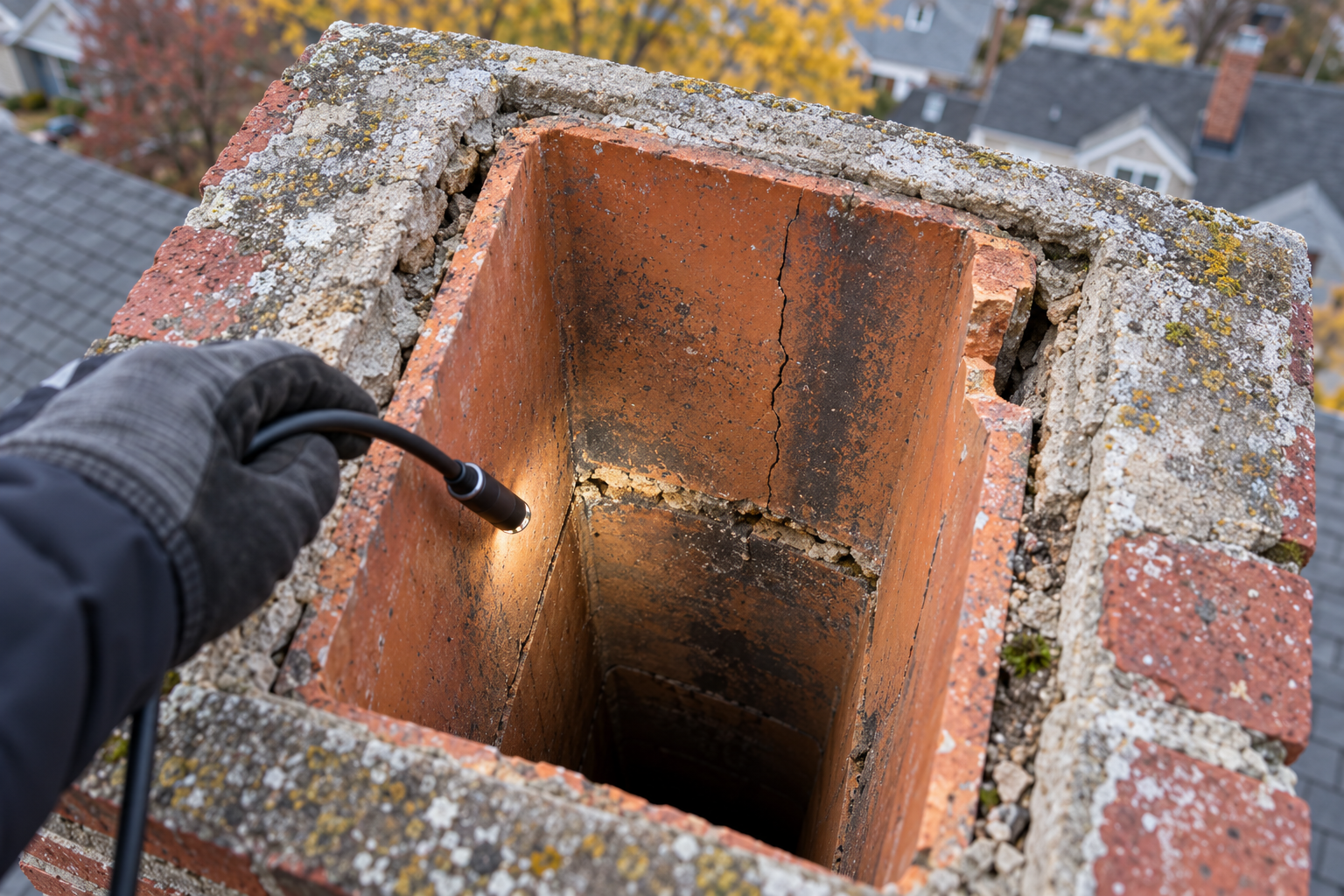
Why Your Chimney Liner Matters More Than You Think
Your chimney liner is the unsung hero of your fireplace system. This protective tube, typically made of clay tile, metal, or cast-in-place concrete, runs from your firebox to the top of your chimney. It serves three critical functions that keep your home safe.
First, the liner contains the heat from your fire, preventing it from transferring to combustible materials in your walls, attic, or roof structure. Without a properly functioning liner, heat can ignite framing members, causing devastating house fires that spread rapidly through hidden spaces.
Second, the liner directs dangerous combustion gases—including carbon monoxide—safely outside your home. Carbon monoxide is odorless, colorless, and potentially fatal. A cracked or deteriorated liner can allow this deadly gas to seep into your living spaces, putting your family at risk of poisoning.
Third, the liner protects your chimney’s masonry from corrosive byproducts of combustion. Creosote, acids, and moisture from burning wood would quickly destroy brick and mortar without the protective barrier of a sound liner.
When your liner fails, all three protective functions collapse simultaneously. This is why chimney liner repair Minneapolis is not optional maintenance—it is essential safety work that requires professional expertise.
7 Critical Warning Signs You Need Chimney Liner Repair Minneapolis Services
Recognizing liner damage early prevents emergencies. Watch for these seven critical warning signs that indicate your Minneapolis chimney needs professional liner attention immediately.
Sign 1: Cracked or Missing Flue Tiles
If you can see cracks in the clay tiles inside your firebox, or if pieces of tile have fallen to the bottom of the firebox, your liner has failed. Clay tile liners, common in older Minneapolis homes, crack from freeze-thaw stress, thermal shock, or chimney fires.
These cracks create gaps where heat and gases escape into your home’s structure. Even hairline cracks can expand during winter use, leading to complete liner failure. Chimney liner repair Minneapolis professionals use camera inspections to identify hidden cracks invisible from the firebox.
Sign 2: Rust or Corrosion on Interior Metal Components
Rust on your damper, fireplace doors, or the metal supports inside your firebox indicates that moisture and corrosive gases are escaping through liner cracks. In Minnesota’s humid climate, this corrosion accelerates rapidly once the liner’s protective barrier is compromised.
This rust is not just cosmetic—it signals that your liner is no longer containing combustion byproducts. The acidic moisture that causes rust also damages your chimney’s masonry and creates serious health hazards.
Sign 3: Pieces of Liner Material in the Firebox
Finding chunks of clay tile, pieces of metal, or concrete debris in your firebox is an unmistakable sign of liner failure. These fragments fall when the liner cracks or collapses, creating dangerous gaps in the protective barrier.
Never ignore debris in your firebox. Each missing piece represents a hole where heat and gases can escape into your home’s structure. This is an urgent situation requiring immediate chimney liner repair Minneapolis evaluation.
Sign 4: Poor Draft or Smoke Backup
When your fireplace suddenly won’t draw properly, or smoke backs up into the room despite a clean chimney, the liner may be damaged or blocked. Cracks in the liner disrupt the draft that carries smoke up and out of your home, causing smoke to spill into your living space.
This creates immediate health hazards from smoke inhalation and indicates that the liner is no longer functioning as designed. In Minneapolis homes, this problem often worsens during cold weather when temperature differentials should improve draft, but liner damage prevents proper airflow.
Sign 5: Visible Gaps or Deterioration at Liner Joints
If you can see gaps between flue tiles, or if the mortar between tiles is crumbling away, the liner has lost its continuity. These gaps allow heat and gases to escape between the liner and the chimney’s masonry walls, creating fire hazards and carbon monoxide risks.
Gaps often appear first at the joints between tiles, where thermal expansion and freeze-thaw cycles create the most stress. Professional camera inspection reveals the full extent of joint deterioration throughout the chimney’s height.
Sign 6: Age Over 20–30 Years
If your chimney liner is original to your home and your house is more than 20–30 years old, the liner has likely reached the end of its service life. Clay tile liners typically last 30–50 years, but Minnesota’s harsh freeze-thaw cycles often shorten this lifespan significantly.
Even if you don’t see obvious damage, age-related deterioration may be occurring hidden within the chimney structure. A professional inspection with camera technology can assess the liner’s actual condition and determine if chimney liner repair Minneapolis or replacement is needed before winter use.
Sign 7: Water Damage or Efflorescence on Chimney Exterior
White, powdery staining (efflorescence) on your chimney’s exterior, or water stains on interior walls near the chimney, often indicates liner failure. When the liner cracks, water from rain and snow enters the space between the liner and the masonry, saturating the chimney structure.
In Minnesota, this trapped water freezes and expands, accelerating masonry deterioration and potentially causing the liner to collapse further. The water damage you see on the exterior is often just the visible symptom of a much larger problem inside the chimney.
Repair vs. Replacement: Which Does Your Minneapolis Chimney Need?
When you discover liner damage, the critical decision is whether to repair or replace. Chimney liner repair Minneapolis professionals evaluate several factors to recommend the best approach.
When Repair Is Possible
Minor cracks in clay tile liners can sometimes be repaired using specialized sealants or by replacing individual damaged tiles. This approach works when damage is limited to one or two tiles and the surrounding structure remains sound.
However, repairs are temporary solutions. If your liner is aging or shows multiple areas of damage, repair may only delay the inevitable need for replacement. In Minnesota’s harsh climate, repaired clay tile liners often fail again within a few years.
When Replacement Is Necessary
Most chimney liner repair Minneapolis professionals recommend complete relining when:
- More than 25% of the liner is damaged
- The liner is cracked or missing in multiple locations
- The chimney has experienced a chimney fire (which often cracks clay tiles)
- The liner is over 30 years old
- The home is being converted from one fuel type to another (e.g., oil to gas)
Modern replacement options include stainless steel liners, which are durable, corrosion-resistant, and designed to withstand Minnesota’s freeze-thaw cycles. Cast-in-place liners create a seamless, insulated barrier that improves draft and efficiency.
The Dangers of Ignoring Chimney Liner Damage in Minnesota Winters
Delaying chimney liner repair Minneapolis creates escalating risks that threaten your home and family. Minnesota’s climate accelerates these dangers.
Fire Hazards
A damaged liner allows heat to transfer directly to combustible materials in your walls, attic, or roof. In Minneapolis homes with older construction, this heat can ignite framing members hidden behind drywall, creating fast-spreading house fires that are difficult to detect until they’re out of control.
The National Fire Protection Association (NFPA) identifies damaged flue liners as a leading cause of residential fires. According to NFPA safety standards, any cracked or deteriorated liner requires immediate professional attention before the fireplace is used again.
Carbon Monoxide Poisoning
Carbon monoxide leaks from damaged liners are particularly dangerous because the gas is odorless and colorless. Symptoms of exposure—headaches, dizziness, nausea, and confusion—are often mistaken for flu or fatigue. High concentrations can cause unconsciousness and death within minutes.
In tightly sealed Minnesota homes during winter, carbon monoxide can accumulate to dangerous levels quickly. Install carbon monoxide detectors on every level of your home, but remember that detectors are a backup safety measure—not a substitute for a properly functioning chimney liner.
Structural Chimney Collapse
Water entering through liner cracks saturates the masonry between the liner and the chimney exterior. During Minnesota’s freeze-thaw cycles, this water freezes and expands, cracking bricks and mortar from within. Over time, this can cause sections of the chimney to collapse, damaging your roof and creating dangerous falling debris.
Accelerated Deterioration
Every fire you burn in a fireplace with a damaged liner accelerates the damage. Heat escaping through cracks bakes the surrounding masonry, making it more porous and susceptible to further water intrusion. Creosote deposits build up faster in damaged liners, increasing chimney fire risk.
What Happens During Professional Chimney Liner Repair Minneapolis Services
Understanding the process helps you prepare for professional chimney liner repair Minneapolis work and recognize quality service.
Step 1: Comprehensive Inspection
A qualified technician performs a Level 2 chimney inspection using a high-resolution camera inserted into the flue. This reveals the full extent of liner damage, including cracks, gaps, and deterioration invisible from the firebox. The inspection also assesses the chimney’s structural condition and identifies any obstructions.
Step 2: Liner Removal (If Replacing)
For replacement projects, the technician removes the damaged liner. Clay tiles are carefully broken apart and removed. Metal liners are pulled out in sections. This work requires specialized tools and safety equipment to protect the chimney’s masonry structure.
Step 3: Chimney Cleaning and Preparation
Before installing a new liner, the technician thoroughly cleans the chimney flue to remove creosote, soot, and debris. The interior masonry is inspected for damage, and any necessary masonry repair is completed to ensure a solid foundation for the new liner.
Step 4: New Liner Installation
For stainless steel liners, the technician lowers the flexible or rigid liner into the flue, secures it at the top and bottom, and insulates it to improve efficiency and safety. For cast-in-place liners, a specialized mixture is poured into the flue to create a seamless, insulated barrier.
The liner is properly sized for your fireplace or appliance to ensure adequate draft and safe venting of combustion gases.
Step 5: Connection and Sealing
The new liner is connected to your fireplace or appliance using appropriate adapters and sealed to prevent gas leakage. The top of the chimney is fitted with a new cap to prevent water entry, and the crown is inspected or repaired as needed.
Step 6: Final Inspection and Testing
The technician performs a final inspection to verify proper installation, checks for adequate draft, and may conduct a smoke test to confirm that gases are venting properly. You receive documentation of the work completed and any warranty information.
Choosing the Right Liner Type for Twin Cities Homes
When replacing your liner, you have several options. Chimney liner repair Minneapolis professionals can help you choose the best type for your specific situation and budget.
Stainless Steel Liners
Stainless steel liners are the most popular choice for Minneapolis homeowners. They are durable, corrosion-resistant, and available in flexible or rigid configurations. Flexible liners work well for chimneys with offsets or bends, while rigid liners provide maximum durability for straight chimneys.
Stainless steel liners carry lifetime warranties from many manufacturers and can withstand the thermal expansion and contraction of Minnesota winters without cracking. They are compatible with all fuel types—wood, gas, and oil.
Cast-in-Place Liners
Cast-in-place liners create a seamless, insulated barrier inside your existing chimney. A specialized mixture is poured into the flue, creating a custom-fit liner that bonds to the existing masonry. This option improves draft, increases efficiency, and provides excellent insulation.
Cast-in-place liners are ideal for chimneys with structural issues or irregular shapes, as they create a new, perfectly sized flue within the existing structure.
Clay Tile Liners
While clay tile liners are traditional, they are rarely recommended for new installations in Minnesota. They crack easily from freeze-thaw stress and thermal shock, and they are difficult to repair. If your existing clay tile liner is damaged, upgrading to stainless steel or cast-in-place is usually the better long-term investment.
Safe Homeowner Observations vs. Professional-Only Work
When you suspect liner damage, knowing what you can safely observe versus what requires professionals protects your safety.
What You Can Safely Check
From inside your home, you can safely:
- Look inside the firebox with a flashlight for visible cracks, missing tiles, or debris
- Check for rust on the damper or fireplace doors
- Note poor draft or smoke backup when starting a fire
- Look for water stains on walls near the chimney
- Listen for unusual sounds (cracking, popping) from the chimney during fires
- Check your carbon monoxide detectors to ensure they’re functioning
What Requires Professionals
❌ NEVER attempt:
- Climbing on the roof to inspect the chimney top or liner
- Inserting cameras or tools into the flue yourself
- Attempting to seal cracks with caulk or patching materials
- Removing liner pieces or debris yourself
- Using the fireplace if you suspect liner damage
- Installing or replacing liner sections yourself
All chimney liner work is professional-only. According to Verified Chimney Pros, liner inspection and replacement requires specialized training, camera equipment, and safety protocols that only certified technicians possess. Falls from roofs and exposure to toxic gases make DIY liner work extremely dangerous.
Preventing Future Liner Damage in Minnesota’s Climate
After your chimney liner repair Minneapolis is complete, protect your investment with these maintenance strategies:
Annual Inspections: Schedule professional chimney inspections every fall before heating season. Camera inspections catch early liner deterioration before it becomes dangerous.
Regular Sweeping: Annual chimney sweeping removes creosote buildup that can damage liners and create fire hazards. In Minnesota, where fireplaces see heavy winter use, annual sweeping is essential.
Burn Properly Seasoned Wood: Wet wood creates more creosote and moisture, accelerating liner corrosion. Burn only wood seasoned for at least six months.
Maintain Your Cap and Crown: Ensure your chimney cap is secure and your crown is properly sealed to prevent water from entering the chimney and saturating the liner.
Address Draft Issues: Poor draft causes incomplete combustion, creating more creosote and acidic moisture that damages liners. Have draft problems evaluated promptly.
Monitor After Chimney Fires: If you experience a chimney fire, have the liner inspected immediately. The intense heat often cracks clay tiles or damages metal liners, creating hidden hazards.
Our Services
Explore the full range of Chimney Crickets services for Minnesota homeowners:
🔍 Chimney Inspections — Start with a professional evaluation before any repair
🧱 Chimney Repointing — Restore deteriorated mortar joints in Minnesota masonry
👑 Chimney Crown Repair — Seal or rebuild a cracked or damaged chimney crown
🔩 Chimney Flashing Repair — Stop water entry at the roof-chimney junction
💧 Chimney Leak Repair — Trace and resolve active moisture entry
🛡️ Chimney Waterproofing — Protect repaired masonry from future moisture damage
🏗️ Full Masonry Repair — Comprehensive brick and mortar restoration
Serving Minnesota Homeowners
Chimney Crickets serves homeowners throughout Bloomington, Minneapolis, the South Metro and surrounding Minnesota communities.
Frequently Asked Questions
What causes chimney liner damage in Minneapolis?
Freeze-thaw cycles, thermal shock from hot fires, creosote buildup, moisture intrusion from damaged caps or crowns, and age are the primary causes. Minnesota’s harsh winters accelerate deterioration through repeated freezing and thawing of moisture trapped in masonry.
How do I know if my chimney liner is cracked?
Look for visible cracks in clay tiles inside the firebox, pieces of tile or liner material in the firebox, rust on the damper, poor draft or smoke backup, or white staining on the chimney exterior. A professional camera inspection provides definitive diagnosis.
Can a cracked chimney liner be repaired or must it be replaced?
Minor cracks in clay tile liners can sometimes be repaired, but replacement is usually recommended for long-term safety. Stainless steel or cast-in-place liners provide superior durability for Minneapolis homes and are the preferred solution for damaged liners.
How much does chimney liner repair cost in Minneapolis?
Costs vary by liner type and chimney height. Stainless steel liner replacement typically costs $2,000–$5,000. Cast-in-place liners cost $3,000–$7,000. Minor repairs may cost $500–$1,500. Professional inspection ($200–$400) determines exact needs and costs.
Is chimney liner replacement covered by homeowners insurance?
Coverage varies by policy. Most insurance covers sudden damage from chimney fires or storms but not gradual deterioration. If liner damage results from a covered event, replacement may be covered. Document damage and contact your insurance agent before beginning work.
How long does a new chimney liner last?
Stainless steel liners typically last 15–25+ years with proper maintenance. Cast-in-place liners can last 30–50 years. Clay tile liners last 30–50 years but are more susceptible to freeze-thaw damage in Minnesota’s climate.
Can I use my fireplace with a cracked liner?
No. Using a fireplace with a cracked or damaged liner is extremely dangerous. It creates fire hazards from heat transfer to combustibles, carbon monoxide risks from gas leaks, and potential structural collapse. Do not use the fireplace until a professional inspects and repairs or replaces the liner.
What's the difference between a flue liner and a chimney liner?
These terms are used interchangeably. Both refer to the protective tube inside your chimney that contains heat and directs combustion gases safely outside your home.
How long does chimney liner replacement take?
Most stainless steel liner installations take 1–2 days. Cast-in-place liner installations typically take 2–3 days including curing time. The timeline depends on chimney height, accessibility, and whether additional repairs are needed.
Do I need a permit for chimney liner replacement in Minneapolis?
Permit requirements vary by municipality and the scope of work. Many Minneapolis liner replacements require permits, especially if structural modifications are involved. Your contractor should handle permit applications and inspections.
Can a chimney liner be repaired instead of replaced?
Minor damage to clay tile liners can sometimes be repaired by replacing individual tiles or applying specialized sealants. However, replacement with stainless steel or cast-in-place liners is usually more cost-effective and durable for Minneapolis homes with significant damage.
What happens if I ignore a damaged chimney liner?
Ignoring liner damage creates serious risks including house fires from heat transfer, carbon monoxide poisoning from gas leaks, structural chimney collapse from water damage, and accelerated deterioration of the entire chimney system. The costs of emergency repairs far exceed preventive maintenance.
Are stainless steel chimney liners better than clay tile?
Yes, for Minneapolis homes. Stainless steel liners resist corrosion, withstand freeze-thaw cycles, are easier to clean, and provide better insulation than clay tile. They carry longer warranties and are compatible with all fuel types.
How often should I have my chimney liner inspected?
Annually, ideally in fall before heating season begins. In Minnesota, annual inspections are essential due to heavy winter fireplace use and harsh freeze-thaw conditions that accelerate liner deterioration.
Can I install a chimney liner myself?
No. Chimney liner installation requires specialized training, camera equipment, proper safety gear, and knowledge of building codes. Falls from roofs and exposure to toxic gases make DIY liner work extremely dangerous. Always hire licensed professionals for chimney liner repair Minneapolis.