Chimney Repair in Minnetonka: Essential Checklist Before Winter Arrives
Winter arrives fast in Minnesota. One day you’re enjoying September sunshine in Minnetonka, and the next you’re brushing snow off your driveway. If you haven’t prepared your chimney for the heating season, you could be facing dangerous problems—or worse, an unusable fireplace when you need it most.
Chimney repair in Minnetonka is not something to postpone. Freeze-thaw cycles in the Twin Cities region are among the most destructive forces attacking masonry. Water enters brick and mortar during fall rains, then freezes and expands by 9%, shattering masonry from the inside out. A problem you can still fix affordably in October becomes a structural emergency by February.
This essential checklist guides Minnetonka homeowners through what to inspect, what warning signs mean, which repairs are truly urgent, and when to call a professional contractor. Use it now—before winter damage multiplies costs exponentially.
Why Chimney Repair in Minnetonka is a Fall Priority, Not a Spring Task
Many Minnetonka homeowners delay chimney repairs until spring, assuming they can wait. This is a costly mistake created by Minnesota’s brutal climate.
The Freeze-Thaw Multiplication Effect
Water trapped in chimney masonry doesn’t just sit harmlessly. When nighttime temperatures drop below freezing, that water freezes and expands by 9%. This expansion is powerful enough to shatter brick from the inside out.
The next day, temperatures rise above freezing. Ice melts partially. The next night, it refreezes and expands again. This freeze-thaw cycle repeats 50-100+ times per Minnesota winter.
A small crack in October becomes a gaping void by March. Mortar that’s deteriorating accelerates its crumbling. Spalling bricks (faces breaking away) expose interior brick, creating direct water pathways. Structural integrity deteriorates exponentially with each freeze-thaw cycle.
Cost Multiplication: Why Waiting Costs Thousands More
Consider two scenarios:
Scenario 1: October Repair (Minnetonka Homeowner)
- Problem discovered: Small flashing gap
- October repair cost: $600
- Winter impact: Problem solved; no additional damage
- Spring assessment: Chimney remains sound
Scenario 2: Postpone Until Spring (Minnetonka Homeowner)
- Problem discovered: Same flashing gap
- Winter damage: 100+ freeze-thaw cycles; water intrusion; interior ceiling stains; mortar deterioration; mold growth begins
- Spring repair cost: $2,500-$4,000 (flashing replacement + crown repair + tuckpointing + water damage mitigation)
- Additional cost: Mold remediation ($10,000-$25,000), interior restoration
Waiting from October to spring multiplies costs by 4-8x.
This is why chimney repair in Minnetonka must happen now. October and early November are the ideal windows. By December, mortar work becomes expensive and weather-dependent. By spring, freeze-thaw damage has compounded into major structural issues.
Essential Checklist: What Minnetonka Homeowners Should Inspect
You don’t need to be a structural engineer to perform preliminary observations. Use this checklist to identify potential problems before calling a professional.
Exterior Observations (Safe to Do From Ground)
Chimney Cap Assessment
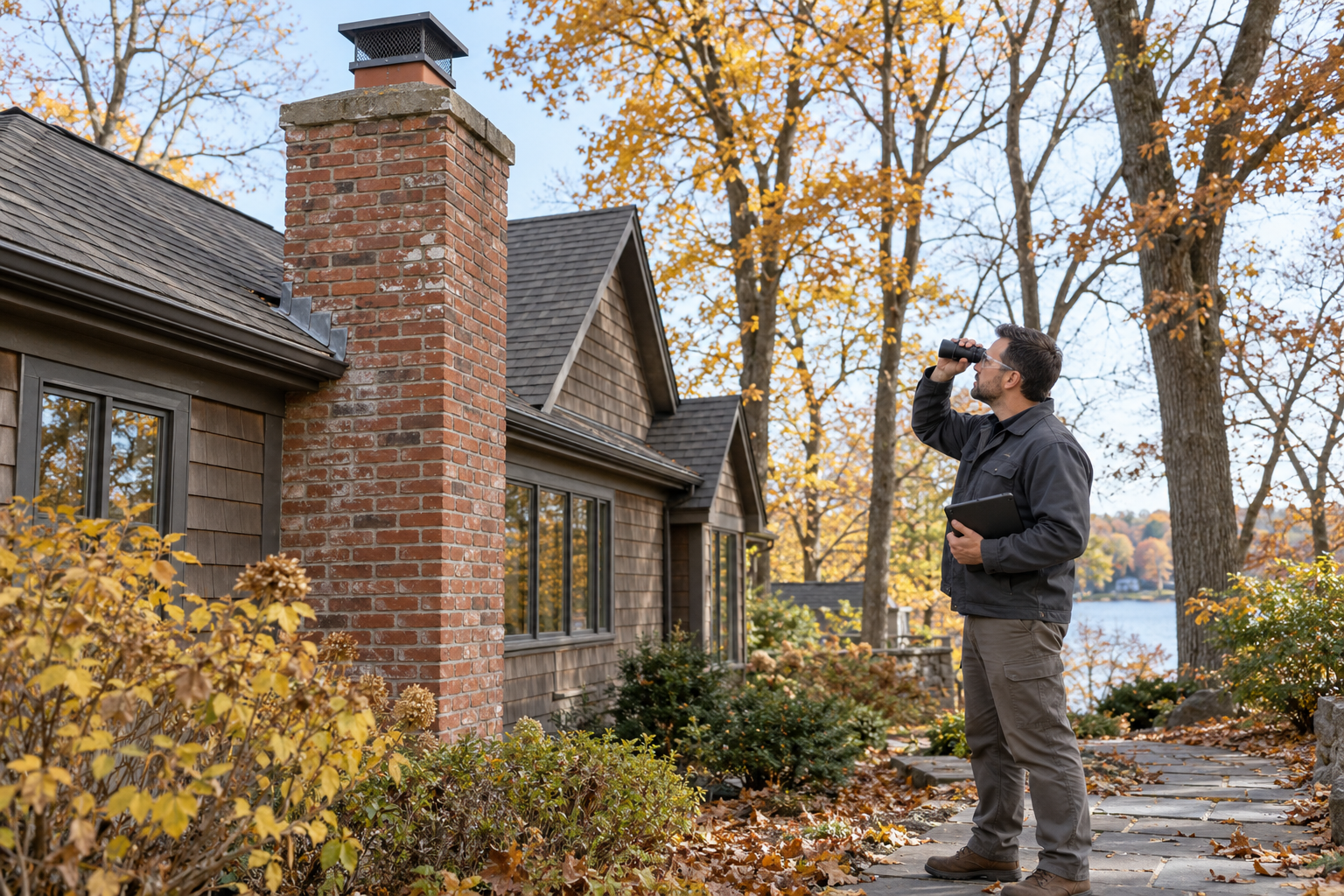
Stand back from your home and use binoculars to examine the top of your chimney:
- Is the cap present? (Missing caps allow direct water entry)
- Is it visibly rusted or corroded? (Rust indicates deterioration)
- Does it sit securely on top? (Loose caps can blow off in wind)
- Is the spark arrestor (mesh screen) intact? (Damaged mesh allows animal entry)
Note in your checklist: If your cap is missing or severely damaged, this is your highest-priority repair.
Crown Inspection
The crown is the concrete seal at the very top of your chimney:
- Are there visible cracks? (Even small cracks allow water entry)
- Are chunks missing? (Deterioration indicates water has been entering)
- Is the surface uneven or sagging? (Structural failure is occurring)
- Do you see white, chalky deposits? (Efflorescence indicates water movement)
Note: Crown damage requires urgent attention. Cracks expand dramatically during freeze-thaw cycles.
Exterior Brick and Mortar Assessment
Use your binoculars to examine the outer brick surface:
- Is mortar between bricks crumbling or missing? (Deteriorating mortar allows water entry)
- Are bricks spalling (faces breaking away)? (Spalling bricks expose interior surfaces to water)
- Do you see cracks running vertically or diagonally? (Structural stress is present)
- Is there discoloration or staining? (Water has been entering)
- Do bricks appear soft or crumbling when observed closely? (Freeze-thaw damage is occurring)
Note: Minor mortar deterioration can be addressed soon. Extensive spalling or large cracks indicate urgent professional assessment.
Flashing Examination
Flashing is the metal seal where your chimney meets your roof:
- Is the flashing visible and intact? (Hidden flashing may be failing)
- Does it show rust or corrosion? (Metal deterioration allows water entry)
- Has it separated from the chimney or roof? (Gaps allow water to pour in)
- Is there evidence of previous repairs or caulking? (May indicate past failures)
Note: Flashing failure is one of the fastest ways water enters. If your flashing looks compromised, professional repair is urgent.
Interior Observations (Safe to Do With Flashlight)
Firebox and Interior Inspection
Use a flashlight to look inside your fireplace opening:
- Are there water stains on the interior walls? (Water has entered your home)
- Is there rust on the damper (the metal door that opens/closes)? (Rust indicates water exposure)
- Do you see white, chalky deposits (efflorescence)? (Water is moving through masonry)
- Is there black, tar-like creosote buildup on interior surfaces? (Fire risk is present)
- Does the interior smell musty or moldy? (Moisture and mold may be growing)
- Can you see daylight down through the damper? (Damper may not be sealing)
Note: Water stains, rust, or mold require professional evaluation immediately.
Ceiling and Wall Assessment
In rooms with your chimney:
- Are there yellow or brown water stains on the ceiling? (Water damage is occurring)
- Do walls near the chimney feel damp? (Moisture is present inside walls)
- Is there any visible mold or mildew? (Health hazard requires remediation)
- Do you notice musty odors near the chimney? (Moisture is trapped in walls)
Note: Any water stains or damp areas require urgent professional attention.
Warning Signs That Chimney Repair in Minnetonka is Urgent
Certain warning signs mean you shouldn’t wait. Professional evaluation is needed immediately.
Red Flag Warning Signs (Call This Week)
Active Water Intrusion
You see water dripping into your fireplace, ceiling stains are spreading, or interior walls are visibly damp. This indicates water is currently entering your home at a rapid rate.
Missing Chimney Cap
Your cap is completely gone. This allows rain to pour directly down your flue and into your home’s interior.
Severe Creosote Buildup
The interior of your flue is coated with thick, tar-like creosote. This is a dangerous fire hazard requiring emergency cleaning before any fireplace use.
Visible Structural Cracks
Large cracks are visible in the exterior brick or mortar. Structural integrity may be compromised.
Damper Rust or Deterioration
Your damper is severely rusted or won’t open/close. This indicates prolonged water exposure and potential safety hazards.
Mold or Mildew Visible
You see active mold growth inside your fireplace or on interior walls. This is a health hazard requiring professional remediation.
Note: If you identify any red flag warnings, don’t delay. Call a professional immediately.
Yellow Flag Warning Signs (Schedule Within 2-4 Weeks)
Minor Creosote Buildup
You see light creosote coating but not heavy accumulation. Cleaning is needed before regular fireplace use.
Small Crown Cracks
The crown has small, hairline cracks. These will expand significantly during winter freeze-thaw cycles.
Deteriorating Mortar
Mortar between bricks is starting to crumble or show gaps. Tuckpointing (mortar repair) should be scheduled before winter.
Minor Flashing Separation
Flashing has minor gaps or hasn’t fully separated. Resealing or replacement is needed soon.
Light Water Stains
You see one or two minor water marks that aren’t growing. Professional assessment will reveal the source.
Note: Yellow flag issues aren’t emergencies but shouldn’t wait until spring.
Green Flag Observations (Monitor and Maintain)
Sound Structure
Your chimney shows no visible damage, cracks are hairline and not growing, and no water stains are present.
Normal Aging
Minor efflorescence or slight color variations are normal for older chimneys.
Recent Professional Cleaning
Your flue was cleaned recently and shows minimal creosote buildup.
Note: Green flag observations suggest your chimney is in reasonable condition. Annual professional inspections will catch developing problems early.
Understanding Industry Standards for Chimney Repair in Minnetonka
When evaluating chimney repair needs, homeowners should understand the professional standards that guide proper diagnosis and repair work.
National Fire Protection Association (NFPA) Standards
The National Fire Protection Association (NFPA) establishes the most widely recognized chimney safety codes and inspection standards across North America. NFPA Standard 211 specifically addresses chimney, fireplace, and venting system installation, maintenance, and inspection requirements.
Key NFPA standards your inspection should follow:
- Annual inspection requirements for chimneys serving fireplaces or wood stoves
- Creosote removal protocols when heavy buildup is present
- Flashing and crown integrity standards
- Damper functionality and safety requirements
- Clearance requirements from combustible materials
When you schedule chimney repair in Minnetonka, verify that your contractor references NFPA compliance to ensure your home meets national safety codes and best practices.
Chimney Safety Institute of America (CSIA) Certification
The Chimney Safety Institute of America (CSIA) certifies individual chimney sweeps and inspectors to rigorous professional standards. CSIA-certified technicians have passed comprehensive exams demonstrating expertise in chimney systems, inspection protocols, safety standards, and repair methods.
What CSIA certification means for your repair:
- Inspector has passed rigorous competency testing
- Professional maintains ongoing education and training
- Inspector follows established code of ethics
- Certified professionals adhere to industry best practices
- Your inspection meets national professional standards
When choosing contractors for chimney repair in Minnetonka, ask whether technicians hold CSIA certification. This ensures you’re working with professionals who’ve met the highest industry standards.
Finding Verified Professionals in Your Area
For additional contractor verification and consumer protection, the Verified Chimney Pros maintains a registry of vetted chimney service providers by region. This resource allows homeowners to verify contractor credentials, insurance status, and customer reviews before hiring.
How to use this resource:
- Search for verified professionals in the Minnetonka and Twin Cities service area
- Review contractor certifications and credentials
- Check customer satisfaction ratings
- Verify insurance and licensing status
- Compare multiple verified contractors before deciding
Using the Verified Chimney Professionals Directory helps ensure you’re working with established, credible companies when scheduling chimney repair in Minnetonka. This added layer of verification protects you from unlicensed contractors.
What Professional Chimney Repair in Minnetonka Includes
Once you’ve identified potential problems, professional contractors evaluate and repair comprehensively.
Professional Inspection and Diagnosis
A professional chimney contractor will perform a Level 2 video inspection, using a specialized camera to see inside your flue. This reveals:
- Internal flue condition and any cracks
- Creosote buildup extent
- Water damage evidence
- Damper functionality
- Chimney liner integrity
Video documentation provides visual proof of conditions, eliminating guesswork.
Common Chimney Repairs in Minnetonka
Chimney Cleaning
Removes creosote buildup, debris, and blockages. Cost: $150-$300 for standard cleaning; $300-$500+ for heavy buildup.
Cap Installation or Replacement
Installs new cap or replaces damaged one. Prevents water and animal entry. Cost: $300-$600.
Flashing Repair or Replacement
Seals or replaces the metal seal at the roof line. Stops water intrusion. Cost: $400-$1,200.
Crown Repair or Rebuild
Fills small cracks, applies protective coating, or rebuilds severely damaged crown. Cost: $300-$3,500 depending on severity.
Tuckpointing (Mortar Repair)
Removes deteriorated mortar and replaces with new mortar. Cost: $50-$150 per linear foot.
Chimney Relining
Installs new interior flue liner. Cost: $2,500-$5,000+.
Water Damage Restoration
Addresses interior water damage, mold, and structural issues. Cost: varies widely; $2,000-$15,000+.
Repair Timeline and Winter Considerations
Ideal timing: October through early November. Mortar requires temperatures above freezing to cure properly.
Winter challenges: Cold temperatures prevent proper mortar curing. Winter repairs require expensive heated enclosures.
Spring delays: Waiting until spring allows freeze-thaw damage to multiply, increasing repair costs 4-8x.
Best practice: Address all identified repairs by early November to avoid winter weather complications and cost multiplication.
Choosing a Professional Chimney Repair Contractor in Minnetonka
Not all contractors are equally qualified. Use these criteria to evaluate professionals.
Questions to Ask Potential Contractors
Experience and Credentials
- How many years have you served Minnetonka and the Twin Cities?
- Are you certified by the Chimney Safety Institute of America (CSIA)?
- Are you licensed and insured?
- Can you provide references from local Minnetonka projects?
Inspection Methods
- Will you perform a Level 2 video inspection?
- Will you provide photo documentation of findings?
- Will you explain findings in writing?
Repair Approach
- Why do you recommend these specific repairs?
- What happens if I don’t make each repair?
- Can repairs be staged or prioritized by urgency?
- What warranty covers your work?
Pricing
- Will you provide a detailed, itemized estimate?
- Why does your estimate differ from competitors?
- Do you offer financing options?
- Are there seasonal pricing considerations?
Red Flags to Avoid
- Door-to-door contractors offering unrealistic discounts
- Refusal to provide video documentation
- Vague, non-itemized estimates
- High-pressure sales tactics or fear-based urgency
- Refusal to discuss specific findings
- Demands for full payment before work begins
- Lack of local references or established business history
Trustworthy contractors welcome questions, provide documentation, and demonstrate local expertise.
Minnesota-Specific Considerations for Chimney Repair in Minnetonka
Minnetonka’s climate creates unique chimney challenges that contractors must understand.
Freeze-Thaw Cycle Expertise
Minnesota contractors must understand how our brutal freeze-thaw cycles attack masonry. Water infiltration that seems minor in October becomes catastrophic by March. Professional contractors who’ve served the Twin Cities for decades understand this acceleration pattern and prioritize repairs accordingly.
Historic vs. Modern Home Considerations
Minnetonka features both historic 1920s-era homes and modern construction. Older homes have softer bricks and different mortar compositions. A contractor must know these differences and use appropriate repair materials and methods.
Seasonal Repair Timing
Local contractors understand why October is ideal and why waiting until spring costs more. They plan schedules accordingly, preventing winter delays and cost inflation.
Insurance and Warranty Considerations
Minnesota homeowners often ask whether insurance covers chimney repairs. Generally, it doesn’t—regular maintenance and gradual deterioration are your responsibility. Professional contractors explain this clearly and help you budget accordingly.
Our Services
Explore the full range of Chimney Crickets services for Minnesota homeowners:
🔍 Chimney Inspections — Start with a professional evaluation before any repair
🧱 Chimney Repointing — Restore deteriorated mortar joints in Minnesota masonry
👑 Chimney Crown Repair — Seal or rebuild a cracked or damaged chimney crown
🔩 Chimney Flashing Repair — Stop water entry at the roof-chimney junction
💧 Chimney Leak Repair — Trace and resolve active moisture entry
🛡️ Chimney Waterproofing — Protect repaired masonry from future moisture damage
🏗️ Full Masonry Repair — Comprehensive brick and mortar restoration
Serving Minnesota Homeowners
Chimney Crickets serves homeowners throughout Bloomington, Minneapolis, the South Metro and surrounding Minnesota communities.
Frequently Asked Questions
What should Minnetonka homeowners check before winter to identify chimney repair needs?
Use binoculars to examine your chimney cap, crown, brick/mortar, and flashing from ground level. Inside, use a flashlight to check for water stains, rust, creosote buildup, and efflorescence. Document any findings before calling a professional.
Why is fall the best time for chimney repair in Minnetonka?
October and November temperatures allow mortar to cure properly. Winter repairs require expensive heated enclosures. Spring repairs allow freeze-thaw damage to multiply 4-8x. Fall is the ideal window for cost-effective repairs.
What is the most common chimney repair needed in the Twin Cities?
Water damage and flashing failure are the most common issues. Minnesota’s freeze-thaw cycles and heavy snowmelt make water intrusion the #1 threat to Minnetonka chimneys.
How much does professional chimney repair cost in Minnetonka?
Costs range from $300 (cap replacement) to $5,000+ (relining). Average repairs (cleaning, flashing, tuckpointing) cost $800-$2,000. Always get detailed estimates before committing.
Should I use my fireplace if my chimney needs repairs?
No. If you’ve identified water damage, creosote buildup, cracks, or structural issues, don’t use the fireplace until repairs are complete. These conditions create fire hazards and water damage risks.
How do I know if my chimney cap needs replacement?
If your cap is missing, rusted, cracked, or loose, it needs replacement. A functional cap sits securely on top and shows no corrosion or deterioration.
What does efflorescence mean on my chimney?
Efflorescence is white, chalky mineral deposits indicating water is moving through masonry. It’s a warning sign that water intrusion is occurring and needs professional evaluation.
Can I clean my chimney myself?
No. Professional cleaning requires specialized equipment, safety precautions, and expertise to remove all creosote safely. DIY attempts can damage your chimney or create safety hazards.
How often should my chimney be inspected in Minnetonka?
If you use your fireplace regularly: annually. If you use it occasionally: every 2-3 years. If you’ve had repairs: follow-up inspection after 6 months to ensure proper curing.
What is a Level 2 chimney inspection?
A Level 2 inspection uses a video camera to examine the interior flue, combined with detailed assessment of crown, flashing, and exterior condition. It provides photo documentation and professional diagnosis.
Is chimney repair covered by homeowners insurance?
Generally, no. Insurance covers sudden, catastrophic damage. Gradual deterioration from aging and weather is considered maintenance—your responsibility.
Why does freeze-thaw damage accelerate so quickly in Minnesota?
Water freezes and expands 9%. Minnesota winters have 50-100+ freeze-thaw cycles, meaning this expansion happens repeatedly, shattering masonry incrementally.
What is tuckpointing and why is it important?
Tuckpointing is removing deteriorated mortar and replacing it with new mortar. It prevents water infiltration, stabilizes structure, and extends chimney life.
Can repairs be staged or done in phases?
Yes. Professional contractors help prioritize repairs by urgency. Red flag repairs should be done immediately; yellow flag repairs within weeks; others can wait until spring if necessary.
How do I choose a reputable chimney contractor in Minnetonka?
Ask about CSIA certification, request local references, verify licensing and insurance, require Level 2 video inspection, demand detailed estimates, and compare multiple contractors before deciding.