
Chimney Tuckpointing Minneapolis: 5 Urgent Warning Signs
As the crisp October air settles over the Twin Cities, homeowners are excitedly preparing for cozy nights by the fireplace. However, this seasonal shift also brings a pressing deadline for exterior home maintenance. If your brickwork is deteriorating, finding reliable chimney tuckpointing Minneapolis professionals becomes an absolute necessity before the deep freeze arrives.
Your chimney stands exposed to the absolute worst of Minnesota’s weather. Decades of driving rain, heavy snow, and aggressive wind eventually take a toll on the mortar holding your bricks together. When that mortar begins to crack and crumble, it leaves your home completely vulnerable to devastating water intrusion.
Because of our extreme climate, ignoring crumbling masonry is a dangerous gamble. This comprehensive guide explains exactly what chimney tuckpointing Minneapolis homes require, the five urgent warning signs you need it now, and why addressing this before winter is critical to saving your home’s structural integrity.
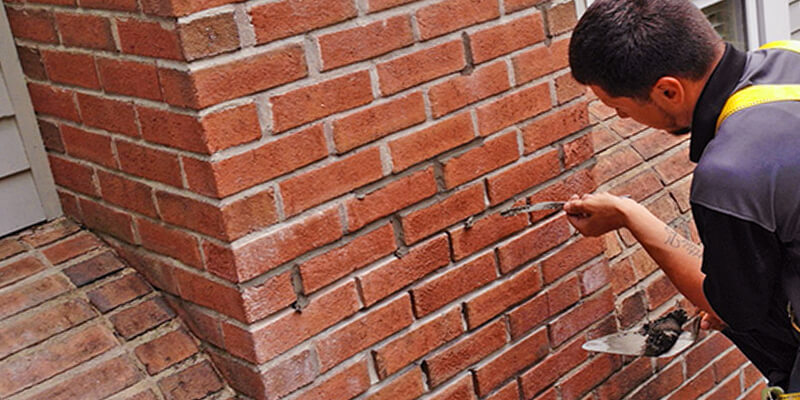
The Silent Danger of Crumbling Mortar in the Twin Cities
A brick chimney is incredibly heavy, often weighing several tons. The mortar joints act as the crucial glue holding this massive structure together. Furthermore, mortar is designed to be slightly softer than the bricks themselves, allowing it to absorb structural stress and moisture.
Over time, this continuous exposure to the elements causes the mortar to degrade. Once the mortar washes away, water gains a direct, unrestricted pathway into your home.
How Minnesota’s Freeze-Thaw Cycle Destroys Chimney Masonry
To understand the urgency of chimney tuckpointing Minneapolis residents must understand our state’s brutal freeze-thaw cycles. During a typical autumn or spring in the Twin Cities, daytime temperatures can easily rise above freezing, only to plummet well below zero overnight.
When rain or melting snow seeps into deteriorating mortar joints, it settles deep inside the masonry. As the temperature drops, that trapped water freezes and expands by 9%. This immense internal pressure acts like a microscopic wedge, blowing the mortar and bricks apart from the inside out.
This vicious cycle repeats dozens of times per season. In just a few short years, what started as a minor hairline crack transforms into a major structural failure.
Hidden Water Damage and Toxic Mold
When mortar fails, water doesn’t just damage the exterior brick; it travels downward into your home. Moisture easily bleeds into the surrounding wooden roof framing, attic insulation, and interior drywall.
Warm, dark, damp spaces inside your walls create the perfect breeding ground for toxic mold. According to the EPA’s guidelines on moisture and mold control, indoor mold can begin growing within just 24 to 48 hours of a water intrusion event. Proactive masonry repair prevents this costly interior nightmare.
What Exactly is Chimney Tuckpointing Minneapolis Homes Need?
Homeowners often hear the term “tuckpointing” but don’t fully understand the process. Simply put, tuckpointing is the highly skilled process of removing damaged, crumbling mortar from a brick structure and replacing it with fresh, color-matched mortar.
Tuckpointing vs. Repointing: What’s the Difference?
While often used interchangeably in the industry, there is a slight technical difference.
- Repointing: The process of grinding out old mortar and replacing it with new mortar to restore structural integrity.
- Tuckpointing: Uses two contrasting colors of mortar (one matching the brick, one contrasting) to create the optical illusion of perfectly straight, narrow mortar joints.
In modern residential chimney repair, when locals search for chimney tuckpointing Minneapolis, they are generally looking for a complete restoration of their failing mortar joints to stop water leaks and prevent chimney collapse.
5 Urgent Signs You Need Chimney Tuckpointing Minneapolis
Catching masonry decay early is your best defense against catastrophic repair bills. Look for these five critical warning signs that indicate your chimney’s mortar has failed.
1. Flaking or Crumbling Mortar Joints
The most obvious sign that you need professional help is physically deteriorating mortar. If the joints between your bricks look deeply recessed, cracked, or are crumbling into a sandy dust, the mortar has lost its structural integrity.
When mortar washes away, the structural weight of the chimney shifts unevenly onto the bricks, which can lead to a sudden, catastrophic collapse during a heavy winter storm.
2. Spalling Bricks on Your Chimney Exterior
Spalling is a severe condition where the actual face of the brick begins to pop off, flake, or shatter. If you find chunks of brick resting on your roof or the lawn below, you have a critical moisture problem.
Spalling occurs when water bypasses failed mortar, saturates the brick, and freezes. Because spalling indicates advanced water intrusion, finding broken masonry is one of the most urgent signs that chimney tuckpointing Minneapolis professionals need to be called immediately.
3. White, Powdery Efflorescence Stains
Have you noticed a chalky, white residue staining the outside of your chimney? This phenomenon is called efflorescence.
It occurs when water travels through the failing mortar joints, dissolving natural salts hidden within the masonry. As the water evaporates on the surface, it leaves the white salt behind. Efflorescence is undeniable proof that excess moisture is penetrating your chimney system.
4. Moisture or Rust Inside Your Firebox
Water always follows the path of least resistance. When exterior mortar fails, water often travels right through the chimney chase and into your living room.
If you see puddles in your firebox, water stains on the ceiling near the fireplace, or bright orange rust forming on your metal damper, your exterior masonry is leaking. Rust prevents the damper from operating correctly, posing a severe carbon monoxide hazard outlined by the NFPA (National Fire Protection Association).
5. A Visibly Leaning or Tilting Chimney Structure
Step back into your yard and look at your chimney’s profile. Does it look like it’s leaning away from the house?
When mortar completely washes out on one side of the chimney due to severe weather exposure, the structural balance is lost. A leaning chimney is an extreme emergency. It requires far more than basic chimney tuckpointing Minneapolis homes usually need; it often requires a complete [chimney rebuild] to prevent it from crashing through your roof.
Safe Homeowner Observations vs. Professional Diagnostics
As a homeowner, your primary job is observation and documentation. You do not need to be a masonry expert to protect your home from winter water damage.
What You Can Safely Check from the Ground
You can gather incredibly valuable information for your local chimney technician without ever leaving the safety of the ground.
- Conduct a Monthly Binocular Inspection: Make it a habit to walk around your property in the fall. Use binoculars to scan the chimney top for missing mortar, spalling bricks, or a cracked [chimney crown].
- Check the Firebox: Use a flashlight to inspect the interior damper for rust or the firebox walls for white efflorescence stains.
- Document the Decay: If you spot crumbling mortar or find brick faces on your lawn, take clear photos with your smartphone. These visual details assist your technician in preparing for the diagnostic visit.
Why You Must Never Climb the Roof
❌ NEVER attempt to climb your roof to inspect or repair your chimney.
We cannot stress this enough: do not climb onto your roof to inspect crumbling masonry. Steep pitches, slick autumn leaves, and structurally unstable chimneys present severe, life-threatening fall hazards.
Furthermore, diagnosing and repairing masonry requires specialized tools and knowledge. Smearing hardware-store silicone caulk over crumbling mortar will trap moisture inside the brick, exponentially worsening the freeze-thaw damage. Always rely on a professional evaluation for high-altitude masonry repairs.
The Professional Chimney Tuckpointing Process
When you hire a reputable local company like Chimney Crickets, you receive a thorough, safety-first restoration that removes the guesswork from the equation.
1. Comprehensive Safety and Structural Inspection
A certified technician will safely access your roof using professional fall-protection gear. They will evaluate the structural integrity of the entire chimney, testing the mortar depth and assessing the brickwork.
They will also perform a of the interior flue using specialized cameras to ensure no hidden water damage has compromised the safety of the chimney liner. For peace of mind regarding industry standards, homeowners can verify diagnostic procedures via the CSIA (Chimney Safety Institute of America).
2. Precision Mortar Removal
To perform high-quality chimney tuckpointing Minneapolis experts must first remove the decay. Using specialized masonry routers and diamond-blade grinders, the technicians carefully grind out the old, failing mortar to a uniform depth (usually 3/4 to 1 inch deep). This creates a clean, solid cavity for the new mortar to bond with.
3. Custom Mortar Matching and Application
Not all mortar is created equal. Using modern, ultra-hard Portland cement on a historic 1920s Minneapolis home will actually crush the original softer bricks.
Professional masons meticulously mix custom mortar to match the structural crushing strength and exact color of your original mortar. The new mortar is then seamlessly injected and “tucked” into the joints, then elegantly smoothed (tooled) to match the original profile.
4. Masonry Waterproofing Application
Once the new mortar has properly cured, the final step in protecting your investment is [masonry waterproofing]. Technicians apply a breathable, industrial-grade water repellent that stops rain from entering while allowing internal moisture vapors to escape. This is the ultimate defense against Minnesota’s brutal freeze-thaw cycles.
Trusting Verified Local Experts in the Twin Cities
When choosing a contractor for chimney tuckpointing Minneapolis homeowners must prioritize local experience. A company that understands the specific architectural styles and historic brickwork of the Twin Cities will provide vastly superior results.
Platforms like verifiedchimneypros.com offer highly valuable guidance on finding fully vetted, insured masonry contractors.
Since 1986, Chimney Crickets has proudly served the Twin Cities metro area. We know exactly how to combat the brutal elements and expertly match the historic mortar profiles found throughout Bloomington, Edina, and Minneapolis. By choosing verified local experts, you ensure your home is protected by high-quality craftsmanship that will last for decades.
Our Services
Explore the full range of Chimney Crickets services for Minnesota homeowners:
🔍 Chimney Inspections — Start with a professional evaluation before any repair
🧱 Chimney Repointing — Restore deteriorated mortar joints in Minnesota masonry
👑 Chimney Crown Repair — Seal or rebuild a cracked or damaged chimney crown
🔩 Chimney Flashing Repair — Stop water entry at the roof-chimney junction
💧 Chimney Leak Repair — Trace and resolve active moisture entry
🛡️ Chimney Waterproofing — Protect repaired masonry from future moisture damage
🏗️ Full Masonry Repair — Comprehensive brick and mortar restoration
Serving Minnesota Homeowners
Chimney Crickets serves homeowners throughout Bloomington, Minneapolis, the South Metro and surrounding Minnesota communities.
Frequently Asked Questions
What is chimney tuckpointing?
Tuckpointing (or repointing) is the process of safely grinding out old, crumbling mortar joints from a brick chimney and replacing them with fresh, structurally sound mortar to prevent water leaks and structural collapse.
How do I know if I need chimney tuckpointing Minneapolis services?
Look for deeply recessed mortar joints, crumbling sandy dust between bricks, white powdery stains (efflorescence) on the exterior, and pieces of broken brick falling onto your roof or lawn.
Can I just caulk over the cracks in my chimney mortar?
No. Never use silicone caulk or roofing tar on brick mortar. Caulk traps internal moisture inside the brick, which will cause massive freeze-thaw damage and destroy the bricks completely during a Minnesota winter.
How long does a tuckpointing repair last?
When performed correctly by a skilled masonry professional using proper materials, a tuckpointing job can easily last 25 to 30 years, depending on severe weather exposure.
Why do chimneys deteriorate so fast in Minnesota?
The freeze-thaw cycle is the main culprit. Water enters porous brick and mortar. When temperatures drop below freezing, that water turns to ice, expands by 9%, and breaks the masonry apart from the inside out.
Do you match the new mortar color to my old chimney?
Yes. Professional masons take great care to mix mortar that matches both the historic structural strength and the visual color profile of your existing chimney for a seamless restoration.
What is chimney flashing, and why does it leak?
Flashing is the layered metal sealing system where your chimney meets the roof. Over time, the metal rusts and the sealants crack, allowing water to sneak behind the metal and into your home.
What happens if I ignore crumbling mortar?
Ignoring the problem allows water to pour into your home, rotting your roof framing and causing interior mold. Eventually, the structural integrity of the chimney will fail, leading to a catastrophic collapse.
Will chimney tuckpointing fix my roof leak?
If the leak is caused by water entering through the degraded mortar joints, yes. However, if the leak is caused by failed [chimney flashing] or a cracked crown, those specific components must also be repaired.
When is the best time of year to tuckpoint a chimney?
Fall (October) is an excellent time to tuckpoint because the weather is generally dry and mild, allowing the mortar to cure properly before the deep winter freeze arrives.
Does homeowners insurance cover chimney tuckpointing?
Generally, no. Insurance typically only covers sudden, catastrophic damage (like a fallen tree). Gradual deterioration caused by weathering, aging, and standard freeze-thaw cycles is considered standard homeowner maintenance.
Can tuckpointing be done in the winter?
It is highly discouraged. Mortar requires temperatures consistently above freezing to cure correctly. Winter masonry work requires expensive, heated scaffolding enclosures to prevent the wet mortar from freezing and failing instantly.
What is spalling?
Spalling is when the outer face of a brick flakes, chips, or completely pops off due to water saturation and extreme freeze-thaw cycles. Spalling bricks must often be replaced entirely.
What areas does Chimney Crickets serve?
Chimney Crickets is based in Bloomington, MN, and proudly serves homeowners within an approximate 35-mile radius, encompassing the entire Minneapolis and Twin Cities metro area.
How much does chimney tuckpointing cost?
Costs vary widely depending on the height of the chimney, the steepness of the roof, and the extent of the mortar damage. A professional inspection is required to provide an accurate, written estimate.
Should I waterproof my chimney after tuckpointing?
Yes. Applying an industrial, breathable masonry water repellent after the new mortar has cured is highly recommended to protect your investment from future freeze-thaw water intrusion.