
Damaged Chimney Cap MN: Essential Winter Guide for Homeowners
A damaged chimney cap MN homeowners overlook can let snow, rain, and animals into the chimney all winter long. Once that happens, the damage rarely stays at the top. Water and debris travel down the flue, weaken mortar and liner joints, and stain interior walls before most families notice a problem.
This guide explains what a damaged chimney cap means for your home, why Minnesota winters expose weak caps so quickly, which warning signs you can safely check from the ground, and when to call a professional.
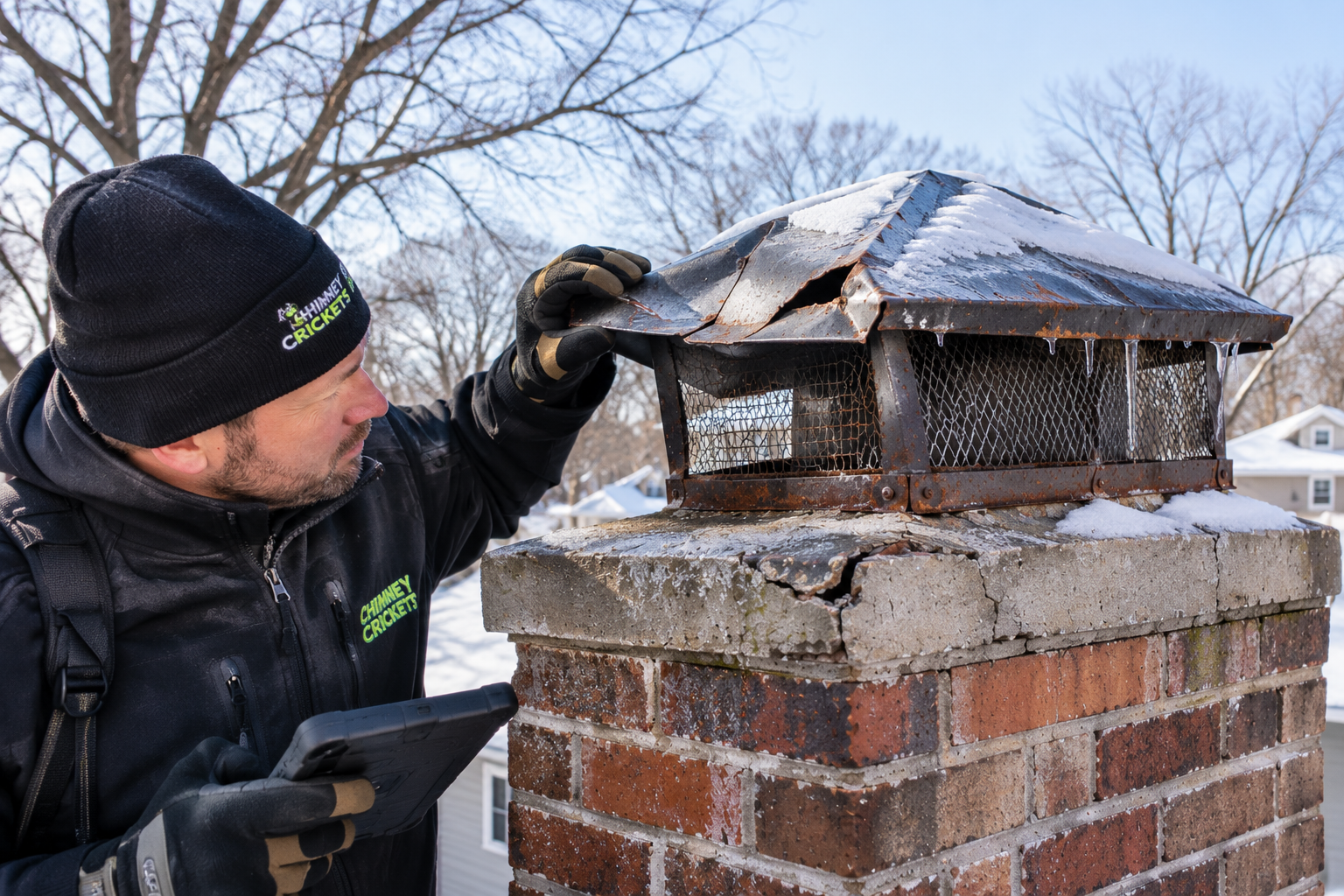
Damaged Chimney Cap MN Homes Face Every Winter
Your chimney cap is the metal or mesh cover that sits on top of the flue opening. It keeps rain and snow out of the chimney, blocks squirrels, raccoons, and birds, and helps contain sparks and embers. Most homeowners never think about the cap until something goes wrong.
Minnesota winters test every part of that cover. Heavy wet snow builds up on the chimney top, ice forms on metal surfaces, and temperatures cross the freezing point many times each season. A cap that looked fine in October can loosen, bend under snow weight, or rust through by March.
A damaged chimney cap rarely fails all at once. Small gaps appear first. Water finds those gaps, and each freeze-thaw cycle widens them a little more. By the time the damage is obvious, the chimney may already be taking on water.
What Your Chimney Cap Protects Against
A properly installed cap guards your chimney against several threats:
- Water entry: Rain and snow stay out of the flue and masonry.
- Animal intrusion: Birds, squirrels, and raccoons cannot nest inside the flue.
- Blockage: Leaves, branches, and nesting material stay out of the flue opening.
- Ember control: Sparks stay inside the chimney, which lowers the risk of roof fires.
- Downdraft resistance: Some cap designs reduce wind-driven downdrafts that push smoke back into the living space.
Each protection depends on the cap staying intact. A damaged chimney cap MN often loses several protections at once, which is why a small defect deserves attention.
How Minnesota Winters Damage Chimney Caps
Several winter forces work against the cap at the same time. Understanding them helps you know what to look for after a storm.
Snow and Ice Loading
Snow accumulates on top of the chimney and cap. Wet, heavy snow adds weight that can bend thin metal or pull fasteners loose. Ice that builds around the cap can also crack the masonry crown underneath it.
Freeze-Thaw Stress
Metal caps expand and contract as temperatures swing. Over many cycles, screws and rivets loosen, and seams open. Sealant around the cap’s base can crack when water freezes inside the gap, which lets more water through.
Wind and Debris Impact
Strong winter winds carry branches and debris toward the roofline. A falling limb can dent or tear a cap, and wire mesh can rip loose. Trees close to the house increase this risk, especially after ice storms that weaken limbs.
Warning Signs of a Damaged Chimney Cap MN
Some warning signs show from the ground. Others appear inside the home. Either type justifies a professional evaluation.
Visible Signs From the Ground
Rust and Corrosion
Orange or brown streaks on a metal cap signal corrosion. Rust usually starts at seams and fasteners, then spreads across the surface over time.
Bent, Torn, or Missing Mesh
Dented metal, sagging wire mesh, or a cap that sits crooked on the flue points to structural damage. A missing cap leaves the flue fully exposed to weather and animals.
Gaps and Looseness
A visible gap between the cap and the flue, or a cap that shifts when wind hits, means the seal has failed. Water and pests can enter through that opening.
Signs Inside the Home
- Scratching, scurrying, or bird sounds from the fireplace or chimney
- Smoke or odors entering the room when the fireplace is in use
- Water stains on the firebox, ceiling, or walls near the fireplace
- Rattling or whistling during high winds
- Soot or debris falling into the firebox
Any of these signs means the chimney needs professional evaluation rather than a quick fix.
Safe Ground-Level Observations vs. Professional-Only Work
Homeowners can make a few safe observations without leaving the ground. Use binoculars from a safe distance, and view the cap from several angles. Note what you see, take dated photos, and compare them over time.
Stay off the roof. Never climb a ladder to reach the chimney top, and never lean a ladder against the chimney. Falls from roofs cause serious injuries every year, and the most important damage is often hidden inside the flue.
The following work belongs to trained professionals:
- Physically inspecting the cap, flue, and crown
- Using a flue camera to check the liner and interior
- Removing, repairing, or replacing the cap
- Sealing or repairing the crown or masonry
- Clearing blockages from the flue
Professional technicians use fall protection, proper tools, and documented procedures. They can also determine whether the damage is limited to the cap or extends into the flue and masonry.
Animals, Debris, and the Blocked Flue Problem
Animals are among the most common reasons a cap fails to do its job. Once a squirrel or raccoon gets into a flue, it may nest, chew on components, or die inside the chimney. Dead animals create odor, blockage, and fire risk.
A blocked flue is more than an inconvenience. When exhaust cannot escape, smoke and carbon monoxide can back up into the home. The EPA notes that carbon monoxide is colorless and odorless, which makes working CO alarms essential during the heating season.
If you suspect animal activity, stop using the fireplace or wood stove until a professional clears the blockage and confirms the flue is open. A quick pause protects your family and prevents a small problem from becoming a dangerous one.
What Happens If a Damaged Chimney Cap MN Goes Unrepaired
Damage grows in predictable stages when a cap stays broken.
First Winter: Early Water Entry
Water enters around the cap and runs down the flue or masonry. Staining may appear inside the fireplace or on nearby walls.
Second and Third Winters: Spreading Deterioration
Freeze-thaw cycles widen the gaps. Mortar in the crown weakens, and the flue liner may begin to crack under repeated moisture.
Long-Term: Structural and Interior Damage
Liner damage, interior water damage, and masonry repairs become likely. A simple cap replacement can grow into a larger project that involves the liner and crown.
The National Fire Protection Association (NFPA) recommends annual chimney inspections for chimneys serving fireplaces and stoves. A cap check is part of that routine. Acting early keeps the repair focused on the cap rather than the entire chimney system.
Damaged Chimney Cap MN Repair: Professional Options
Once a technician confirms the damage, the right fix depends on the cap’s condition, the flue’s condition, and the crown below. Each option has a different scope and cost.
Repair Versus Replacement
A loose fastener or a small seam gap may be repairable. A bent, rusted, or missing cap usually needs replacement. Technicians also check whether the crown needs sealing or patching, since a new cap cannot protect a cracked crown.
Stainless Steel Upgrade Option
Many homeowners choose a stainless steel cap for durability in Minnesota’s climate. Stainless steel generally resists corrosion better than basic galvanized steel. Technicians size the cap to the flue and match the design to your appliance.
Costs vary with cap size, material, and whether crown work is needed. Ask for a written estimate that itemizes the cap, labor, and any masonry repairs. Compare estimates against the scope of work, not just the total price.
Preparing Before Minnesota’s Heating Season
These steps help your cap stay effective through the coldest months:
- Schedule a professional inspection in early fall. Book before the November rush.
- Trim overhanging branches from the ground. Use a pole saw or hire a licensed tree service for limbs near the roofline.
- Clear leaves and debris around the chimney base. Trapped debris holds moisture against masonry.
- Keep gutters and downspouts clear. Water should move away from the chimney, not pool beside it.
- Test carbon monoxide and smoke alarms. Replace batteries and confirm the units work before the first fire.
- Photograph the cap from the same spot each season. Changes over time reveal problems early.
- Hold off on fireplace use if you notice animal activity or smoke problems. Wait until a technician confirms the flue is clear.
Each step supports the cap through Minnesota’s heaviest snow and ice. Together, they reduce the chance of an emergency repair during a January cold snap.
When to Call a Chimney Professional
Timing matters. Use these guidelines to decide how quickly to act:
- Call immediately if smoke enters the room, the cap is missing, you hear animal sounds, or you see water staining near the fireplace.
- Schedule within 30 days for rust, sagging mesh, a gap at the flue, or a cap that shifts in the wind.
- Schedule before the first fire if the cap looks intact but you have not had an inspection in over a year.
Bloomington and Twin Cities homeowners often wait until the first cold snap. Booking earlier helps you avoid long wait times in November and gives technicians time to order parts if a replacement is needed.
Choosing a Qualified Chimney Pro in the Twin Cities
Hiring the right company matters as much as the repair itself. Verify licensing and insurance before work begins. The Verified Chimney Professionals Directory helps homeowners check credentials for chimney service providers in their region.
Ask whether the inspector holds Chimney Safety Institute of America (CSIA) certification, a recognized credential for chimney professionals. Look for technicians who explain findings clearly, provide photos, and give you time to decide. Be cautious of anyone who pressures immediate work without an inspection.
Chimney Crickets is located in Bloomington, Minnesota, and was founded in 1986. We serve Minneapolis, Bloomington, and surrounding Twin Cities communities within roughly 35 miles. You can learn more about our chimney inspections and chimney repair services on our website.
Our Services
Explore the full range of Chimney Crickets services for Minnesota homeowners:
🔍 Chimney Inspections — Start with a professional evaluation before any repair
🧱 Chimney Repointing — Restore deteriorated mortar joints in Minnesota masonry
👑 Chimney Crown Repair — Seal or rebuild a cracked or damaged chimney crown
🔩 Chimney Flashing Repair — Stop water entry at the roof-chimney junction
💧 Chimney Leak Repair — Trace and resolve active moisture entry
🛡️ Chimney Waterproofing — Protect repaired masonry from future moisture damage
🏗️ Full Masonry Repair — Comprehensive brick and mortar restoration
Serving Minnesota Homeowners
Chimney Crickets serves homeowners throughout Bloomington, Minneapolis, the South Metro and surrounding Minnesota communities.
Frequently Asked Questions
What is a chimney cap, and how is it different from a chimney crown?
A chimney cap is the metal or mesh cover that sits directly on the flue opening. A chimney crown is the concrete or mortar slab at the top of the chimney structure that shields the masonry below. Both protect the chimney from water, but they cover different parts of the system.
What are the most common signs of a damaged chimney cap in Minnesota?
Common signs include rust streaks, bent or torn mesh, visible gaps at the flue, and a cap that shifts in wind. Inside the home, watch for animal sounds, smoke odors, and water stains near the fireplace. Any of these signs warrants a professional evaluation.
Can I replace a damaged chimney cap myself?
No. Replacing a cap requires roof access, proper fall protection, and correct sizing for the flue. Improper installation can allow water entry or create a blockage. Hire a qualified chimney professional for any cap work.
How long does a chimney cap last in Minnesota's climate?
Lifespan depends on material, installation quality, and exposure. Basic galvanized caps often deteriorate faster under repeated freeze-thaw and snow loading than stainless steel. A professional can estimate remaining life during an inspection.
How much does it cost to repair a damaged chimney cap?
Costs vary with cap size, material, and whether crown or liner work is needed. Minor fastener or seam repairs cost less than full replacement. Request a written estimate that itemizes each component before approving work.
Can a damaged chimney cap cause a chimney fire?
A damaged cap can contribute to fire risk. A missing or torn spark screen allows embers to escape onto the roof, and blockages can increase creosote buildup. A professional inspection identifies both problems.
Will a damaged chimney cap let animals into my chimney?
Yes. Gaps, missing sections, and torn mesh give squirrels, raccoons, and birds easy access to the flue. Once inside, animals can nest or become trapped, creating odor and blockage. Stop using the fireplace until a technician clears the flue.
Is a damaged chimney cap covered by homeowner's insurance?
Coverage depends on your policy and the cause of damage. Storm or falling-tree damage is more likely to be covered than wear, rust, or lack of maintenance. Review your policy and document damage with photos before filing a claim.
Can a blocked flue from a damaged cap cause carbon monoxide problems?
Yes. When exhaust cannot escape, smoke and carbon monoxide can back up into the home. The EPA recommends working CO alarms on every level of the home, especially during the heating season.
How do I know if smoke is backing up because of a damaged chimney cap?
Smoke entering the room, especially during windy conditions, may indicate a cap problem. Other causes include a blocked flue, poor draft, or an undersized flue. A professional inspection determines the actual cause.
Should I use my fireplace if the chimney cap looks damaged?
Avoid using the fireplace until a professional inspects the cap and flue. Smoke, sparks, or carbon monoxide may enter the home during use. A short delay protects your family and prevents additional damage.
Is a stainless steel chimney cap better for Minnesota winters?
Stainless steel generally resists corrosion better than basic galvanized steel, which helps in Minnesota’s wet, salty winter conditions. The right cap still depends on your flue size, appliance type, and local conditions. Ask your technician to recommend a design that fits your system.
How often should a chimney cap be inspected in Minnesota?
Inspect the cap annually as part of a full chimney inspection. Schedule an extra check after major storms, ice events, or heavy snowfall. Early-fall inspections are ideal because they allow time for repairs before the heating season.
Can I check my chimney cap from inside the house?
You can observe interior signs such as smoke, odors, sounds, and water stains without touching the chimney. Never reach into the flue or attempt to inspect it with tools. Structural and flue checks require a trained professional.
What should I look for when hiring a Minneapolis or Bloomington chimney pro for cap repair?
Verify licensing and insurance, and check credentials through the Verified Chimney Professionals Directory. Ask whether the inspector holds CSIA certification and whether the estimate itemizes the work. Avoid anyone who pushes immediate repairs without a clear inspection and written findings.