
Firebox Damage Minnesota: Essential Guide for Homeowners
Firebox damage Minnesota homeowners overlook inside their hearth can turn a cozy winter evening into a serious fire hazard. The firebox—the lined chamber where wood actually burns—absorbs direct flame contact, intense radiant heat, and corrosive ash every time you light a fire. When firebricks crack or mortar joints wash out, extreme heat can penetrate behind the masonry toward structural wood framing.
Understanding what firebox damage Minnesota fireplaces develop means helps you recognize safety risks before lighting your next fire. This guide explains why fireboxes wear down in Minnesota’s climate, what warning signs you can safely check from your living room, and when to call a chimney professional.
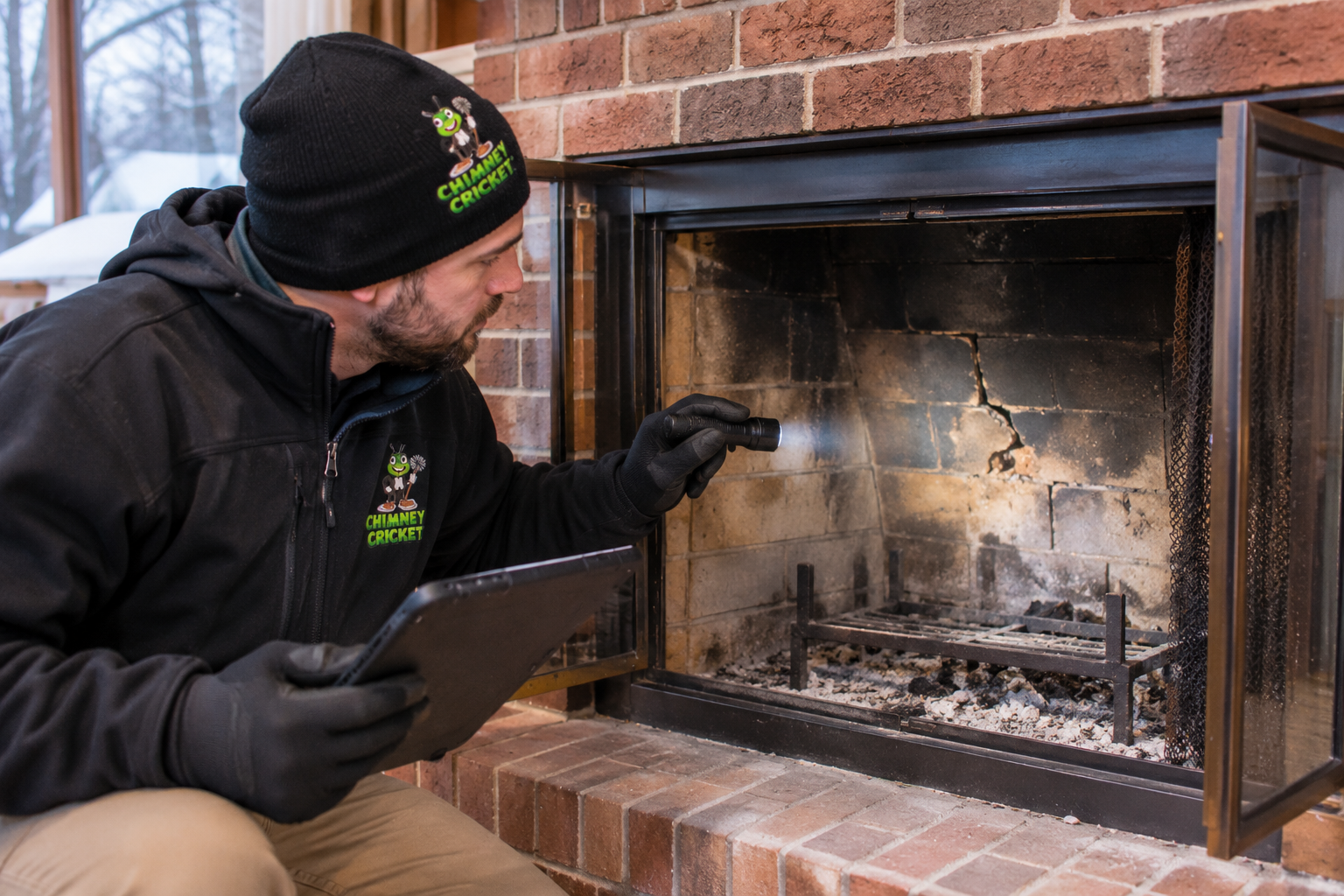
Why Firebox Damage Minnesota Fireplaces Develop Is a Serious Safety Concern
Many homeowners view the inside of their fireplace as an indestructible stone or brick box. In reality, a masonry firebox is a carefully engineered heat shield built with specialized refractory firebricks and high-temperature refractory mortar.
When firebox damage Minnesota homes experience compromises that protective lining, two major hazards emerge immediately:
- Heat transfer to combustibles: Open mortar joints and deep brick cracks allow superheated gases and radiant heat to reach the outer masonry shell and adjacent wooden wall studs or floor joists.
- Smoke and gas leakage: Gaps in the upper firebox or smoke chamber can let carbon monoxide and smoke seep into wall cavities or living spaces instead of rising cleanly up the flue.
Over repeated fires, sustained heat drying out hidden wood framing causes a chemical change called pyrolysis, which lowers the temperature at which wood ignites. That is why evaluating firebox damage Minnesota properties show before peak heating season is essential for household safety.
The National Fire Protection Association (NFPA) establishes fireplace and chimney safety standards under NFPA 211, requiring intact refractory linings and annual inspections for active wood-burning fireplaces. The Chimney Safety Institute of America (CSIA) likewise emphasizes that damaged firebrick or missing mortar joints must be repaired before continued fireplace use.
How Minnesota Winters Accelerate Firebox Damage Minnesota Wide
Fireplaces across Minneapolis, Bloomington, and surrounding Twin Cities suburbs endure steeper thermal swings than hearths in milder climates. Several seasonal forces combine to accelerate firebox damage Minnesota homeowners notice each autumn.
Extreme Thermal Shock During Subzero Cold Snaps
In January and February, an exterior chimney stack sits exposed to subzero air while the living room side stays near room temperature. Lighting a roaring hardwood fire raises firebox surface temperatures above 1,000°F within minutes.
That rapid expansion places tremendous internal stress on cold firebricks and mortar joints. Over dozens of heating cycles, thermal shock causes brittle bricks to crack and mortar joints to separate.
Moisture Intrusion From Above the Hearth
Firebox damage Minnesota technicians uncover often starts high above the living room. When rain or melted snow enters through chimney crown cracks or a damaged chimney cap, moisture runs down the flue and saturates the firebox walls.
When you light a fire inside a damp firebox, trapped water inside the brick pores turns rapidly into steam. That internal steam pressure flakes away the surface of the firebrick—a destructive condition known as spalling.
Improper Burning Habits and Log Placement
Burning construction scraps, wet green wood, or oversized fires generates excessive temperatures and acidic deposits that wear down refractory surfaces. Slamming heavy logs against the back wall or burning fires directly against brick without a proper grate also accelerates physical wear.
Common Types of Firebox Damage Minnesota Homeowners Should Recognize
Not every mark inside your hearth means the same thing. Knowing how technicians classify firebox damage Minnesota fireplaces exhibit helps you understand what you are seeing when you look inside a cold fireplace.
Missing or Crumbling Refractory Mortar Joints
Refractory mortar holds individual firebricks tightly together and seals gaps against heat penetration. Over years of heating and cooling, mortar joints can erode, turn powdery, or fall out completely.
Once mortar recedes deeper than a quarter-inch or leaves open gaps between bricks, flames and hot gases can push directly behind the firebox wall.
Cracked or Split Firebricks
Hairline surface crazing happens naturally on older firebricks, yet wide or deep cracks that split a brick completely through weaken the heat barrier. Cracked panels in prefabricated factory-built fireplaces are equally critical and often require manufacturer-approved refractory panel replacement before burning again.
Spalling and Pitted Brick Surfaces
Spalling occurs when the smooth face of a firebrick flakes, chips, or crumbles away, exposing rough, porous clay beneath. Addressing winter chimney masonry moisture issues outdoors prevents ongoing spalling inside the firebox.
Warped, Rusted, or Loose Metal Components
Moisture dripping down the flue frequently corrodes cast-iron damper plates, throat frames, and ash dump doors. A rusted damper that will not open fully causes fireplace smoke problems indoors, while a damper stuck open wastes warm indoor air all winter.
Masonry Fireboxes vs. Factory-Built Metal Fireboxes
Older homes in Minneapolis and Bloomington typically feature traditional site-built masonry fireboxes lined with individual yellow or buff-colored clay firebricks. Newer Twin Cities homes often have factory-built metal fireplaces lined with textured refractory panels molded to look like brick.
Both styles suffer from firebox damage Minnesota weather and regular burning cause, yet their repair methods differ completely. Masonry fireboxes are restored with refractory mortar and replacement firebricks, whereas factory-built units require specific replacement panels listed for that exact fireplace model.
Safe Hearth-Level Checks vs. Professional Firebox Damage Minnesota Work
You can safely check your firebox from the living room floor without specialized equipment or risk. Wait at least 24 hours after your last fire until ashes are completely cold, then follow these simple steps:
- Shine a bright flashlight across the back and side walls: Look for open gaps between bricks, loose firebricks that wobble when gently pressed, or deep cracks running across brick faces.
- Inspect the floor of the firebox: Check for broken brick shards, chunks of fallen mortar, or uneven sunken bricks around the grate area.
- Look upward toward the damper throat: Check for heavy rust flakes, bent metal damper blades, or dark water streaks running down the back wall.
- Check the glass doors and fireplace screen: Confirm that mesh screens close cleanly and tempered glass doors have intact gaskets and no chips.
- Test nearby smoke and carbon monoxide alarms: Press the test button on every detector to verify fresh batteries and loud alerts.
Leave all elevated, internal, and structural repairs to trained chimney professionals:
- Reaching up past the damper into the smoke chamber or flue
- Climbing ladders or inspecting the chimney crown and cap from the roof
- Grinding out old mortar joints or repointing firebricks
- Replacing cracked refractory panels or rebuilding firebox walls
- Evaluating hidden flue tiles with a chimney liner inspection camera
Avoid patching firebox cracks with standard hardware-store cement, stucco mix, or ordinary masonry mortar. Standard cement cannot withstand direct flame temperatures and will crack, pop, and fail rapidly under fire heat.
What Happens When Firebox Damage Minnesota Homes Have Goes Unrepaired
Continuing to burn wood inside a deteriorated hearth compounds both safety hazards and repair scope. Understanding how firebox damage Minnesota fireplaces experience progresses underscores why early repair matters.
Stage One: Surface Mortar Erosion and Hairline Cracks
Mortar joints begin receding and thin cracks appear in the back wall where heat concentrates most intensely. At this stage, targeted refractory repointing restores the protective barrier efficiently.
Stage Two: Loose Bricks and Heat Penetration
Without intact mortar support, individual firebricks loosen, shift, or crack all the way through. Intense heat begins passing through open joints into the structural backing masonry behind the firebox.
Stage Three: Smoke Chamber Deterioration and Structural Risk
Neglected firebox damage Minnesota homeowners put off eventually allows heat and moisture to compromise the smoke chamber and nearby framing. What began as straightforward mortar repointing can expand into a full firebox rebuild and structural masonry repair.
According to the Environmental Protection Agency (EPA), burning dry seasoned wood in a well-maintained fireplace reduces smoke emissions and indoor air pollutants while supporting cleaner, safer combustion. Keeping the firebox intact ensures combustion byproducts stay contained inside the venting system.
Professional Repair Solutions for Firebox Damage Minnesota Homeowners Rely On
When you schedule a professional evaluation, a technician inspects the entire fireplace system—from the hearth floor and firebox walls up through the damper, smoke chamber, and flue. Depending on the condition found, professionals generally recommend one of the following solutions.
Refractory Mortar Repointing (Tuckpointing)
When firebricks remain solid and properly aligned, technicians grind out eroded joints and pack fresh high-temperature refractory mortar between the bricks. Refractory mortar cures into a heat-resistant seal engineered to withstand direct flame exposure without shrinking or crumbling.
Individual Firebrick or Refractory Panel Replacement
If specific firebricks in the center of the back wall have spalled or split, technicians carefully remove the damaged units and install matching firebricks set in refractory mortar. For factory-built fireplaces, technicians source and install approved refractory panels matched to the appliance rating plate.
Smoke Chamber Parging and Damper Restoration
Because heat and smoke funnel directly from the firebox into the smoke chamber, technicians often find rough, unsealed masonry or missing mortar right above the damper. Smoothing and sealing the smoke chamber with insulating refractory mortar improves draft efficiency while protecting adjacent framing.
Full Firebox Rebuild and Flue Coordination
When widespread cracking, severe spalling, or structural shifting affects most of the combustion chamber, rebuilding the firebox with new refractory brick restores original safety clearances. Technicians also verify that the flue liner above is sound and free of heavy creosote buildup before clearing the fireplace for winter use.
Five Habits That Help Prevent Firebox Damage Minnesota Winters Cause
Once your hearth is in sound condition, everyday burning and maintenance habits keep firebox damage Minnesota winters bring to a minimum:
- Burn only dry, seasoned hardwood: Seasoned oak, maple, or birch burns hotter and cleaner with less corrosive moisture and creosote than wet or green logs.
- Use a sturdy cast-iron or steel fireplace grate: Lifting logs slightly off the firebox floor promotes airflow underneath the fire and shields floor bricks from direct log impacts.
- Never throw water on a hot wood fire: Pouring water onto burning logs causes instantaneous thermal shock that can crack hot firebricks and warp metal dampers immediately.
- Leave a thin layer of cold ash during active winter burning: About an inch of cold ash insulates the hearth floor slightly, though excess ash should be scooped safely into a covered metal container outdoors once completely cold.
- Schedule annual chimney cleaning and inspection every fall: Routine chimney cleaning and chimney inspection visits catch small mortar gaps and exterior water leaks before winter fires begin.
When to Call a Pro for Firebox Damage Minnesota Concerns
Knowing when to pause fireplace use protects your family and prevents minor wear from turning into major masonry work. Use these clear guidelines to decide when to schedule service:
- Stop burning and call promptly if firebricks are loose or missing, cracks extend completely through bricks or refractory panels, or mortar joints have open gaps deeper than a quarter-inch.
- Schedule an inspection within 30 days if you see flaking brick surfaces, heavy damper rust, or water stains inside the hearth after rain or snowmelt.
- Book a routine check before your first November fire if the firebox looks intact to your eyes, yet more than a year has passed since your last professional evaluation.
When selecting a service provider, verify state licensing, liability insurance, and industry training. You can check regional chimney companies through the Verified Chimney Pros and ask whether technicians hold CSIA credentials.
Chimney Crickets is located in Bloomington, Minnesota, and serves homeowners throughout Bloomington, Minneapolis, and the Twin Cities metro area within roughly 35 miles. When you notice cracks, crumbling mortar, or rust inside your hearth, our team provides thorough evaluations and lasting chimney repair solutions.
Our Services
Explore the full range of Chimney Crickets services for Minnesota homeowners:
🔍 Chimney Inspections — Start with a professional evaluation before any repair
🧱 Chimney Repointing — Restore deteriorated mortar joints in Minnesota masonry
👑 Chimney Crown Repair — Seal or rebuild a cracked or damaged chimney crown
🔩 Chimney Flashing Repair — Stop water entry at the roof-chimney junction
💧 Chimney Leak Repair — Trace and resolve active moisture entry
🛡️ Chimney Waterproofing — Protect repaired masonry from future moisture damage
🏗️ Full Masonry Repair — Comprehensive brick and mortar restoration
Serving Minnesota Homeowners
Chimney Crickets serves homeowners throughout Bloomington, Minneapolis, the South Metro and surrounding Minnesota communities.
Frequently Asked Questions
Is it safe to use my fireplace if I notice firebox damage Minnesota inspectors flag?
No, you should pause fireplace use until a qualified chimney technician evaluates the cracks or missing mortar. Open joints and split firebricks allow intense combustion heat and embers to penetrate toward nearby wood framing.
What is the difference between regular mortar and refractory mortar in a firebox?
Regular masonry mortar is designed for exterior brick walls and breaks down rapidly under direct flame heat. Refractory mortar is specifically formulated to withstand extreme fireplace temperatures without shrinking, cracking, or losing its bond.
Why are the bricks inside my firebox yellow or tan instead of red?
Fireboxes are lined with refractory firebricks made from specialized fireclay that resists extreme heat and thermal shock. Standard red exterior clay bricks can crack or explode when exposed to direct fireplace flames.
How do hairline cracks differ from serious firebox damage Minnesota technicians repair?
Very fine surface crazing on otherwise solid, tightly mortared bricks may simply require monitoring during annual inspections. Wide cracks that split a brick completely through, loose bricks, or open mortar gaps require professional repair before burning.
Can water leaking down my chimney cause firebox damage?
Yes, rain or melted snow entering through a cracked crown or missing cap saturates the firebricks and rusts the damper. When you light a fire in a damp firebox, trapped moisture turns to steam and causes the brick faces to flake and spall.
Why should I never pour water on fireplace embers to put out a fire?
Dousing hot firebricks and cast-iron dampers with cold water creates sudden thermal shock that can crack masonry and warp metal immediately. Instead, let fires burn down naturally behind a closed screen and dispose of cold ashes in a covered metal container outdoors.
How often should a fireplace firebox be inspected in Minneapolis and Bloomington?
The National Fire Protection Association (NFPA) recommends an annual inspection for all active fireplaces and chimneys. Scheduling that inspection in early fall ensures any mortar repointing or moisture repairs are completed before winter heating begins.
What does it mean if my prefabricated fireplace has cracked refractory panels?
Factory-built metal fireplaces rely on molded refractory panels to insulate the metal firebox wall from high temperatures. Once a panel develops deep cracks or crumbles, it must be replaced with an approved panel before the fireplace is used again.
Can I patch small firebox cracks myself with hardware-store fireplace cement?
Tubs of premixed fireplace caulk from hardware stores are temporary cosmetic fillers that often shrink and pop out after a few fires. Proper firebox restoration requires grinding out deteriorated joints and packing commercial refractory mortar or replacing damaged bricks.
Does firebox damage affect how well my fireplace drafts?
Yes, missing mortar in the upper firebox or smoke chamber creates air turbulence and leaks that weaken upward draft. Combined with a rusted or warped damper, interior deterioration can cause smoke to spill into the living room.
What causes white chalky stains inside a masonry firebox?
White powdery deposits—called efflorescence—indicate that moisture is moving through the chimney masonry and evaporating inside the hearth. A technician should inspect both the firebox and exterior chimney crown or cap to stop the water entry point.
How long does professional firebox repointing take?
Most targeted refractory repointing and minor firebrick replacement projects are completed within a single service visit, followed by a brief curing period before your next fire. Larger firebox rebuilds require additional time depending on the extent of masonry work.
Should I clean all the ash out of my firebox before every fire?
Leaving about a half-inch to one-inch layer of cold ash on the firebox floor helps insulate the floor bricks from direct heat. However, scoop out excess ash once completely cold so airflow under the grate remains unobstructed.
Does homeowners insurance cover firebox repair?
Standard homeowners policies generally treat gradual mortar wear, thermal cracking, and deferred maintenance as homeowner upkeep rather than covered losses. Sudden damage from a documented chimney fire or storm may be evaluated differently under your policy.
What should I ask when hiring a professional for firebox damage Minnesota repair?
Verify liability insurance and credentials through resources like the Verified Chimney Professionals Directory and CSIA. Ask whether the technician will inspect the full flue system as well as the firebox, provide photos of their findings, and use rated refractory mortar.